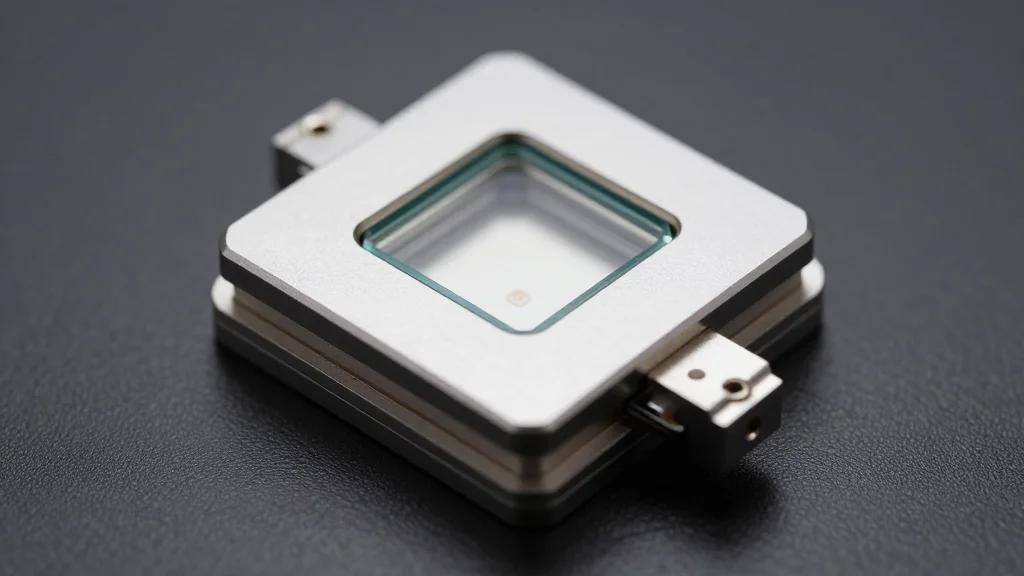
Fast 2D Piezo Scanning Stage for Image Stabilization and Resolution Enhancement
Why It Matters
The P‑733 enables real‑time sub‑pixel adjustments that boost image sharpness and effective resolution, giving manufacturers a competitive edge in high‑performance imaging and laser applications.
Key Takeaways
- •P‑733 offers 100 µm × 100 µm travel with 0.1 nm resolution
- •Zero‑play flexure design eliminates backlash for precise sub‑pixel shifts
- •Capacitive sensors provide direct feedback for active error compensation
- •Stage operates at video‑rate frequencies, enabling real‑time vibration correction
- •XYZ variant adds Z axis for laser micro‑hole‑drilling precision
Pulse Analysis
The push for ever‑higher image fidelity in both scientific and industrial settings has turned piezo‑driven scanners into a strategic component of modern optics. Unlike traditional mechanical stages, piezo actuators can deliver nanometer‑scale motion at kilohertz rates, allowing systems to counteract vibration and execute sub‑pixel displacements in real time. This capability underpins emerging techniques such as pixel‑shift super‑resolution and on‑the‑fly stabilization for aerial and space‑borne cameras, where every micron of motion translates directly into measurable performance gains. According to market research, the global piezoelectric actuator market is projected to exceed $2 billion by 2028, driven largely by imaging and semiconductor sectors.
Physik Instrumente’s P‑733 platform translates those advantages into a turnkey package. Its 100 µm × 100 µm travel range, 0.1 nm repeatability, and zero‑play flexure guidance deliver the precision required for semiconductor wafer inspection, high‑resolution microscopy, and laser micro‑hole‑drilling. The built‑in capacitive sensors close the feedback loop, enabling active error correction that keeps the stage within nanometers of its target even under rapid acceleration. Compared with competing offerings that rely on piezo stacks with limited bandwidth, the P‑733’s parallel kinematics and video‑rate operation give it a clear edge in throughput‑critical environments. The optional P‑733.3 adds a Z axis, opening the door to three‑dimensional positioning for laser micro‑fabrication and confocal microscopy.
Looking ahead, the convergence of fast piezo stages with AI‑driven image reconstruction promises to push resolution limits beyond the physical pixel size. Manufacturers can embed the P‑733 into compact sensor modules, letting software algorithms fuse multiple offset frames into a single high‑definition output without sacrificing frame rate. As aerospace, autonomous vehicles, and medical diagnostics increasingly rely on real‑time, high‑precision imaging, demand for such integrated solutions is expected to grow at double‑digit rates through 2030. Standardized interfaces and modular electronics also simplify integration, reducing development cycles for OEMs.
Fast 2D Piezo Scanning Stage for Image Stabilization and Resolution Enhancement
Comments
Want to join the conversation?
Loading comments...