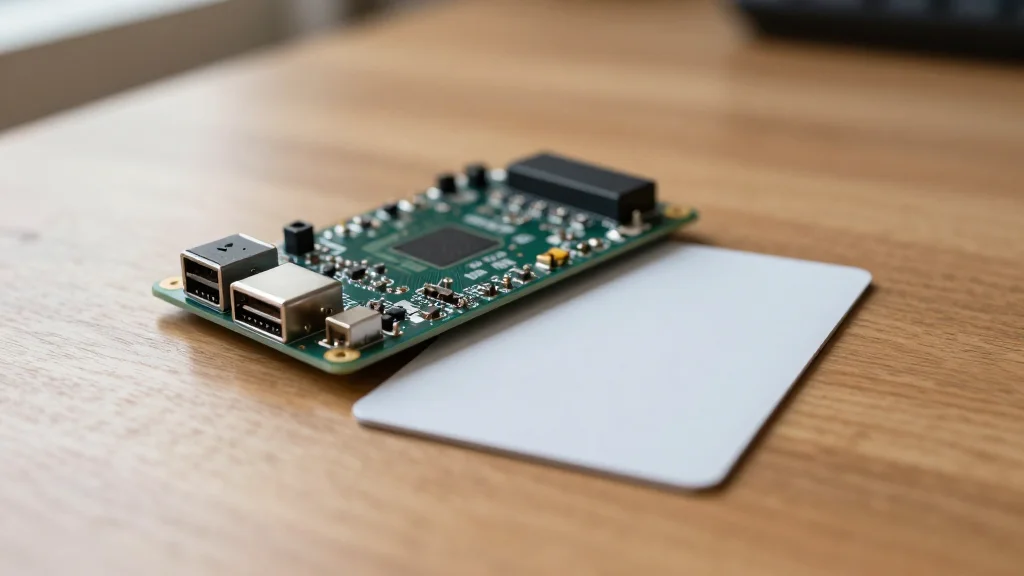
Forget Raspberry Pi: This Computer Is the Literally the Size of a Credit Card
Why It Matters
The achievement pushes the limits of ultra‑compact IoT hardware, opening pathways for truly portable, wallet‑sized smart devices and new form‑factor innovations in the consumer and enterprise markets.
Key Takeaways
- •ESP32‑C3FH4 SoC powers the credit‑card computer with Wi‑Fi/BLE
- •1.54‑inch 200×200 e‑paper display fits within card dimensions
- •Custom flex‑PCB and hand‑soldered 0.5 mm pads overcome connector limits
- •Battery and power‑path management enable untethered operation inside a wallet
- •Future upgrades may add USB‑C, microSD, GPIO, and wireless charging
Pulse Analysis
The "Muxcard" prototype showcases how far system‑on‑chip integration and component miniaturization have come. By leveraging the ESP32‑C3FH4, the builder combined wireless connectivity, NFC and an e‑ink display within a 85 mm × 54 mm footprint. The real engineering feat lay in overcoming mechanical constraints: standard FPC connectors were too bulky, prompting a custom flex‑PCB and painstaking hand‑soldered 0.5 mm pitch wires. These solutions highlight the trade‑offs between size, reliability and manufacturability that developers face when pushing devices to the edge of physical limits.
In the broader IoT landscape, a credit‑card‑sized computer could redefine how and where data is collected. Wallet‑friendly devices can embed authentication, contactless payments, or health monitoring directly into everyday accessories, reducing the need for separate wearables or smartphones. Compared with hobbyist platforms like the Raspberry Pi, this form factor sacrifices raw processing power for ultra‑low power consumption and discreetness, making it ideal for niche applications such as secure access badges, smart tickets or field‑deployed sensors that must remain unobtrusive.
Looking ahead, the open‑source nature of the project invites community enhancements. Adding a caseless USB‑C port, microSD storage and wireless charging would address current pain points around durability and power autonomy. However, scaling from a fragile prototype to a mass‑produced product will require robust PCB materials, automated assembly techniques and rigorous testing against solder fatigue. If these hurdles are cleared, we may see a new class of wallet‑integrated smart cards that blend computing, connectivity and convenience in a single, ultra‑thin package.
Forget Raspberry Pi: this computer is the literally the size of a credit card
Comments
Want to join the conversation?
Loading comments...