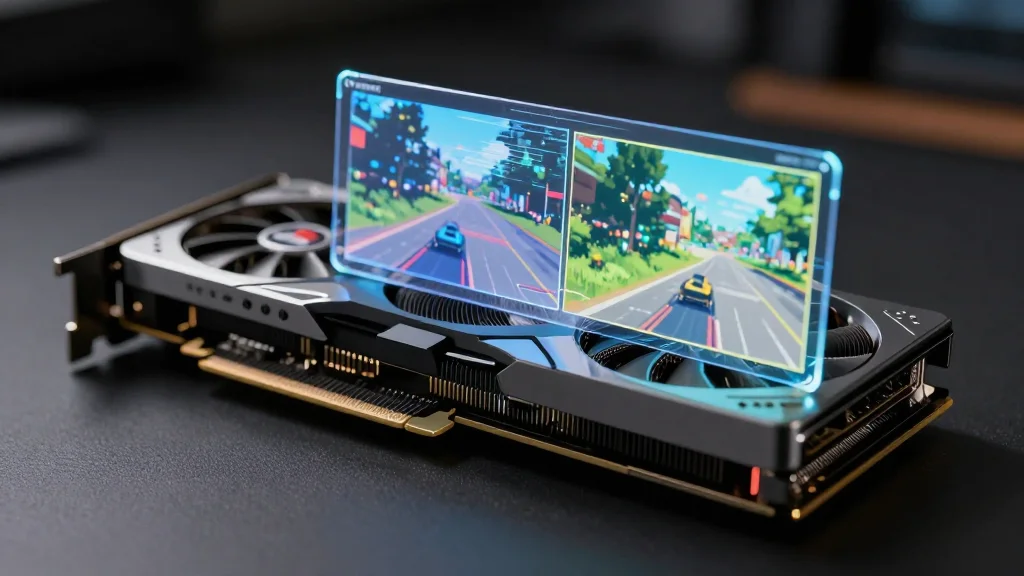
FSR 4 Upscaling Is Finally Coming to Older Radeon GPUs, and the Image Quality Gains Are Real
Companies Mentioned

Why It Matters
Extending FSR 4 to legacy Radeon hardware boosts visual fidelity without forcing costly upgrades, sharpening AMD’s competitive edge against Nvidia’s DLSS in a tight market.
Key Takeaways
- •FSR 4.1 arrives on RX 7000 this summer, RX 6000 early 2027.
- •Older GPUs use INT8, slower than FP8 but retain strong image quality.
- •Performance loss vs. FSR 3 is modest; visual boost outweighs penalty.
- •Enables Radeon cards to compete with Nvidia’s DLSS amid GPU price spikes.
Pulse Analysis
Artificial intelligence upscaling has become a cornerstone of modern gaming, with Nvidia's DLSS and Intel's XeSS setting performance expectations. AMD’s FidelityFX Super Resolution 4 (FSR 4) initially launched only on the flagship RX 9000 series, leveraging FP8 precision to deliver near‑native image quality at reduced render costs. The recent announcement expands FSR 4.1 to the older RX 7000 and RX 6000 families, signaling AMD’s intent to democratize AI‑enhanced graphics across a broader user base.
The technical shift from FP8 to INT8 on legacy GPUs introduces a trade‑off: INT8 calculations are less computationally efficient, resulting in a slightly higher performance penalty compared to the newer cards. However, benchmark data from early adopters indicates that the visual fidelity remains impressively close to the FP8 baseline, with sharper textures and reduced aliasing versus the previous FSR 3 implementation. For gamers running at 1440p or 4K, the modest frame‑rate dip is often eclipsed by the clearer, more detailed output, especially in fast‑paced titles where upscaling artifacts previously marred the experience.
From a market perspective, the move arrives at a time when GPU supply constraints and geopolitical tensions have driven prices to historic highs. By enabling older Radeon hardware to tap into AI upscaling, AMD offers a cost‑effective path to high‑quality gaming without the premium of a new GPU purchase. This could erode Nvidia’s advantage in the mid‑range segment, particularly as competitors like Nvidia consider re‑launching older RTX models. Additionally, the compatibility with handheld PCs and Valve’s upcoming Steam Machine suggests a broader ecosystem impact, positioning FSR 4 as a versatile tool for both desktop and portable gaming platforms.
FSR 4 upscaling is finally coming to older Radeon GPUs, and the image quality gains are real
Comments
Want to join the conversation?
Loading comments...