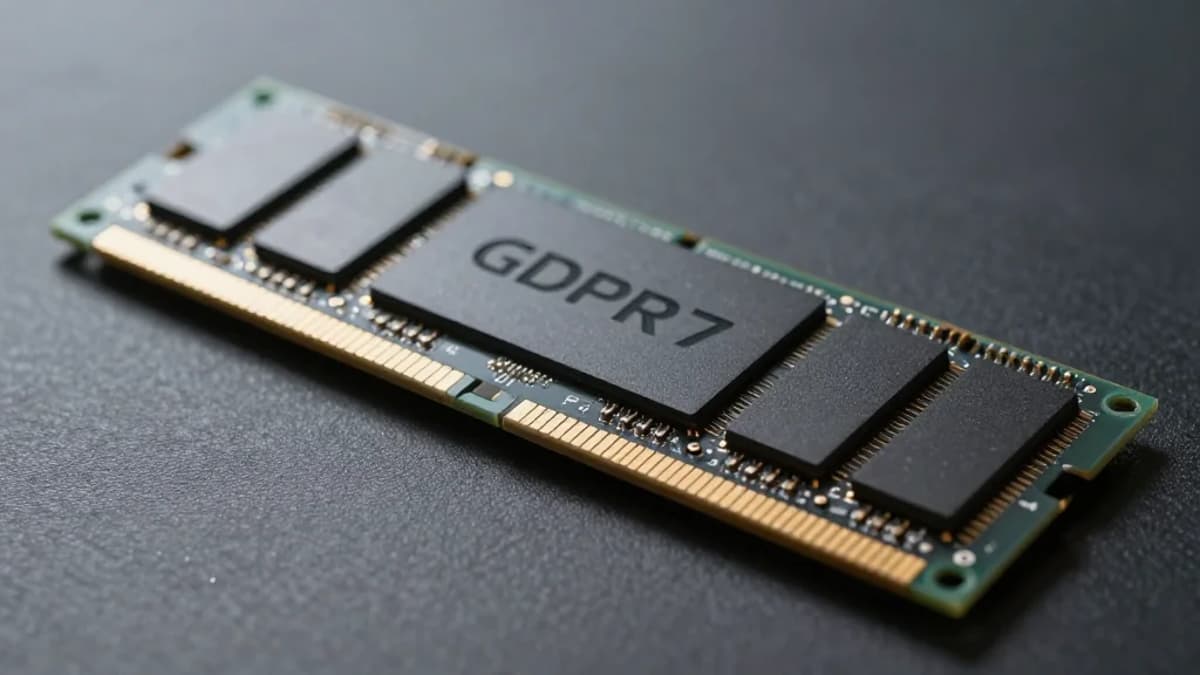
Galax RTX 5060 Teardown Confirms Micron Joins RTX 50 GDDR7 Supply
•February 27, 2026
0
Why It Matters
Diversifying GDDR7 sources helps NVIDIA mitigate memory shortages, potentially improving GPU availability for gamers without guaranteeing price cuts.
Key Takeaways
- •Micron GDDR7 confirmed on RTX 5060 board
- •Third memory supplier diversifies NVIDIA's supply chain
- •28 Gbps speed matches existing RTX 50 cards
- •Improves GPU production flexibility amid memory shortages
- •May boost retail availability, not necessarily lower prices
Pulse Analysis
The RTX 50 series is the first NVIDIA platform built around GDDR7, a memory technology that delivers higher bandwidth while consuming more silicon area. As AI workloads surge, data‑center manufacturers are snapping up the fastest DRAM, leaving less capacity for consumer graphics cards. This imbalance has forced GPU makers to look beyond the traditional duopoly of Samsung and SK Hynix, prompting the inclusion of Micron’s 16‑Gb GDDR7 devices in a mainstream desktop board. By tapping a third vendor, NVIDIA can smooth out allocation volatility and reduce the risk of production stalls caused by a single‑source bottleneck.
From a board‑partner perspective, Micron’s entry provides a safety net against regional shortages and bin‑tightness. Manufacturers can source memory from multiple fabs, balancing cost, lead time, and yield considerations across continents. This flexibility translates into more predictable assembly schedules and, ultimately, a steadier flow of finished GPUs to retailers. While the Micron chips on the GALAX RTX 5060 operate at the same 28 Gbps speed as their Samsung and Hynix counterparts, the real advantage lies in supply chain resilience rather than raw performance gains.
Looking ahead, Micron is already promoting higher‑density, 24‑Gb GDDR7 modules capable of 36 Gbps speeds, which could enable 12 GB configurations on a 128‑bit bus without redesigning the memory controller. Although those parts are currently earmarked for professional and mobile GPUs, their eventual trickle‑down to desktop cards could reshape the VRAM landscape. For consumers, the immediate benefit is likely improved stock levels and reduced price volatility, though any price reductions will depend on broader market dynamics and the pace at which AI demand eases.
Galax RTX 5060 teardown confirms Micron joins RTX 50 GDDR7 supply
0
Comments
Want to join the conversation?
Loading comments...