GatesAir Supports Successful ATSC 3.0 Direct-to-Mobile Trial in India
Why It Matters
The trial validates a scalable, cost‑effective ATSC 3.0 D2M solution that can expand digital inclusion and provide reliable emergency communications, opening new revenue streams for broadcasters worldwide.
Key Takeaways
- •First hybrid HPHT/LPLT ATSC 3.0 D2M network demonstrated globally
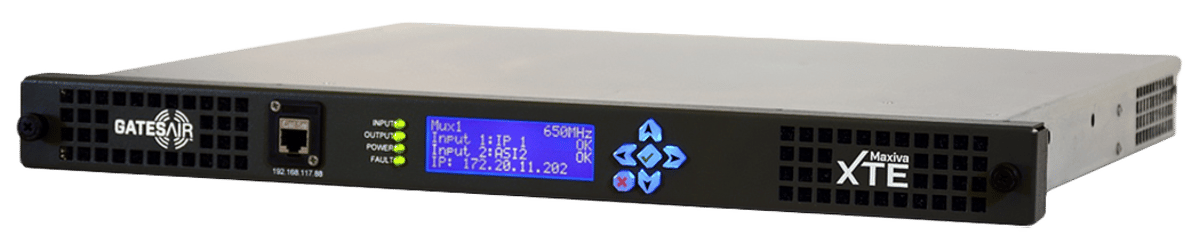
- •GatesAir’s Maxima XTE exciter enabled cost‑effective ATSC 3.0 upgrade
- •Trial proved reliable indoor coverage for smartphones, tablets, and feature phones
- •Direct‑to‑mobile broadcast bypasses internet, easing cellular congestion
- •Potential for emergency alerts independent of mobile networks highlighted
Pulse Analysis
ATSC 3.0’s Direct‑to‑Mobile (D2M) capability is reshaping how broadcasters deliver video and data, moving beyond traditional set‑top boxes to reach handheld devices directly over the air. By leveraging advanced modulation, higher spectral efficiency, and robust error correction, D2M can stream high‑definition content to smartphones and tablets without consuming cellular bandwidth. This model aligns with the broader industry shift toward converged broadcast‑and‑IP services, offering advertisers a new audience segment and operators a tool to alleviate network congestion.
In Delhi, GatesAir and Tejas Networks executed a three‑year pilot that combined a high‑power high‑tower (HPHT) system with low‑power low‑tower (LPLT) broadcast radio heads in a single‑frequency network. The hybrid architecture delivered strong outdoor signals while penetrating deep indoor environments, a critical requirement for India’s densely populated urban areas. The trial’s success demonstrates a cost‑effective upgrade path for existing DVB‑T2 infrastructure, allowing public broadcasters like Prasar Bharati to adopt ATSC 3.0 without massive capital outlay. Moreover, the ability to broadcast emergency alerts independent of mobile networks addresses public‑safety concerns in regions with unreliable internet.
For the global broadcast market, the Indian D2M proof‑point signals a viable commercial model that can be replicated in other emerging economies. Broadcasters can monetize D2M through subscription services, targeted advertising, and government‑funded educational or health programming. The hybrid HPHT/LPLT approach also offers a template for operators seeking to balance coverage breadth with spectrum efficiency. As standards bodies refine ATSC 3.0 specifications and device manufacturers expand compatible hardware, D2M is poised to become a mainstream distribution channel, driving new revenue streams and reinforcing the relevance of over‑the‑air broadcasting in a connected world.
GatesAir Supports Successful ATSC 3.0 Direct-to-Mobile Trial in India
Comments
Want to join the conversation?
Loading comments...