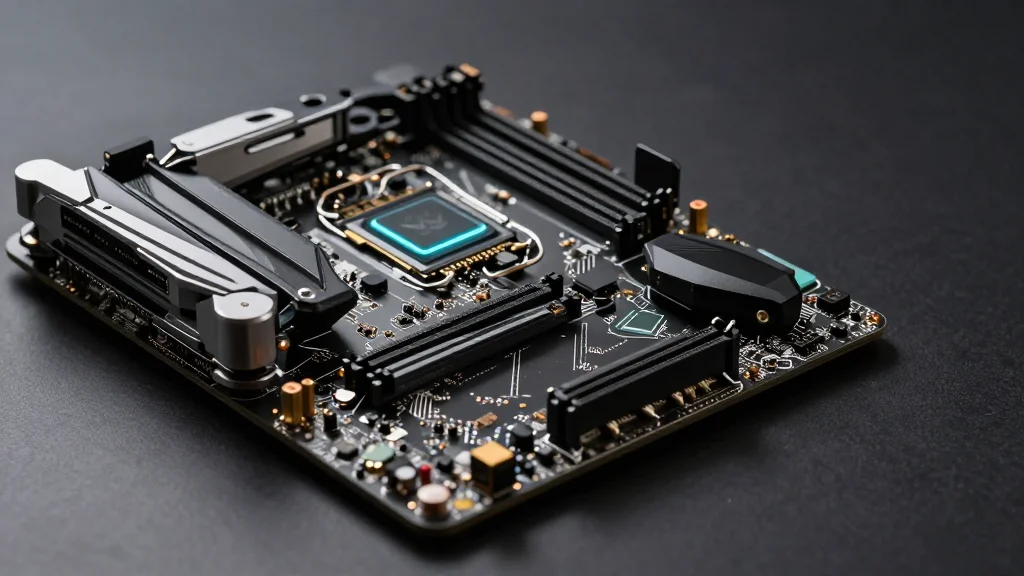
GIGABYTE Unveils AI‑Enhanced D5 Bionic Corsa Motherboard with X3D Turbo Mode 2.0

Companies Mentioned

Why It Matters
The D5 Bionic Corsa illustrates how AI is becoming a first‑class design parameter for core PC hardware, not just an afterthought for software optimization. By embedding a dedicated AI chip on the motherboard, GIGABYTE reduces the latency of performance adjustments, enabling real‑time adaptation to fluctuating workloads—a capability that could become a differentiator in the crowded enthusiast market. Beyond gaming, the board’s AI‑driven memory tuning addresses a growing demand from creators and enterprise users who run inference models on desktop workstations. As AI workloads proliferate, hardware that can automatically balance power, thermals, and performance will be essential for maintaining efficiency without manual tweaking. GIGABYTE’s approach may set a new benchmark for how motherboard manufacturers compete, shifting the focus from raw clock speeds to intelligent, adaptive performance ecosystems.
Key Takeaways
- •GIGABYTE launched the AI‑enhanced D5 Bionic Corsa motherboard on June 7, 2026.
- •Features X3D Turbo Mode 2.0, a dedicated AI overclocking chip for AMD Ryzen X3D CPUs.
- •AI Snatch Engine provides one‑click DDR5 memory optimization using trained datasets.
- •HyperTune BIOS offers AI‑driven firmware tuning for memory and voltage settings.
- •Base price expected around $399 USD; availability slated for later June 2026.
Pulse Analysis
GIGABYTE’s AI‑centric motherboard marks a decisive pivot from the traditional overclocking playbook toward a model where machine learning continuously optimizes hardware behavior. Historically, motherboard vendors have relied on static profiles or user‑driven tweaking; the D5 Bionic Corsa’s on‑board AI chip flips that paradigm by making performance adaptation a hardware function. This could accelerate a virtuous cycle: as AI engines become more capable, manufacturers will embed more sensors and compute resources, which in turn fuels richer datasets for future AI models.
From a competitive standpoint, the move puts pressure on ASUS, MSI, and ASRock to match or exceed GIGABYTE’s integration depth. While software‑only AI tuning can be rolled out via BIOS updates, a dedicated chip offers lower latency and potentially higher reliability—attributes that matter to overclockers and professional users alike. If GIGABYTE’s performance claims hold up in independent testing, the D5 Bionic Corsa could become the reference platform for AI‑enhanced desktop builds, forcing rivals to invest in similar silicon or partner with third‑party AI chip providers.
Looking ahead, the broader PC ecosystem may see a shift in how performance is marketed. Instead of headline GHz numbers, we could see “AI‑optimized” performance metrics become the new selling point, much like “Ray‑Tracing Ready” did for graphics cards. This evolution aligns with the rising prevalence of AI workloads on consumer hardware, from real‑time video upscaling to on‑device inference. GIGABYTE’s strategy suggests that the next wave of hardware differentiation will be defined by how intelligently a system can manage its own resources, a trend that could reshape motherboard design, chipset roadmaps, and even the economics of PC building for years to come.
GIGABYTE Unveils AI‑Enhanced D5 Bionic Corsa Motherboard with X3D Turbo Mode 2.0
Comments
Want to join the conversation?
Loading comments...