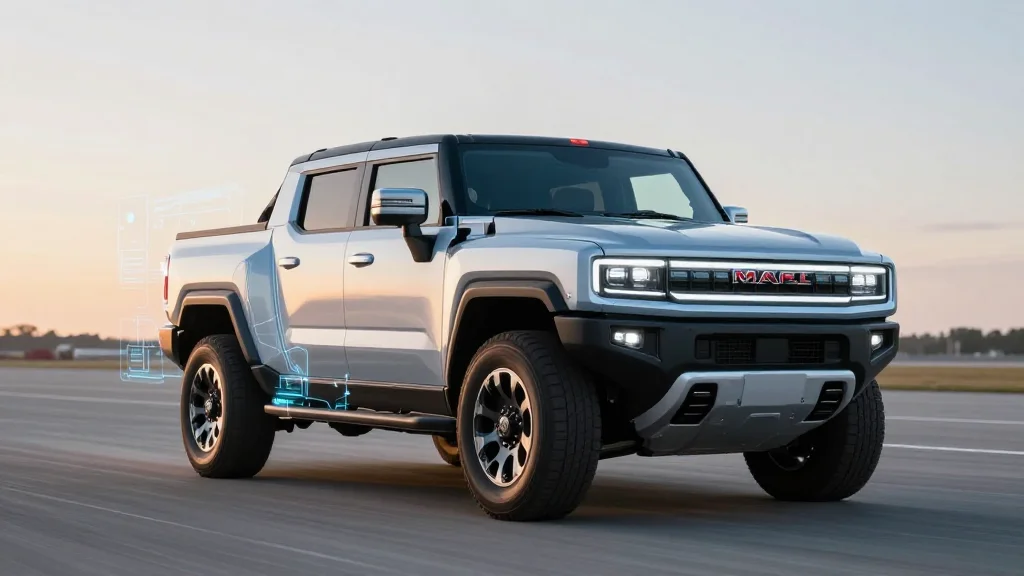
GM Claims 20‑Month Hummer EV Build to Reset EV Development Pace

Companies Mentioned
Why It Matters
Accelerating vehicle development cycles can dramatically lower the financial risk associated with EV rollouts, especially as market demand fluctuates and policy incentives shift. By proving that a high‑performance EV can be engineered in less than two years, GM signals that the hardware‑heavy automotive sector is finally catching up to the software industry's rapid iteration cadence. The shift also forces the entire supply chain to adapt. Parts suppliers, testing facilities, and even regulatory bodies will need to accommodate faster design loops and greater reliance on digital twins. If GM’s model proves scalable, it could set a new industry standard that reshapes capital allocation, competitive dynamics, and the speed at which new technologies—such as solid‑state batteries or advanced driver‑assist systems—reach consumers.
Key Takeaways
- •GM took 20 months to develop the GMC Hummer EV from concept to production, versus the typical 48‑72 months.
- •Chief product officer Sterling Anderson said the goal is to make two‑year development the norm.
- •Virtual integration engineering uses AI‑trained models and custom simulation tools to replace many physical prototypes.
- •Jason Fischer highlighted that virtual tests can now confirm physical properties in hours or days.
- •If successful, the faster cycle could cut capital spend and reshape the automotive supply chain.
Pulse Analysis
GM’s announcement is more than a brag‑sheet; it marks a strategic pivot toward a software‑first engineering culture. Historically, automakers have relied on costly, time‑intensive physical prototyping to validate everything from chassis stiffness to thermal management. By moving those validation steps into a high‑fidelity digital twin, GM is effectively turning the vehicle into a data‑rich product that can be iterated at a pace comparable to consumer electronics. This shift reduces the "design‑to‑production" lag that has historically penalized EV makers with high upfront tooling costs and long amortization periods.
However, the approach carries risks. Virtual models are only as good as the data and assumptions they embed. Any systematic error could propagate across multiple vehicle programs, leading to costly redesigns after physical tooling has begun. Moreover, regulators have been cautious about accepting purely digital safety validation, meaning GM will still need to allocate resources for physical crash testing and emissions certification. The company’s confidence hinges on its ability to demonstrate that virtual validation can meet—or exceed—regulatory standards without compromising safety.
If GM can consistently deliver new EVs in a two‑year window, the competitive landscape could shift dramatically. Smaller, tech‑savvy entrants that already operate on rapid software cycles may find themselves on equal footing with legacy OEMs, eroding the traditional advantage of scale. Conversely, manufacturers that fail to adopt comparable virtual engineering capabilities could see their development costs balloon, making them vulnerable to market downturns or policy changes. In the next 12‑18 months, the performance of GM’s upcoming electric Silverado and Cadillac Lyriq refreshes will serve as the litmus test for whether AI‑driven hardware development can become an industry norm.
GM claims 20‑Month Hummer EV Build to Reset EV Development Pace
Comments
Want to join the conversation?
Loading comments...