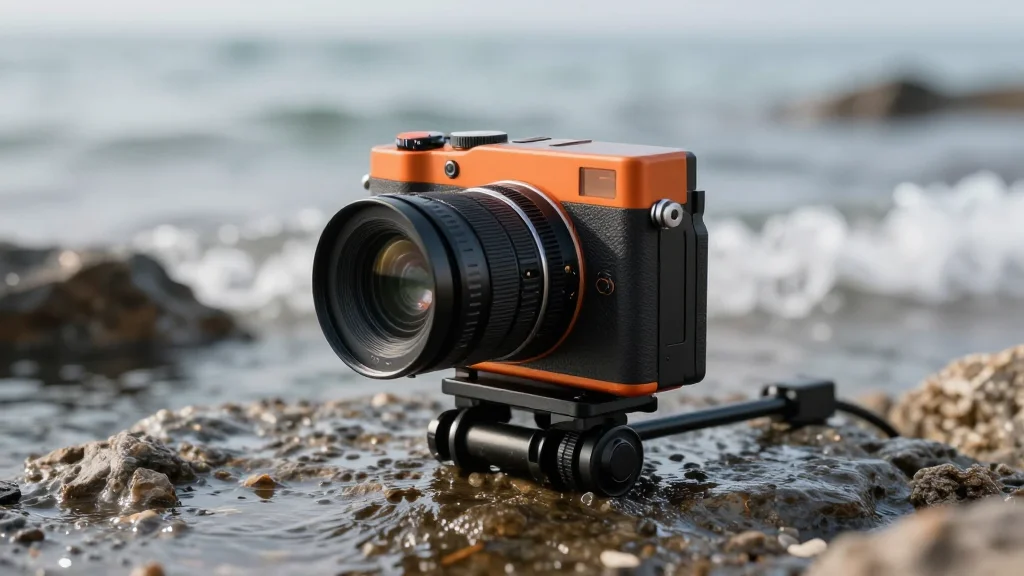
GoPro Unveils MISSION 1 Series Compact Cinema Cameras, Pre‑Orders Open

Companies Mentioned

GoPro
DJI
Why It Matters
The MISSION 1 Series marks GoPro’s most ambitious hardware expansion since the HERO line’s inception, signaling a strategic pivot toward professional‑grade video production. A 1‑inch sensor and 8K capture bring GoPro into direct competition with mirrorless manufacturers, potentially lowering the barrier for creators who need high‑resolution footage without the bulk of traditional cinema cameras. If the series delivers on its performance promises, it could accelerate the convergence of action‑camera durability with cinema‑camera image quality, reshaping equipment choices for documentary filmmakers, adventure journalists and independent producers. Beyond product specs, the launch underscores a broader industry trend: the demand for rugged, portable cameras that can operate in extreme environments—underwater, in high‑altitude, or on moving vehicles—while still meeting broadcast‑level standards. GoPro’s extensive accessory ecosystem, from waterproof housings to high‑capacity batteries, reinforces its commitment to this niche, and the pricing strategy makes the technology accessible to a wider creator base, potentially expanding the market for compact cinema tools.
Key Takeaways
- •GoPro opens pre‑orders for MISSION 1 Series; base model $599, PRO $699.99.
- •All models feature a new 50 MP 1‑inch sensor and GP3 processor for 8K video.
- •PRO variant records 8K60 and 4K240; base caps at 8K30 and 4K120.
- •Waterproof to 66 ft (20 m) out of the box; optional housing extends to 196 ft (60 m).
- •Launch targets creators seeking cinema‑grade quality in a compact, rugged form factor.
Pulse Analysis
GoPro’s MISSION 1 Series is a calculated gamble that could redefine its market position. Historically, GoPro’s strength lay in the action‑camera segment, where its HERO line dominated a niche that has been eroding due to smartphone camera improvements. By introducing a 1‑inch sensor—traditionally reserved for larger mirrorless bodies—GoPro is attempting to leapfrog the performance gap that has kept many pros tethered to more expensive systems. The GP3 processor’s claim of superior thermal management is crucial; compact cameras often throttle under sustained high‑resolution recording, and GoPro’s ability to maintain 8K60 without overheating will be a decisive factor for early adopters.
The pricing strategy is equally aggressive. At under $800 for a camera capable of 8K60, GoPro undercuts entry‑level mirrorless options from Sony, Canon and Fujifilm, which typically start above $1,200 for comparable sensor sizes. This could attract a new segment of creators—freelance videographers, travel journalists and extreme‑sport producers—who need cinema‑grade footage but cannot justify the cost or bulk of traditional gear. However, the success of the MISSION 1 will hinge on ecosystem maturity. GoPro’s accessory lineup, while extensive, must prove reliability in professional workflows, especially for battery life and mounting solutions that can handle the rigors of field production.
Competitors are not standing still. DJI’s Osmo Action 3 and Pocket 2 have already pushed the envelope on sensor size and video capabilities, and newer entrants like Insta360 are experimenting with modular designs that blur the line between action and cinema cameras. GoPro’s brand equity and existing user base give it a head start, but the company must deliver on the promised performance to avoid being dismissed as a gimmick. If the MISSION 1 Series lives up to its specifications, it could catalyze a shift toward more versatile, rugged cameras in the professional market, forcing traditional manufacturers to rethink the balance between durability and image quality.
In the short term, the pre‑order surge and early shipping dates will test market appetite. A strong launch could boost GoPro’s revenue diversification, reducing reliance on the HERO line’s seasonal sales cycles. Long‑term, the MISSION 1 could serve as a platform for future iterations—potentially integrating larger sensors, interchangeable lenses or even AI‑driven stabilization—positioning GoGo as a true hybrid between action and cinema cameras. The coming months will reveal whether GoPro’s bold step pays off or simply adds another niche product to an already crowded field.
GoPro Unveils MISSION 1 Series Compact Cinema Cameras, Pre‑Orders Open
Comments
Want to join the conversation?
Loading comments...