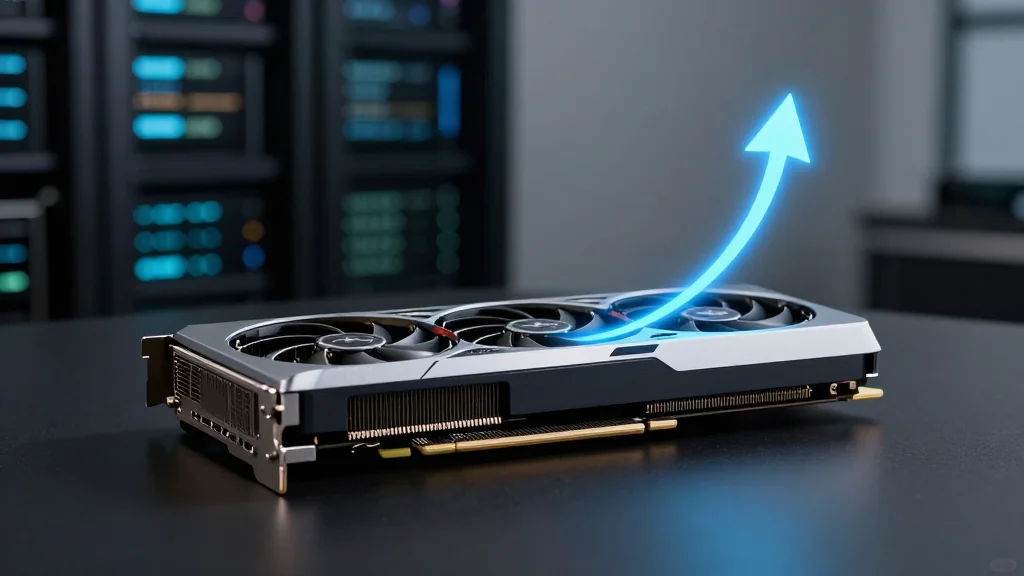
GPU Prices Are Surging—3 Ways to Play the AI Chip Shortage
Companies Mentioned
Why It Matters
Rising GPU prices translate into higher margins for hardware and service providers, reshaping capital allocation in the AI infrastructure market. The dynamics create distinct investment opportunities across the supply chain, from memory to cloud‑scale GPU rentals.
Key Takeaways
- •GPU rental prices up 40‑50% for H100, H200, Blackwell models.
- •Micron's HBM supply sold out through 2027, driving revenue growth.
- •AMD's MI450 chips attract Meta, OpenAI, Oracle for inference workloads.
- •CoreWeave leads GPUaaS market with 30+ data centers across US and EU.
- •Nebius backs $45 billion backlog despite $8 billion liabilities.
Pulse Analysis
The AI boom has turned GPUs into a scarce commodity, pushing rental rates to record highs. As models grow larger and training cycles lengthen, data‑center operators are forced to pay premium prices for NVIDIA’s H100 and the newer Blackwell series. This price pressure is not temporary; the core constraint is HBM memory, whose production ramp‑up won’t materialize until well into 2027. Consequently, the entire AI compute stack is experiencing a pricing power shift, benefitting firms that control supply.
Investors can capitalize on three distinct levers. Memory specialists like Micron are already sold out of HBM through 2027, positioning them for triple‑digit revenue growth and robust pricing leverage. Meanwhile, AMD is challenging NVIDIA’s dominance with its MI450 line, winning contracts from Meta, OpenAI and Oracle, and promising cost‑effective inference solutions. The most immediate upside lies with GPU‑as‑a‑Service providers—CoreWeave, Applied Digital, Nebius and IREN—who monetize the surge by renting out high‑end GPUs on dynamic contracts. Their capital‑intensive expansion is funded through debt and equity, but strong backlogs and long‑term contracts mitigate risk.
Looking ahead, the shortage underscores a strategic inflection point for the AI ecosystem. Companies that secure HBM supply or diversify away from NVIDIA’s CUDA stack will likely capture market share as hyperscalers seek alternatives. However, the capital demands of scaling GPU farms and the uncertainty around memory supply chain improvements add layers of risk. Stakeholders should monitor HBM production milestones, pricing trends, and the financial health of GPUaaS operators to gauge the durability of this boom.
GPU Prices Are Surging—3 Ways to Play the AI Chip Shortage
Comments
Want to join the conversation?
Loading comments...