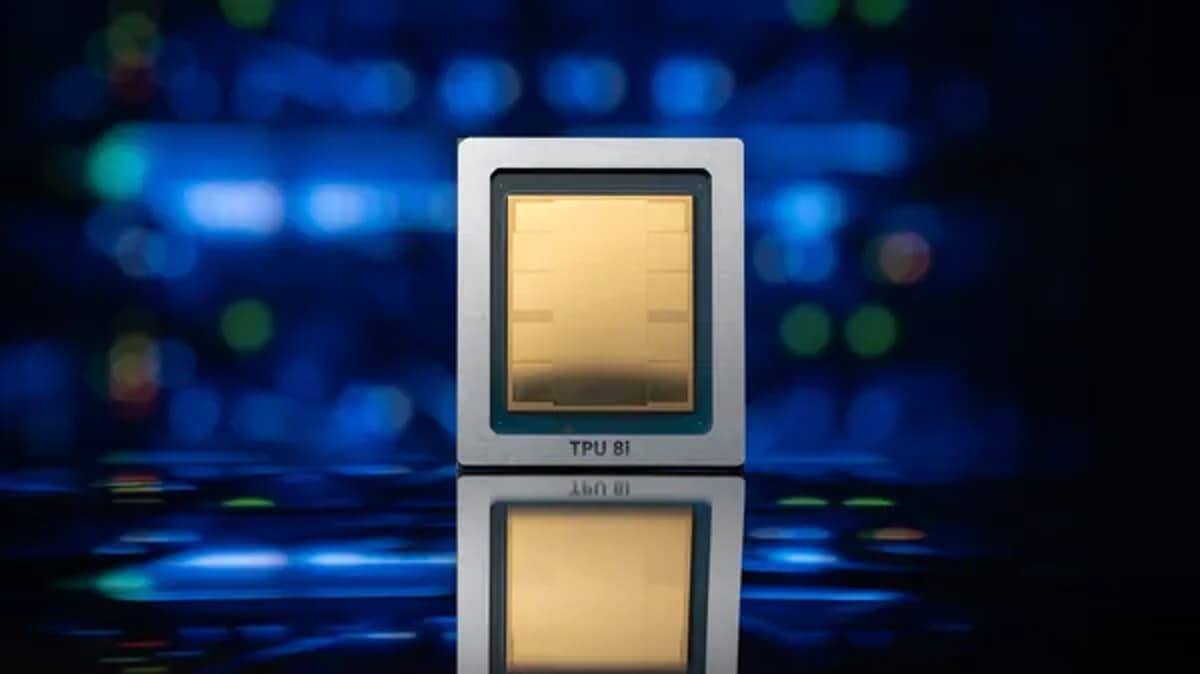
Here’s How Our TPUs Power Increasingly Demanding AI Workloads.
Companies Mentioned
Why It Matters
TPUs give Google Cloud a performance and cost advantage for AI services, attracting enterprises that need to run ever‑larger models at scale. This hardware edge reshapes the economics of cloud‑based AI deployment.
Key Takeaways
- •Google’s TPUs deliver 121 exaflops compute power.
- •New generation doubles bandwidth versus previous TPU versions.
- •TPUs are purpose-built for large‑scale AI model training.
- •Custom silicon reduces latency and cost for Google Cloud AI services.
- •Over a decade of in‑house TPU development fuels generative AI growth.
Pulse Analysis
Google’s Tensor Processing Units (TPUs) are a rare example of a tech giant building its own silicon to meet a specific workload. The first TPU rolled out in 2016, but the effort began more than ten years earlier when engineers set out to replace generic CPUs and GPUs with a processor that could execute matrix math at unprecedented speed. By integrating high‑density systolic arrays, on‑chip memory, and a streamlined software stack, Google created a platform that scales from edge devices to massive data‑center clusters, laying the groundwork for today’s AI boom.
The latest TPU generation, unveiled at Google Cloud Next, boasts 121 exaflops of mixed‑precision compute and roughly twice the interconnect bandwidth of its predecessor. This translates into faster training of transformer‑based models, lower latency for inference, and more efficient utilization of cloud resources. Compared with leading GPUs, TPUs deliver higher throughput per watt for the matrix‑heavy operations that dominate generative‑AI workloads. The architecture also supports sparse computation, enabling developers to prune models without sacrificing speed, a critical advantage as model sizes continue to swell.
From a business perspective, Google’s in‑house TPUs give its Cloud platform a competitive edge, attracting enterprises that need to run large language models or real‑time recommendation engines at scale. The performance gains reduce operational costs, allowing customers to train models faster and iterate more frequently. Moreover, Google’s open‑source TensorFlow and TPU‑specific libraries lower the barrier to entry for developers, fostering an ecosystem that can accelerate innovation across industries. As AI workloads become more demanding, the continued evolution of TPUs is likely to shape the economics of cloud AI services for years to come.
Here’s how our TPUs power increasingly demanding AI workloads.
Comments
Want to join the conversation?
Loading comments...