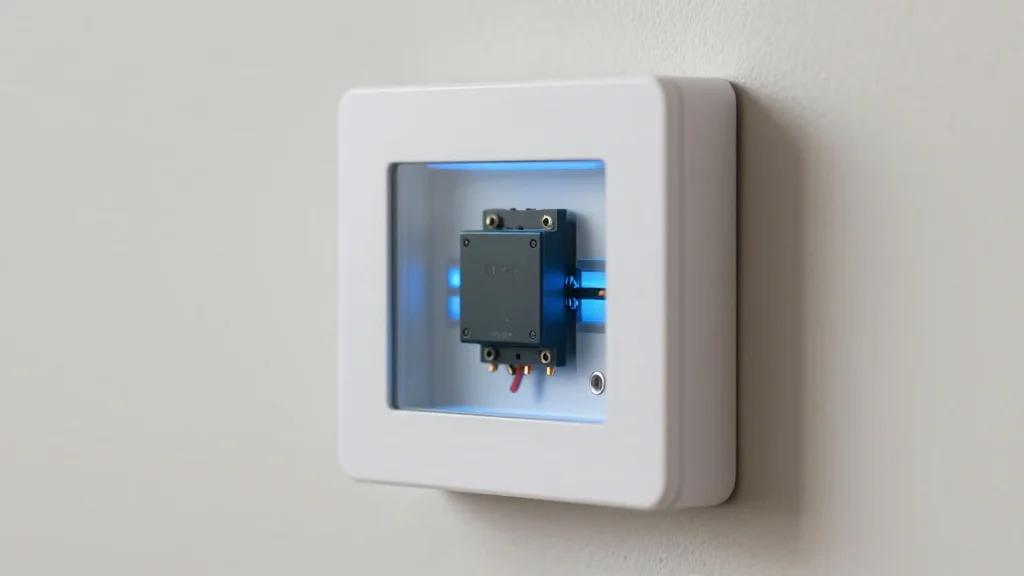
How to Design Ultra-Low-Power Smart Thermostats without a C-Wire
Why It Matters
Eliminating the C‑wire lowers installation costs and maintenance, accelerating adoption of smart thermostats in legacy homes and commercial buildings. The ultra‑low power architecture also opens new opportunities for IoT‑enabled control devices where wiring and battery constraints are critical.
Key Takeaways
- •Latching solid-state relays switch with a pulse, no hold current.
- •Load‑powered architecture harvests energy from HVAC line, removing C‑wire.
- •Standby current drops below 1 µA, enabling battery‑free thermostats.
- •Reduced component count and PCB size lower BOM and improve reliability.
- •Architecture applicable to fire alarms, security, and utility metering.
Pulse Analysis
Power delivery has become the bottleneck for next‑generation thermostats, not processing power or connectivity. Most residential and light‑commercial HVAC units still rely on a two‑wire configuration originally intended for simple mechanical switches, leaving no dedicated common (C) wire for continuous power. Installing a new C‑wire is expensive, disruptive, and often impractical in retrofit scenarios, limiting the rollout of advanced climate‑control features. By rethinking the energy source at the system level, engineers can sidestep this legacy constraint and unlock broader market penetration for smart climate solutions.
Latching solid‑state relays, such as Littelfuse’s CPC1601M, fundamentally change the power budget. A short control pulse toggles the relay, after which it latches without any hold current, reducing standby draw to under 1 µA. The relay’s load‑powered mode captures voltage from the HVAC transformer, stores it in a filter capacitor, and powers both the relay and the thermostat’s electronics. This energy‑harvesting loop eliminates the need for batteries or a C‑wire, cuts component count, shrinks PCB footprints, and improves reliability by removing mechanical wear and audible noise associated with traditional electromechanical relays.
The implications extend far beyond thermostats. Building‑automation devices—fire‑alarm panels, security controllers, and utility meters—face similar wiring and power challenges. Adopting ultra‑low‑power, load‑powered relay architectures can reduce installation complexity, extend battery life in backup systems, and enable truly autonomous IoT nodes. As the industry pushes toward deeper electrification and distributed intelligence, designs that minimize wiring dependencies while maintaining robust switching will become a cornerstone of cost‑effective, maintenance‑free smart‑building deployments.
How to design ultra-low-power smart thermostats without a C-wire
Comments
Want to join the conversation?
Loading comments...