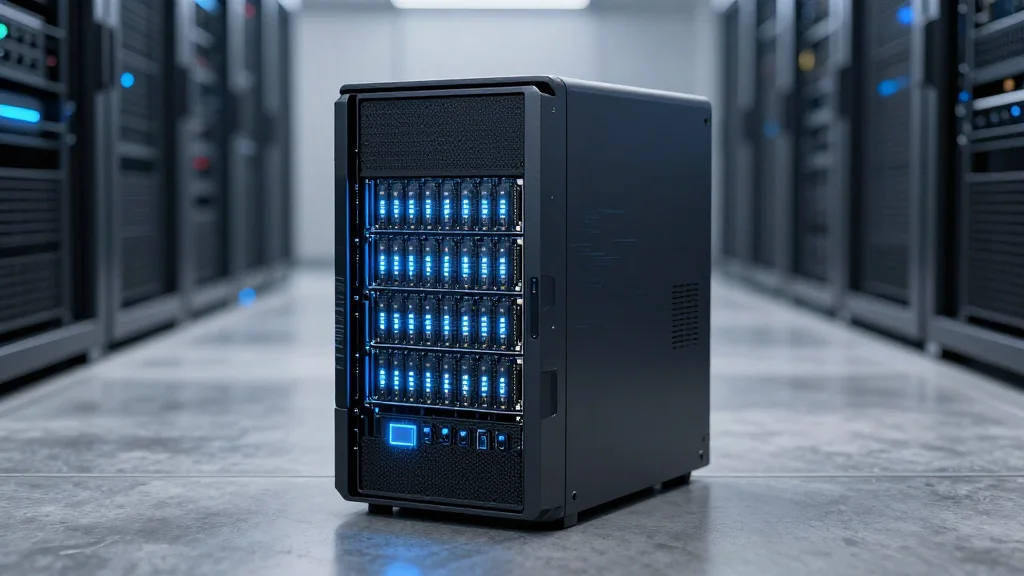
HPE Memory Server Targets Compute-Heavy and Agentic AI Workloads
Why It Matters
The 3250 gives enterprises a single, secure chassis for the most demanding analytics and AI workloads, cutting infrastructure complexity while boosting performance and resilience.
Key Takeaways
- •HPE 3250 supports up to 16 Xeon 6 sockets, 64 TB DDR5.
- •Designed for SAP HANA, Oracle, SQL Server, and agentic AI.
- •Consolidates workloads, cutting server sprawl and data reassembly overhead.
- •Includes iLO root‑of‑trust with post‑quantum cryptography protection.
- •Competes directly with IBM Power and high‑end Dell/Fujitsu servers.
Pulse Analysis
Enterprises are increasingly seeking platforms that can handle massive in‑memory datasets without the latency penalties of distributed clusters. Traditional two‑socket servers struggle to meet the memory bandwidth and capacity demands of modern SAP HANA, Oracle, and SQL Server deployments, let alone the next wave of agentic AI models that require terabytes of shared context. A unified memory server like HPE’s 3250 addresses this gap by offering a single system image that scales to 64 TB of DDR5, delivering consistent latency and simplifying application architecture.
The 3250’s foundation on HPE Superdome Flex introduces a high‑speed interconnect fabric that stitches together up to 16 Xeon 6 sockets into a coherent memory pool. This design reduces the need for complex data sharding and reassembly, while integrated iLO management provides a silicon‑root‑of‑trust and post‑quantum cryptography, positioning the server for long‑term security compliance. Advanced error detection, memory healing, and fault‑tolerant uptime further enhance availability for mission‑critical workloads, making the platform attractive for regulated industries and cloud‑native deployments.
In the broader market, HPE’s move challenges IBM Power’s dominance in high‑end compute and forces Dell, Fujitsu and other vendors to accelerate their own memory‑centric offerings. Organizations that adopt the 3250 can expect lower total cost of ownership through reduced hardware sprawl, streamlined management, and improved energy efficiency. As AI workloads evolve toward more autonomous, agentic models, the ability to provision vast shared memory will become a decisive factor in choosing infrastructure partners, giving HPE a strategic foothold in the emerging AI‑first data center landscape.
HPE memory server targets compute-heavy and agentic AI workloads
Comments
Want to join the conversation?
Loading comments...