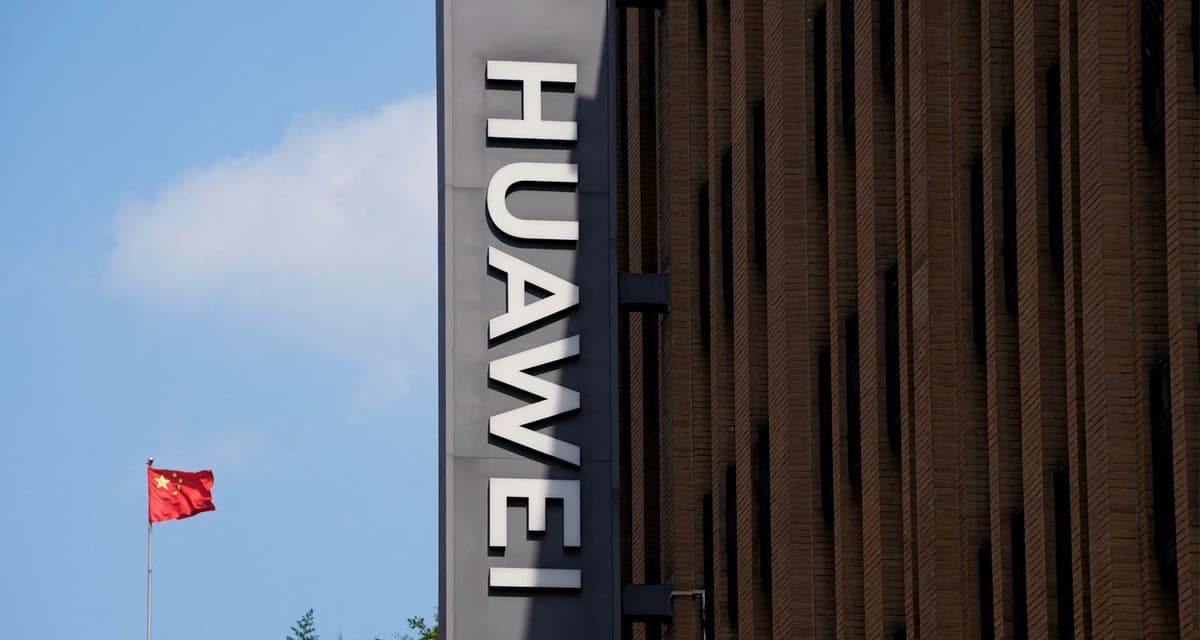
Huawei Claims Chip Design Breakthrough
Companies Mentioned
Taiwan Semiconductor Manufacturing Company
TSM

Semiconductor Manufacturing International Corp.
NVIDIA
NVDA
DeepSeek
Why It Matters
If Huawei’s system‑level efficiency approach succeeds, it could offset U.S. export restrictions and reshape the competitive landscape of high‑end AI and mobile chips. The move signals China’s determination to close the advanced‑node gap without relying on foreign lithography equipment.
Key Takeaways
- •Huawei targets 1.4 nm-equivalent density by 2029, matching future frontier
- •Introduces Tau Scaling Law to boost performance via reduced interconnect latency
- •LogicFolding architecture to debut in Kirin chips later this year
- •SMIC shares jumped 7.6% after Huawei’s architecture announcement
Pulse Analysis
Huawei’s latest claim marks a strategic pivot in China’s chip‑making ambitions. By projecting a 1.4 nm‑equivalent transistor density by 2029, the company aims to sit alongside industry leaders like TSMC, which plans a 1.4 nm process for 2028. The target is especially bold given the U.S. embargo that blocks Huawei from accessing cutting‑edge lithography tools, forcing the firm to explore alternative pathways to performance gains.
Central to this effort is the Tau Scaling Law, a design philosophy that prioritizes reducing signal latency and interconnect length over traditional node scaling. Coupled with the newly announced LogicFolding architecture, Huawei intends to shorten internal wiring, improve data movement, and deliver higher chip density without relying on smaller transistors. Analysts view this system‑level efficiency shift as a credible method to extract performance when advanced equipment is unavailable, potentially redefining how future chips are optimized.
The market response underscores the broader implications. SMIC’s shares rose 7.6% on the news, reflecting investor optimism that Huawei’s breakthroughs could revitalize China’s domestic semiconductor ecosystem. At the same time, rising demand for Ascend AI chips—driven by Chinese firms seeking alternatives to Nvidia’s restricted products—highlights a growing geopolitical tug‑of‑war over AI hardware. Should Huawei’s approach prove scalable, it may not only narrow the technology gap but also alter supply‑chain dynamics, giving China a stronger foothold in the global chip arena.
Huawei claims chip design breakthrough
Comments
Want to join the conversation?
Loading comments...