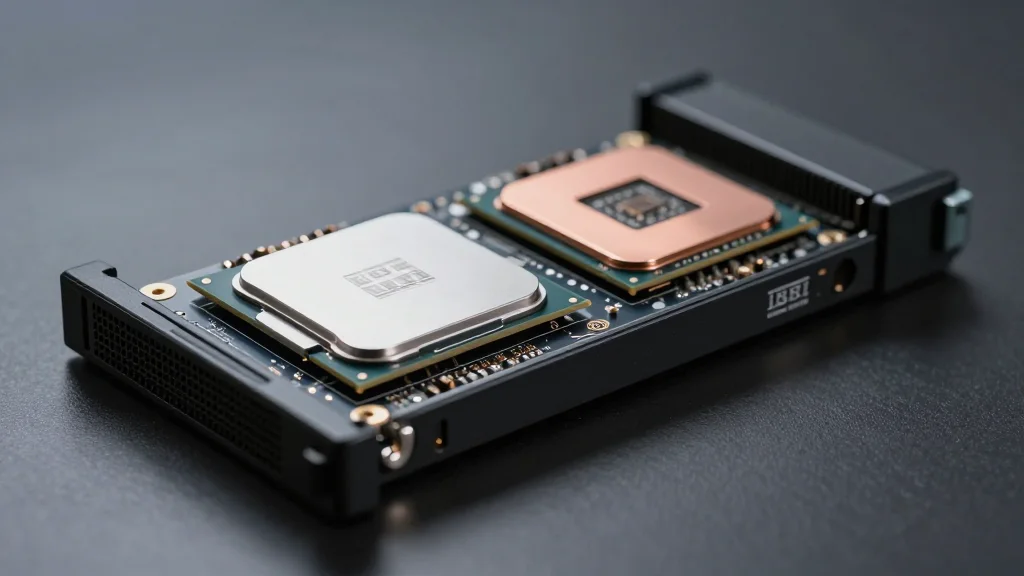
IBM and Arm Team Up to Build Dual‑Architecture Hardware for AI and Edge

Companies Mentioned
Why It Matters
The IBM‑Arm partnership could redefine how enterprises approach compute infrastructure by offering a single platform that delivers both high performance and low power consumption. This flexibility is crucial as AI workloads grow in complexity and edge deployments demand energy‑efficient solutions. By uniting IBM’s reputation for reliability and security with Arm’s pervasive ecosystem, the collaboration may accelerate the shift toward heterogeneous architectures, forcing rivals to rethink their product roadmaps. Moreover, the joint effort underscores a broader industry trend toward modular, software‑defined hardware that can adapt to diverse workloads without costly hardware refresh cycles. If successful, it could lower barriers for mid‑size firms to adopt AI at scale, democratizing access to advanced compute capabilities that have traditionally been the domain of hyperscalers.
Key Takeaways
- •IBM and Arm announced a strategic partnership to develop dual‑architecture hardware devices.
- •Collaboration focuses on virtualization, security, and reference silicon that combines x86 and Arm cores.
- •Tina Tarquinio (IBM) and Mohamed Awad (Arm) provided direct quotes on the partnership’s goals.
- •First reference design expected by end‑2027, with pilot programs in early 2028.
- •The alliance targets AI, data‑intensive, and edge workloads, challenging Intel, AMD and Nvidia.
Pulse Analysis
The IBM‑Arm alliance arrives at a moment when the industry is grappling with the limits of homogeneous x86 servers. While Intel and AMD have introduced hybrid cores, they still rely on a single instruction set, which can constrain power efficiency at the edge. Arm’s dominance in low‑power designs, combined with IBM’s deep experience in enterprise‑grade silicon and security, creates a compelling value proposition for customers seeking to run AI inference close to data sources while retaining the robustness of traditional data‑center workloads.
Historically, IBM has struggled to regain market share in the server space after the mainframe era, pivoting toward hybrid cloud and AI services. Partnering with Arm may revitalize its hardware narrative, giving it a differentiated offering that can compete on both performance and energy metrics. For Arm, the deal provides a foothold in the high‑end enterprise market, an area where its partners have traditionally been limited to mobile and IoT. The collaboration could also stimulate a wave of software innovation, as developers will need tools to abstract away the underlying architecture differences, potentially spurring new standards for heterogeneous programming.
Looking forward, the success of this partnership will depend on ecosystem adoption. If major cloud providers and ISVs certify their stacks for the dual‑architecture platform, the model could become a new baseline for future server designs. Conversely, if integration challenges prove too costly, the industry may see a slower, more incremental shift toward heterogeneity. Either way, the IBM‑Arm collaboration marks a decisive step toward a more flexible, power‑aware compute future.
IBM and Arm Team Up to Build Dual‑Architecture Hardware for AI and Edge
Comments
Want to join the conversation?
Loading comments...