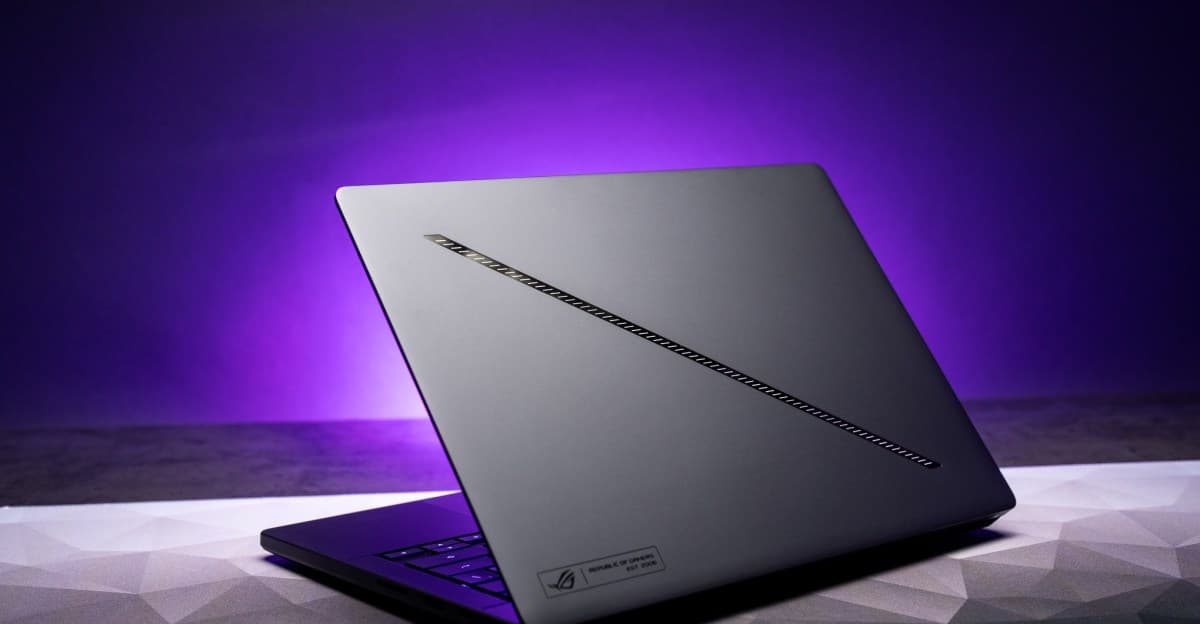
If I Could only Have One Laptop for Work and Gaming, I’d Get This One
Why It Matters
The G14’s shift to Intel and its steep price illustrate the tightening margin between premium Windows laptops and competing MacBook or larger gaming rigs, forcing buyers to weigh portability against cost. It signals how component shortages and power‑efficiency gains are reshaping the high‑end laptop market.
Key Takeaways
- •Intel Core Ultra 9 386H powers 16‑core G14, boosting performance.
- •OLED 2880×1800 120 Hz screen offers 1,100 nits HDR brightness.
- •Battery life reaches 17 hours mixed use, far above AMD predecessor.
- •Starting price $3,450, $1,000 more than last‑gen AMD model.
- •Full‑size SD card slot and Thunderbolt 4 added to compact chassis.
Pulse Analysis
The 2026 Zephyrus G14 marks Asus’s bold pivot from AMD to Intel’s Panther Lake architecture, a move driven by the latter’s power‑efficiency improvements and integrated Thunderbolt 4 support. While the 16‑core Core Ultra 9 386H delivers higher multi‑core scores and sustains GPU performance longer on battery, the real differentiator is the 73 Wh cell that pushes mixed‑use endurance past 17 hours—far exceeding the 8.5‑hour runtime of the previous AMD version. This efficiency gain narrows the traditional gap between gaming laptops and ultrabooks, making the G14 a viable single‑device solution for creators who need both raw GPU horsepower for Lightroom or Premiere and the portability to work on the go.
Despite the technical upgrades, the price jump to $3,450‑$3,600 places the G14 in direct competition with premium alternatives such as Apple’s 14‑inch MacBook Pro (starting around $1,950) and larger Windows gaming rigs like the ROG Strix Scar 16. Buyers must now justify the $1,000 premium for features like a brighter OLED panel, full‑size SD slot, and longer battery life, especially as the market grapples with ongoing RAM and SSD cost inflation fueled by AI workloads. The G14’s performance in titles like Battlefield 6 and Helldivers 2 remains solid, but it no longer offers the price‑to‑performance edge that defined earlier generations.
The broader implication for the laptop ecosystem is a growing stratification: high‑end Windows machines are becoming luxury items, while mid‑tier devices struggle to keep pace with component pricing. Asus’s decision to retain the previous‑gen AMD models suggests a hedging strategy against price volatility, yet the long‑term viability of such dual‑track lineups remains uncertain. Professionals and gamers alike will need to assess whether the G14’s blend of portability, battery endurance, and premium build justifies its cost or whether a two‑device approach—pairing a more affordable Windows laptop with a dedicated gaming console or a lower‑priced MacBook—offers better value.
If I could only have one laptop for work and gaming, I’d get this one
Comments
Want to join the conversation?
Loading comments...