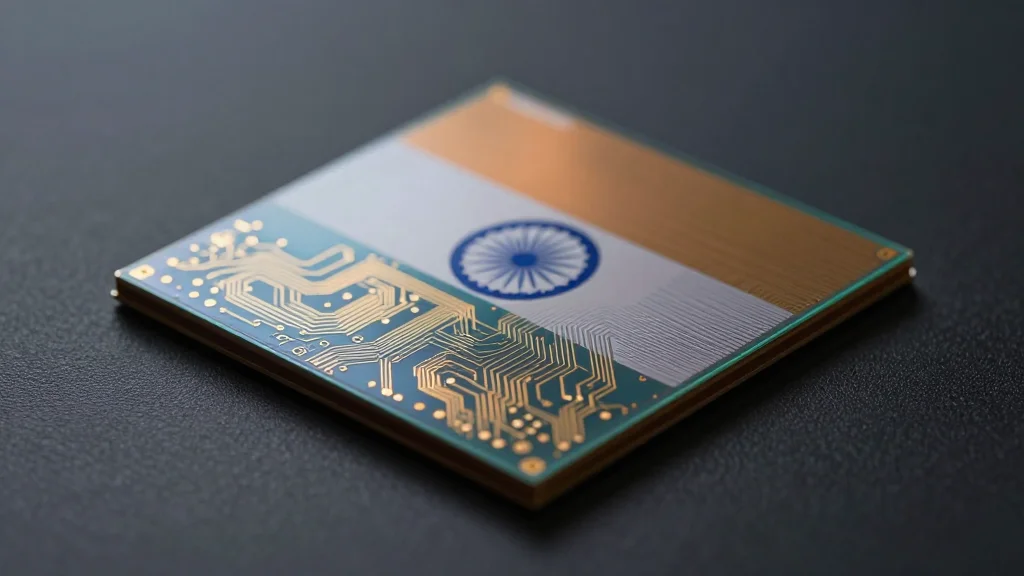
India’s Electronics Push Shifts to Design, but Ownership Gap Remains
Companies Mentioned

Why It Matters
Design ownership unlocks higher‑value IP and revenue streams, turning India from a manufacturing base into a product‑creation nation and strengthening its global tech competitiveness.
Key Takeaways
- •ECMS fourth tranche approved, ₹7,104 crore (~$765 M) funding.
- •India lacks design ownership despite large manufacturing scale.
- •Independent design houses (IDHs) proposed to license IP and capture value.
- •Talent, funding, and assured demand remain critical gaps for IDHs.
- •Government procurement reforms could unlock $45 B market for local designs.
Pulse Analysis
India’s electronics agenda has long been dominated by scale‑driven assembly, but the latest ECMS funding round signals a strategic inflection point. By earmarking roughly $765 million for component manufacturing, the government is acknowledging that raw capacity alone cannot sustain growth. The real differentiator now is design capability—creating proprietary architectures, firmware and system‑level integration that generate durable intellectual property. This transition mirrors the evolution of other tech hubs where design firms, not just factories, dictate value capture and market influence.
The emerging ecosystem of independent design houses illustrates both promise and friction. Firms like Mirafra have moved beyond service contracts to develop in‑house system‑on‑chips, while Tescom and Brandworks blend ODM and IDH models to retain IP on products ranging from EV charging stations to surveillance hardware. Yet, scaling such models is hampered by a shortage of deep‑tech talent, limited risk capital, and uncertain order books. Without predictable demand—especially from the public sector—design houses struggle to justify the upfront R&D outlay. The industry therefore looks to government procurement reforms that could mandate a 70% local value‑add threshold, unlocking a $45 billion market and providing the revenue runway needed for sustained innovation.
Policy levers and ecosystem builders are crucial to bridge the design gap. Initiatives like the Atal Innovation Mission, ACCS Design Contest and regional incubators such as Maker Village are seeding talent pipelines and offering prototyping resources. Simultaneously, adjusting duty structures and improving PCB quality can reduce import reliance, further localizing the value chain. If India can align design ownership, manufacturing scale, and assured market access, it stands to transition from a low‑margin assembly hub to a globally competitive product nation, capturing higher margins and strategic tech sovereignty.
India’s Electronics Push Shifts to Design, but Ownership Gap Remains
Comments
Want to join the conversation?
Loading comments...