Indoor Positioning Moving Toward Layered, Multi-Radio Architectures
Companies Mentioned
Why It Matters
Enterprises can achieve centimeter‑level accuracy without proliferating dedicated anchors, lowering deployment cost and complexity while unlocking new location‑based services. Successful integration of multiple radios will become the key competitive differentiator in the indoor‑RTLS market.
Key Takeaways
- •802.11az adds time‑of‑flight ranging to Wi‑Fi APs.
- •UWB delivers 10‑30 cm accuracy for critical asset tracking.
- •BLE channel sounding enables sub‑meter proximity with low power.
- •Multi‑radio APs combine GNSS, UWB, Wi‑Fi to cut anchor costs.
- •Integration, not radio choice, is the primary market bottleneck.
Pulse Analysis
The indoor‑positioning landscape is coalescing around a three‑tier model. At the base, ubiquitous Wi‑Fi networks, now enhanced by IEEE 802.11az, provide meter‑to‑sub‑meter ranging using fine‑time measurements rather than simple RSSI. The middle tier leverages ultra‑wideband, whose 10‑30 cm precision under IEEE 802.15.4z makes it ideal for high‑value asset tracking and safety‑critical zones. The top tier relies on Bluetooth channel sounding, delivering low‑power, sub‑meter proximity for wearables and consumer devices. Together these radios let operators balance coverage, accuracy and power consumption.
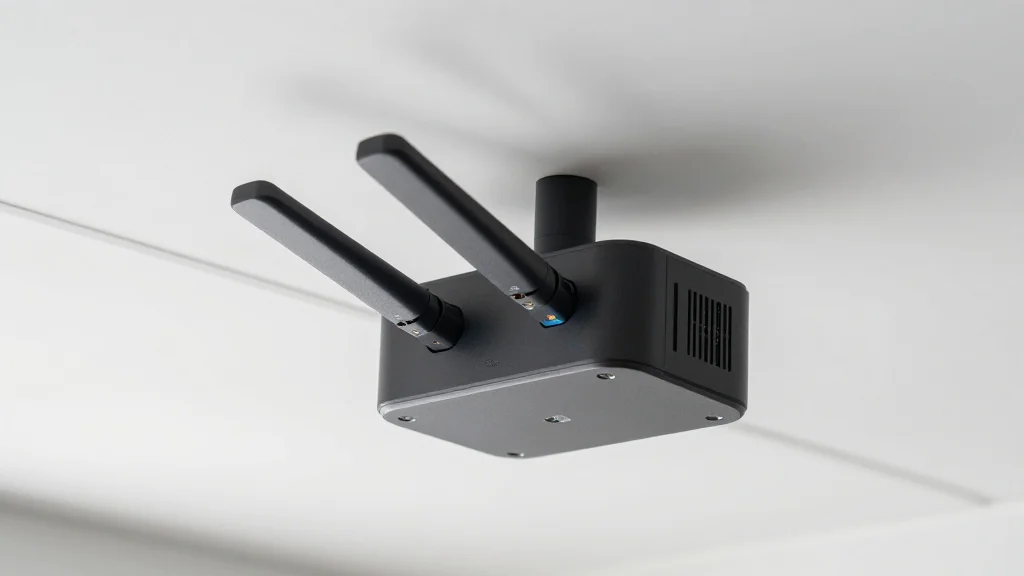
Hardware manufacturers are collapsing this stack into a single access point. Cisco’s 9176 series and Aruba’s AP‑755 embed GNSS, UWB and 802.11az radios, turning a traditional data hub into a self‑locating anchor. This reduces the need for separate RTLS nodes, cuts cabling and site‑survey costs, and simplifies the anchor‑to‑tag topology. On the tag side, designers favor UWB‑BLE hybrids or pure UWB solutions because Wi‑Fi ranging still demands higher power and more complex RF front‑ends, making it less suitable for battery‑operated assets.
Despite mature standards and improving chipsets, the market’s limiting factor is integration. Firmware calibration, cross‑technology interoperability and a unified data model are required for seamless operation. Initiatives like Omlox provide a middleware layer that normalizes UWB core positioning while exposing APIs for Wi‑Fi and BLE data, easing deployment in factories and warehouses. As enterprises adopt this layered approach, the ability to orchestrate multiple radios will dictate cost efficiency, scalability and the speed at which new location‑based services reach the market.
Indoor Positioning Moving Toward Layered, Multi-Radio Architectures
Comments
Want to join the conversation?
Loading comments...