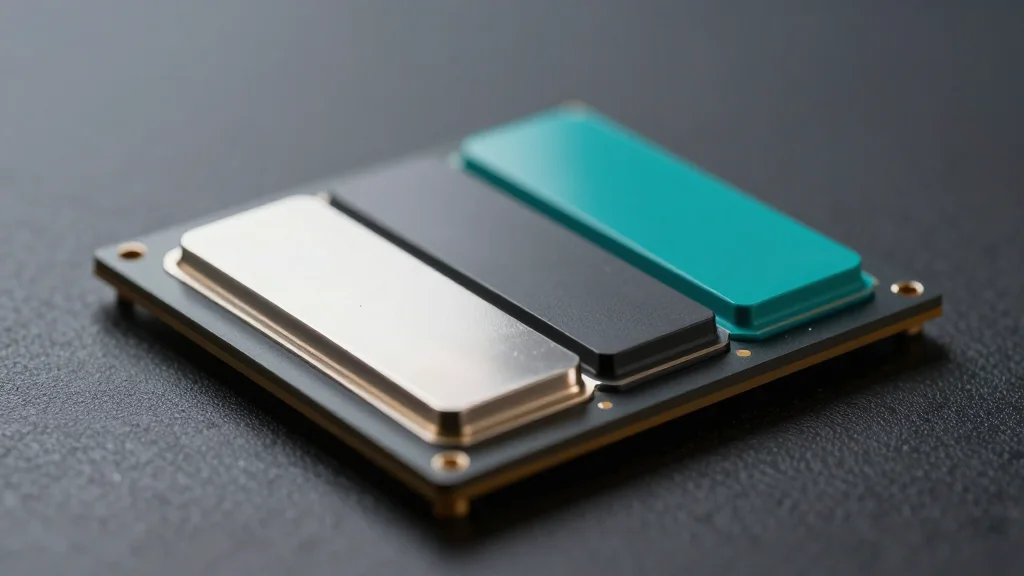
Infineon-Led European Project Moore4Power Launches
Why It Matters
Moore4Power accelerates Europe’s power‑electronics roadmap, strengthening technological sovereignty and supporting the EU’s Clean Industrial Deal. Faster, more efficient converters will cut emissions across energy, transport and manufacturing sectors.
Key Takeaways
- •€91 m (~$99 m) funded by EU Horizon Europe and national grants.
- •62 partners across 15 countries collaborate on heterogeneous power‑chiplet integration.
- •AI‑driven digital twins aim to cut prototype‑to‑datasheet time to one week.
- •Targets 30% rail propulsion loss cut and 99% e‑mobility efficiency.
- •Digital Product Passport embeds lifecycle data, enabling longer life and material savings.
Pulse Analysis
Europe’s power‑electronics sector faces a crossroads as traditional Moore’s‑Law scaling reaches physical limits. To keep pace, the EU has turned to a "More‑than‑Moore" strategy, channeling €91 million (about $99 million) through the Horizon Europe – Chips Joint Undertaking into the Moore4Power consortium. By uniting 62 partners from 15 countries, the project pools expertise across silicon, silicon‑carbide and gallium‑nitride platforms, aiming to create modular chiplet architectures that can be mixed and matched for optimal performance. This collaborative model mirrors successful semiconductor ecosystems in Asia and the United States, positioning Europe to reclaim a leading role in high‑efficiency power conversion.
At the technical core, Moore4Power emphasizes heterogeneous integration and AI‑driven design workflows. Digital twins and automated simulation pipelines promise to compress the time from first silicon samples to a validated datasheet from weeks to just one week, dramatically lowering development costs. The resulting power modules target up to 99% efficiency for bidirectional e‑mobility charging and a 30% reduction in propulsion losses for rail applications, delivering tangible CO₂ savings across high‑impact sectors such as wind energy, electric transport and heavy industry. These performance gains are underpinned by a modular chiplet approach that leverages the best material for each function, enhancing reliability while maintaining competitive pricing.
Beyond performance, the initiative embeds sustainability through a Digital Product Passport (DPP). By wirelessly broadcasting real‑time health metrics, operating conditions and remaining lifespan, the DPP enables predictive maintenance, extended service life and easier component reuse, aligning with the EU’s circular‑economy objectives. For manufacturers, this transparency translates into lower material consumption and reduced waste, while regulators gain granular data to verify compliance with climate targets. As the first demonstrators enter real‑world testing, Moore4Power could set a new benchmark for fast, eco‑friendly power‑electronics development, strengthening Europe’s industrial competitiveness on the global stage.
Infineon-led European project Moore4Power launches
Comments
Want to join the conversation?
Loading comments...