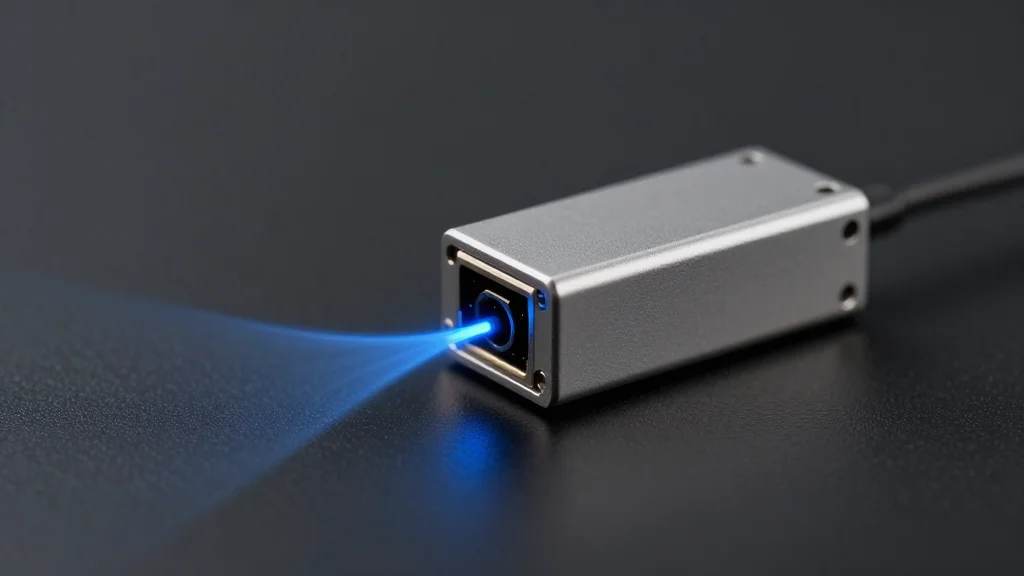
InPHRED Expands Into Data-Center Optical Interconnect Market with InP VCSEL and Micro-RC-LED Solutions
Why It Matters
The solutions promise data‑center operators dramatically lower power consumption while scaling bandwidth for AI workloads, giving InPHRED a foothold in a market poised for multi‑billion‑dollar growth.
Key Takeaways
- •μRC‑LED demo: 200‑lane array, <3 dB loss, 4 pJ/bit.
- •InP VCSEL demo: 32‑channel, 50 Gbps/lane, up to 100 °C.
- •Targets ultra‑short‑reach and rack‑scale optical links.
- •Nanoporous platform enables dense, low‑power photonics.
- •AI data‑center demand accelerates shift from copper to optics.
Pulse Analysis
The data‑center ecosystem is undergoing a rapid transition as AI models demand ever‑higher bandwidth and lower latency. Traditional copper interconnects are hitting physical limits in power dissipation and signal integrity, prompting hyperscalers to adopt optical I/O for both short‑reach and rack‑scale connections. This shift is fueling a multi‑billion‑dollar market for silicon‑photonic components that can deliver dense, energy‑efficient links while fitting within increasingly compact server architectures.
InPHRED’s approach leverages its proprietary nanoporous semiconductor platform to produce two complementary photonic devices. The micro‑resonant cavity LED (μRC‑LED) targets ultra‑short‑reach chip‑to‑chip links, offering a 200‑lane array with sub‑3 dB coupling loss and an impressive 4 pJ/bit energy metric. Meanwhile, its 1310 nm InP VCSEL roadmap delivers a 32‑channel, 50 Gbps‑per‑lane engine capable of operating at temperatures up to 100 °C, with fiber‑coupling loss below 2 dB. These specifications address the dual challenges of minimizing electrical distance to ASICs and extending optical reach across rack boundaries, positioning InPHRED to meet the bandwidth‑density and thermal constraints of next‑generation AI infrastructure.
If InPHRED meets its 2027 demonstration milestones, it could reshape optical interconnect design by enabling higher channel counts without complex microlens arrays and simplifying system integration through direct‑drive VCSELs. Competitors such as Intel, Broadcom, and Lumentum are also racing to capture market share, but InPHRED’s nanoporous technology may offer a cost‑effective path to scalability. Data‑center operators seeking to reduce power budgets while scaling AI workloads will likely evaluate these solutions, potentially accelerating adoption of hybrid optical architectures that blend ultra‑short‑reach and rack‑scale links. The company’s progress will be a key indicator of how quickly the industry can transition away from copper toward fully optical data‑center fabrics.
InPHRED expands into data-center optical interconnect market with InP VCSEL and micro-RC-LED solutions
Comments
Want to join the conversation?
Loading comments...