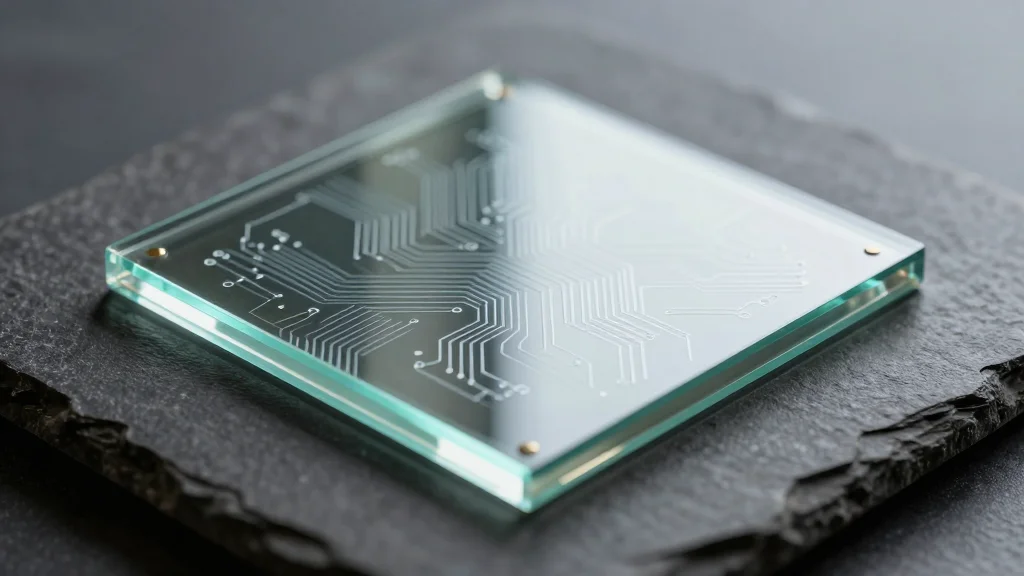
Intel and 3DGS Back a $3.3bn Glass-Substrate Plant in India’s Odisha
Companies Mentioned
Why It Matters
The investment deepens India’s semiconductor supply chain and gives Intel a foothold in advanced packaging, a critical performance driver as transistor scaling slows. It also mirrors global efforts to localise chip production amid geopolitical tensions.
Key Takeaways
- •Intel and 3DGS to invest $3.3bn in Odisha substrate plant
- •Plant aims to produce 70,000 glass substrates and 50M assembled units annually
- •Project will create over 1,800 direct high‑skilled jobs in India
- •India provides about $330m in subsidies for the substrate facility
- •Focus on advanced packaging aligns with global chips‑localisation strategies
Pulse Analysis
The substrate market has quietly become the new frontier of semiconductor innovation. As transistor dimensions near physical limits, performance gains now hinge on how chips are packaged and interconnected. Glass‑core substrates, with tighter signal paths and superior thermal characteristics, enable denser 3D stacking and faster data transfer, making them essential for high‑performance computing, AI accelerators and 5G infrastructure. India’s decision to host a dedicated glass‑core facility signals a strategic shift from being a pure consumer of chips to a producer of critical packaging components.
Intel’s partnership with 3D Glass Solutions reflects a calibrated entry into India’s burgeoning chip ecosystem. Rather than committing billions to a leading‑edge fab, the company is targeting a $3.3 billion advanced‑packaging plant that can be operational within six years. The projected output—70,000 glass substrates, 50 million assembled units and 13,000 heterogeneous‑integration modules—will feed both domestic manufacturers and export markets, while the creation of over 1,800 skilled jobs bolsters the local talent pool. Government subsidies of roughly $330 million, part of the broader India Semiconductor Mission, lower the financial barrier and underscore policy support for supply‑chain diversification.
Globally, the initiative dovetails with the EU’s Chips Act and the U.S. CHIPS Act, both of which aim to reduce reliance on a concentrated supply chain exposed by the pandemic and geopolitical frictions. By adding advanced packaging to its portfolio, India not only accelerates its semiconductor roadmap but also offers chipmakers a new geographic node for high‑value manufacturing. The success of the Odisha plant could catalyze further investments in related technologies, positioning the country as a pivotal player in the next wave of chip design and integration.
Intel and 3DGS back a $3.3bn glass-substrate plant in India’s Odisha
Comments
Want to join the conversation?
Loading comments...