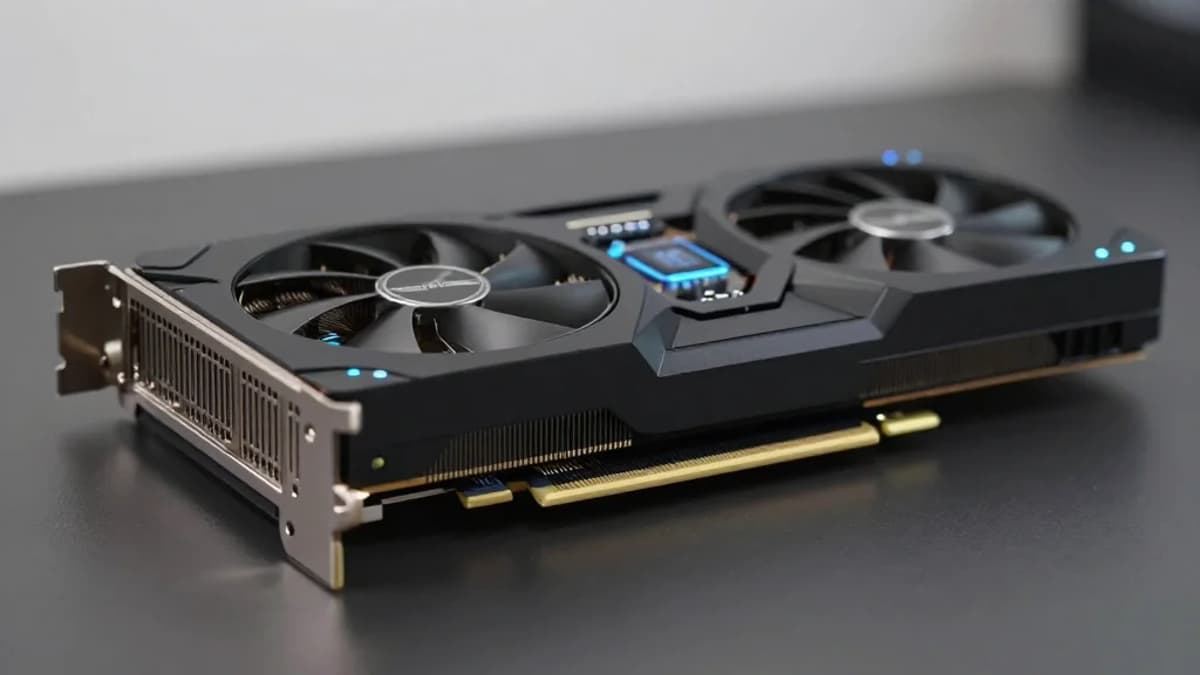
Intel Arc Pro B70 Pro-Viz GPU Tested with BMG-G31 Die
•March 2, 2026
0
Key Takeaways
- •B70 uses 32 Xe² cores, 32 GB GDDR6
- •B70 offers ~1.5× performance over B60
- •B65 retains 20 Xe² cores, adds 32 GB memory
- •Dual‑GPU B70 possible via partner designs
- •Release expected within next month, Q2 2026
Summary
Intel confirmed its upcoming Arc Pro B70 “Battlemage” GPU, built on the long‑rumored BMG‑G31 die, featuring 32 Xe² cores, 32 GB of GDDR6 memory on a 256‑bit bus, and roughly 4,096 FP32 cores—double the B60’s capacity. A smaller Arc Pro B65 will use the same die with 20 Xe² cores and 32 GB memory. Early LLM Scaler tests show the B70 delivering about 1.49× geometric‑mean performance and 1.13× fixed‑batch gains versus the B60, with potential near‑doubling under optimal conditions. Intel aims to ship the cards within the current quarter, roughly a month away.
Pulse Analysis
Intel’s Arc Pro lineup is entering a pivotal phase as the company unveils the B70 “Battlemage” GPU, a single‑board solution aimed squarely at professional visualization, rendering, and AI inference workloads. By leveraging the BMG‑G31 die, Intel can pack 32 Xe² compute clusters and a 256‑bit memory interface, delivering 32 GB of GDDR6 and an estimated 4,096 FP32 execution units. This architecture marks a clear departure from the dual‑GPU configurations that defined the earlier B60 series, signaling Intel’s confidence in a monolithic design that can meet demanding enterprise pipelines without the complexity of multi‑card setups.
The technical specifications of the B70 and its sibling, the B65, illustrate Intel’s tiered strategy. While the B70 maximizes the die with 32 Xe² cores, the B65 scales the same silicon down to 20 Xe² cores, preserving the 32 GB memory pool to address memory‑bound workloads. Early benchmarks from Intel’s LLM Scaler tool report a 1.49× improvement in geometric‑mean performance and a 1.13× gain at fixed batch sizes compared with the B60’s BMG‑G21 die. Analysts expect these figures to improve further in optimized environments, potentially approaching a two‑fold performance increase, which could make the Arc Pro series a viable alternative for studios and data‑center teams traditionally locked into Nvidia’s RTX ecosystem.
From a market perspective, the announced Q2 2026 release window places Intel in direct competition with Nvidia’s upcoming RTX 5000‑series and AMD’s Radeon Pro 7000 line. If partners such as Maxsun roll out dual‑GPU variants of the B70, Intel could capture a segment of users seeking high‑throughput, low‑latency solutions for AI‑driven rendering and scientific simulation. The combination of higher core counts, expanded memory, and demonstrated performance gains may accelerate the adoption curve for Intel’s professional GPUs, reinforcing the company’s broader ambition to diversify beyond CPUs and establish a foothold in the lucrative enterprise graphics arena.
Comments
Want to join the conversation?