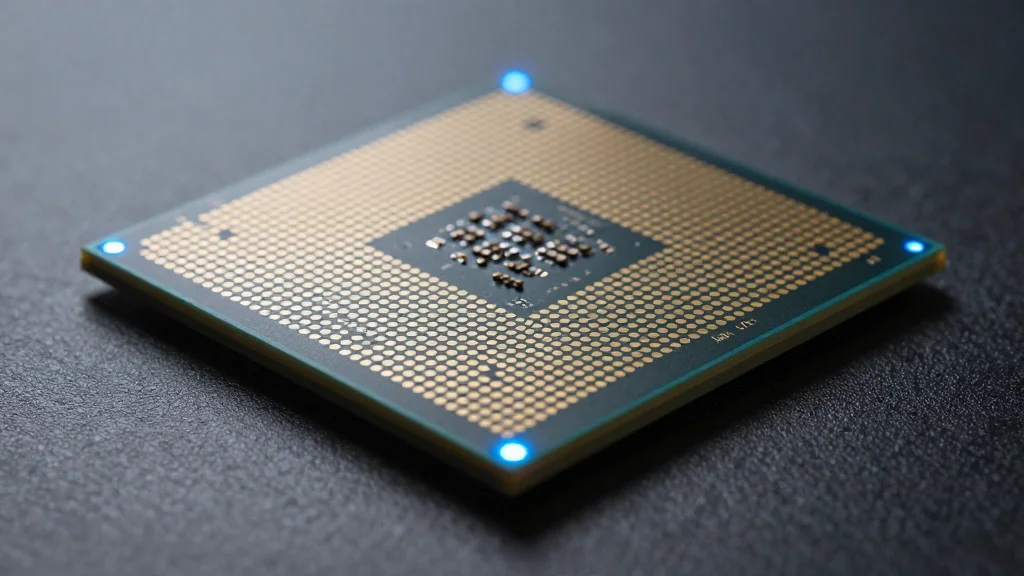
Intel Begins Mass Production of 288‑Core Xeon 6+ “Clearwater Forest” CPUs on 18A Process

Companies Mentioned
Why It Matters
The Clearwater Forest launch marks Intel’s most ambitious attempt yet to reclaim leadership in the high‑performance server market. By delivering unprecedented core counts and cache sizes on a single die, Intel is addressing the twin pressures of AI workload scaling and data‑center energy efficiency. If the claimed 60%+ performance‑per‑watt advantage materializes, operators could achieve significant OPEX savings, accelerating the adoption of AI services across cloud, enterprise and edge environments. Beyond cost, the integration of extensive PCIe Gen5 and CXL 2.0 lanes positions the platform as a hub for heterogeneous compute, enabling tighter coupling of CPUs with accelerators, storage and networking fabrics. This could reshape system architectures, reducing the need for separate AI‑specific servers and simplifying procurement for large‑scale operators. The success of Clearwater Forest will also influence Intel’s roadmap for subsequent generations, potentially dictating the pace of its 18A node ramp and the viability of its Foveros‑based 3D stacking strategy.
Key Takeaways
- •Intel begins mass production of Clearwater Forest Xeon 6+ CPUs on 18A process
- •Chips feature up to 288 Darkmont E‑cores, 576 MB L3 cache and 450 W TDP
- •Testing shows 38% rack‑power reduction and >60% performance‑per‑watt gain vs Sierra Forest
- •OneAPI 2026.0 toolkit adds full support for Clearwater Forest, Diamond Rapids, Nova Lake and others
- •Dell PowerEdge R9810/R9820 servers will debut with up to 12,800 MT/s memory bandwidth
Pulse Analysis
Intel’s Clearwater Forest line is a strategic gamble that hinges on three pillars: manufacturing yield, ecosystem readiness, and market pricing. The 18A node, built on RibbonFET and EMIB 2.5D interconnects, promises higher transistor density but has historically suffered from yield challenges that delayed earlier roadmaps. By committing to full‑scale production now, Intel signals confidence in its fab output, yet any hiccup could delay shipments and cede ground to AMD, which already ships 96‑core EPYC 9004 parts at competitive margins.
The broader software stack is equally critical. Intel’s oneAPI initiative aims to abstract hardware differences, but adoption remains fragmented. If developers can leverage the massive on‑package cache and extensive CXL lanes without extensive code rewrites, the Clearwater Forest could become the de‑facto platform for AI inference at the edge. Conversely, a lack of compelling developer tools could force customers to stick with more familiar AMD or Arm ecosystems, diluting Intel’s market impact.
Finally, pricing will dictate the competitive narrative. While Intel has not disclosed MSRP, the high TDP and advanced packaging suggest a premium product. Cloud providers will weigh the performance‑per‑watt claims against capital expenditure; a modest price premium could be justified if the power savings translate into lower total cost of ownership. In the coming months, benchmark releases and early‑access deployments will reveal whether Intel’s high‑core‑count vision can translate into a sustainable market advantage or remains a niche offering for the most demanding AI workloads.
Intel Begins Mass Production of 288‑Core Xeon 6+ “Clearwater Forest” CPUs on 18A Process
Comments
Want to join the conversation?
Loading comments...