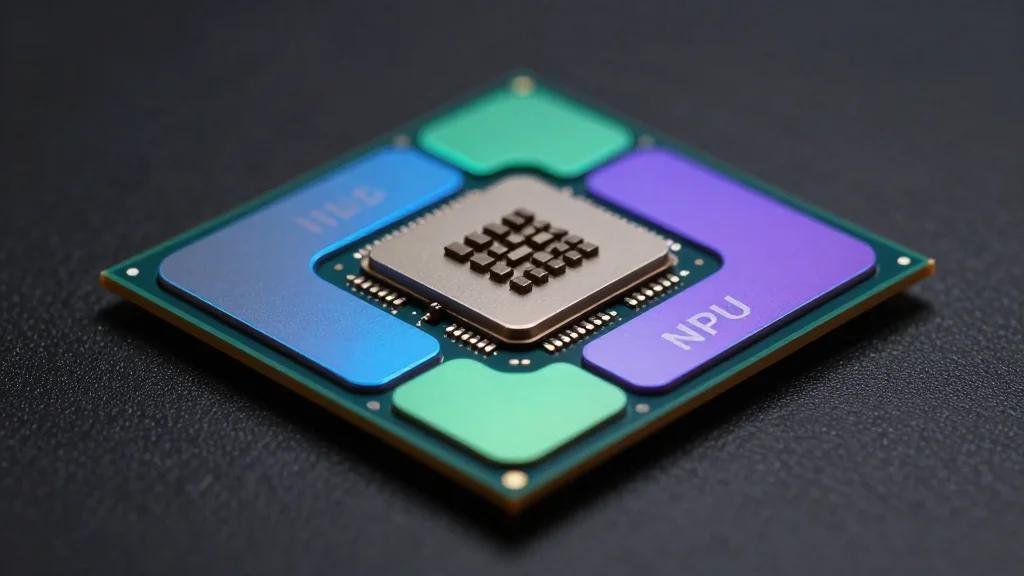
Intel Core Ultra Series 3 "Panther Lake-H" Die Annotated

Key Takeaways
- •Four‑tile disaggregated design improves scalability and power efficiency
- •Compute tile houses 16 cores: 6P, 8E, 4LPE
- •P‑cores boost to 5.10 GHz; E‑cores to 3.80 GHz
- •Graphics tile offers 12 Xe cores on TSMC N3E node
- •I/O tile provides PCIe 5.0, Thunderbolt 5, Wi‑Fi 7 connectivity
Pulse Analysis
Intel’s Panther Lake‑H marks a decisive step toward fully modular mobile processors. By partitioning the die into compute, graphics, and I/O tiles, the company can mix and match process technologies—Intel 18A for the core complex, TSMC N3E for the GPU, and TSMC N6 for connectivity—optimizing each function for power, performance, and cost. This approach mirrors the industry’s shift to chiplet‑centric designs, enabling faster iteration cycles and better yields while preserving a compact, rectangular package through filler silicon tiles.
The compute tile’s 16‑core configuration—six high‑performance “Cougar Cove” cores, eight efficiency “Darkmont” cores, and a four‑core low‑power island—delivers a versatile performance envelope for demanding workloads and background tasks alike. With P‑cores reaching 5.10 GHz and a combined 18 MB L3 cache, the chip targets premium gaming and content‑creation laptops. Integrated DDR5/LPDDR5X memory controllers supporting up to 9600 MT/s, alongside a new NPU5 with three neural compute engines, provide the bandwidth and AI acceleration needed for modern applications.
From a market perspective, Panther Lake‑H positions Intel to reclaim leadership in the high‑end notebook segment. The robust I/O suite—four PCIe 5.0 lanes, eight PCIe 4.0 lanes, Thunderbolt 5, Wi‑Fi 7, and USB4 V2—offers the connectivity breadth that enterprise and creator users demand. As competitors like AMD’s Ryzen 7000 series and Apple’s M‑series chips push integration limits, Intel’s tile strategy could deliver comparable or superior performance while retaining flexibility for future node migrations, signaling a potentially transformative era for mobile computing.
Intel Core Ultra Series 3 "Panther Lake-H" Die Annotated
Comments
Want to join the conversation?