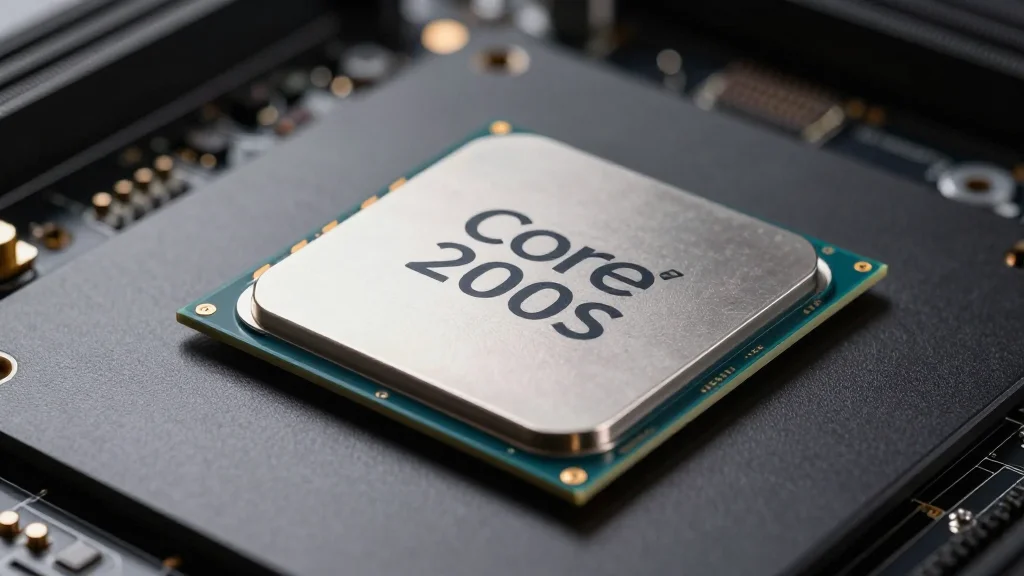
Intel Launches Core Ultra 200S Plus CPUs, Promising Near‑Flagship Performance at Half the Price

Why It Matters
The Core Ultra 200S Plus launch signals Intel’s aggressive push to counteract the twin pressures of chipflation and AMD’s dominance in the mid‑range desktop market. By delivering near‑flagship performance at roughly half the price of its own high‑end SKU, Intel aims to re‑engage cost‑sensitive consumers who have been migrating to AMD or delaying upgrades. The introduction of iBOT also marks a strategic shift toward software‑level differentiation, addressing a long‑standing efficiency gap in gaming workloads that have historically favored AMD architectures. If the 200S Plus line meets its performance promises, it could reshape pricing dynamics across the CPU segment, forcing AMD to either accelerate its own price cuts or introduce new architectural enhancements. Moreover, the move underscores how AI‑driven demand is reshaping the broader semiconductor ecosystem, prompting manufacturers to balance high‑performance silicon with affordability to sustain PC market growth.
Key Takeaways
- •Intel launched Core Ultra 200S Plus CPUs on May 13, pricing the 250K Plus at $199 and the 270K Plus at $299.
- •The 270K Plus offers 8 performance cores and 16 efficiency cores (24 total), matching performance of the $589 285K model.
- •Die‑to‑die clock speeds increased by 900 MHz compared with previous 200S models.
- •Intel introduced iBOT, a binary optimization tool that restructures x86 code in real time for better IPC.
- •Launch targets budget‑conscious buyers amid “chipflation” and aims to narrow the performance gap with AMD‑based gaming consoles.
Pulse Analysis
Intel’s Core Ultra 200S Plus strategy reflects a broader industry trend: hardware vendors are increasingly bundling software innovations with modest silicon tweaks to extract performance gains without incurring the cost of a full architecture redesign. The 900 MHz D2D clock bump and the addition of four efficiency cores are incremental, but when paired with iBOT they could deliver a noticeable uplift in real‑world gaming and multitasking scenarios. Historically, Intel’s refresh cycles have been criticized for offering marginal gains, prompting consumer fatigue. By explicitly naming the line “Plus” and communicating tangible architectural changes, Intel attempts to reset that narrative.
From a competitive standpoint, the pricing undercuts AMD’s Ryzen 7 7700X, which retails near $350 and offers comparable core counts but lacks the same level of internal clock optimization. If benchmark data validates Intel’s claims, OEMs may pivot back to Intel‑based platforms for mainstream builds, especially in markets where price elasticity is high. However, the success of iBOT hinges on developer adoption; without widespread game‑engine integration, the software advantage could remain theoretical.
Looking ahead, the 200S Plus launch may be a bellwether for how Intel addresses the lingering supply‑chain constraints caused by AI‑driven demand. By offering a higher‑core, lower‑priced product now, Intel can capture market share that might otherwise be lost to AMD or to delayed consumer upgrades. The next quarter’s performance data and OEM adoption rates will be the true test of whether the “Plus” moniker translates into a sustainable competitive edge.
Intel Launches Core Ultra 200S Plus CPUs, Promising Near‑Flagship Performance at Half the Price
Comments
Want to join the conversation?
Loading comments...