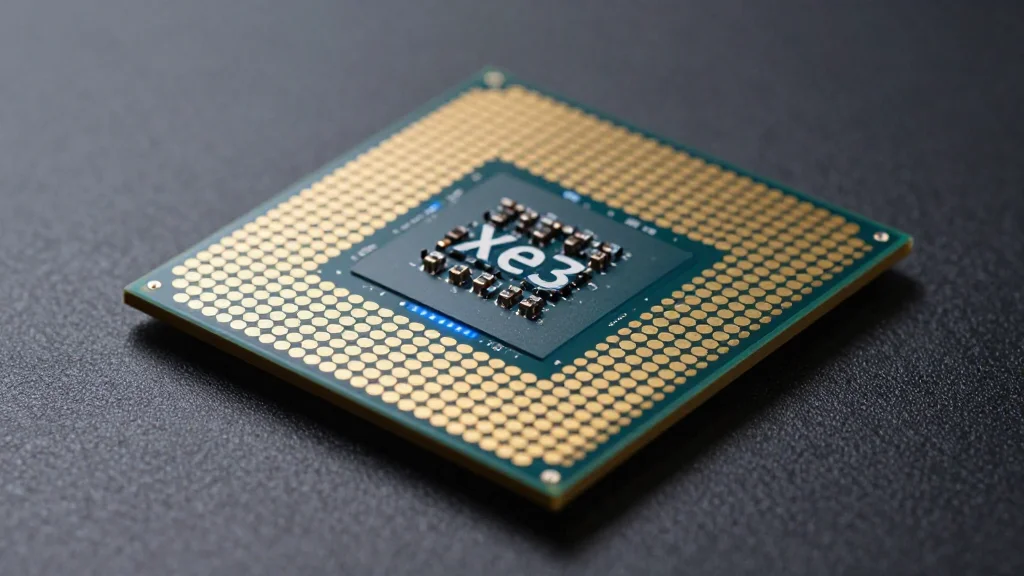
Intel Nova Lake to Use Xe3 Graphics, AX High-End Variant Cancelled
Why It Matters
By delaying new GPU architecture and the AX variant, Intel reduces launch risk and preserves a pipeline of differentiated products, strengthening its competitive stance against AMD and Nvidia. The move also signals a measured approach to maintaining performance leadership while managing development costs.
Key Takeaways
- •Nova Lake uses Xe3, not Xe4 graphics.
- •Xe3P targets higher‑tier Nova Lake P models.
- •AX high‑end variant cancelled, delayed to Razer Lake.
- •Intel favors incremental GPU improvements over new architecture.
- •Staggered rollout extends product‑cycle differentiation.
Pulse Analysis
Intel’s decision to equip Nova Lake processors with Xe3 graphics reflects a pragmatic shift in its silicon roadmap. While Xe4 promised a generational leap, the company appears to prioritize silicon validation and yield stability, leveraging the mature Xe3 design that already supports a broad range of display and media workloads. The Xe3P variant, reserved for the Nova Lake P segment, offers modest enhancements in bandwidth and media engine efficiency, delivering a clear performance tier without the engineering overhead of a brand‑new GPU core.
The cancellation of the AX high‑end SKU further underscores Intel’s staggered product strategy. By postponing the most powerful configuration to the upcoming Razer Lake generation, Intel can allocate engineering resources to refine the next‑generation GPU architecture and ensure a more compelling launch. This approach also allows OEMs to differentiate their premium offerings across two product cycles, preserving market excitement and price‑point elasticity. For enterprise and enthusiast segments, the delayed AX variant may mean a temporary reliance on AMD’s Ryzen 7000 series or Nvidia’s mid‑range GPUs for top‑tier compute and graphics needs.
Industry analysts view Intel’s incremental path as aligning with broader trends where chipmakers favor evolutionary upgrades between major architecture shifts. The move mitigates supply‑chain volatility and reduces the risk of early‑generation defects, which can erode brand confidence. At the same time, it pressures Intel to deliver tangible performance gains within the Xe3 family to stay competitive against AMD’s RDNA 3‑based integrated graphics and Nvidia’s low‑power offerings. Looking ahead, the Razer Lake platform, slated to host the AX variant, will be a critical bellwether for Intel’s ability to reclaim leadership in high‑performance integrated graphics while maintaining a balanced product portfolio.
Intel Nova Lake to Use Xe3 Graphics, AX High-End Variant Cancelled
Comments
Want to join the conversation?
Loading comments...