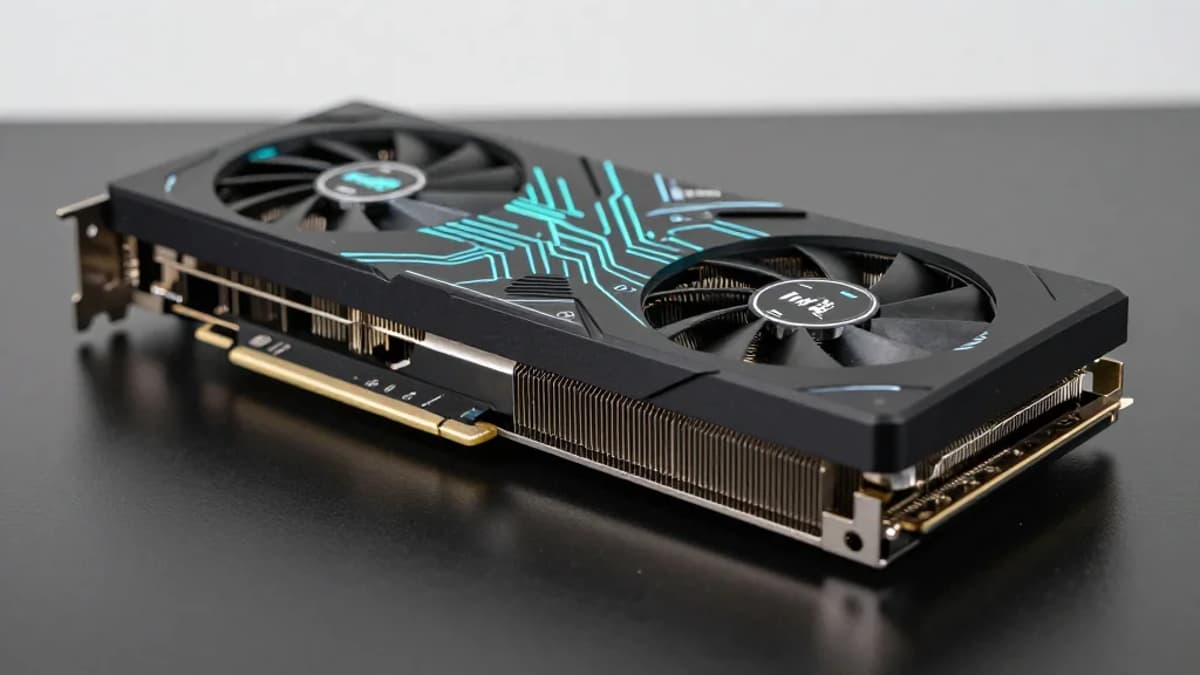
Intel Releases Llm-Scaler-Vllm 0.14.0-b8, Talks Up 1.49x Performance With BMG-G31
•March 2, 2026
0

Why It Matters
The performance uplift and broader model support accelerate AI inference on Intel’s GPU line, helping developers compete with NVIDIA‑dominated solutions and potentially expanding Intel’s market share in data‑center AI workloads.
Key Takeaways
- •LLM‑Scaler vLLM 0.14.0‑b8 supports Intel Battlemage GPUs.
- •INT4 throughput improves up to 25% versus previous release.
- •Adds Qwen3, GLM‑4.7‑Flash, Ministral, DeepSeek‑OCR, Coder models.
- •BMG‑G31 validated, delivering 1.49× geo‑mean performance.
- •Performance gains higher on golden BKC system configurations.
Pulse Analysis
Intel’s latest LLM‑Scaler vLLM 0.14.0‑b8 marks a strategic push to make its Battlemage GPU family a viable platform for large‑language‑model inference. By packaging the runtime in a Docker container and aligning it with the upstream vLLM 0.14 codebase, Intel lowers integration friction for developers already familiar with containerized AI stacks. The inclusion of PyTorch 2.10 and the newest oneAPI libraries, especially oneDNN, showcases Intel’s commitment to a unified software ecosystem that can extract maximum efficiency from its silicon.
Performance gains are a headline feature: INT4 precision workloads now see up to a 25% throughput increase, a notable jump for inference workloads that rely on quantized models. The expanded model catalog—covering Qwen3‑VL, GLM‑4.7‑Flash, Ministral, DeepSeek‑OCR, and Qwen3‑Coder‑Next—means a broader set of enterprise and research applications can run natively on Intel hardware without extensive model conversion. This breadth reduces time‑to‑market for AI services and positions Intel as a more competitive alternative to NVIDIA’s CUDA‑centric ecosystem.
The validation of the BMG‑G31 “Big Battlemage” GPU is perhaps the most market‑impacting signal. Early benchmarks report a 1.49× geo‑mean performance improvement under SLA constraints compared with the prior G21 chip, with even higher gains expected on systems equipped with a golden BKC configuration. If Intel brings the BMG‑G31 to consumer‑grade Arc cards, it could reshape the GPU landscape by offering high‑throughput, cost‑effective AI inference options, challenging NVIDIA’s dominance in both data‑center and edge deployments.
Intel Releases llm-scaler-vllm 0.14.0-b8, Talks Up 1.49x Performance With BMG-G31
0
Comments
Want to join the conversation?
Loading comments...