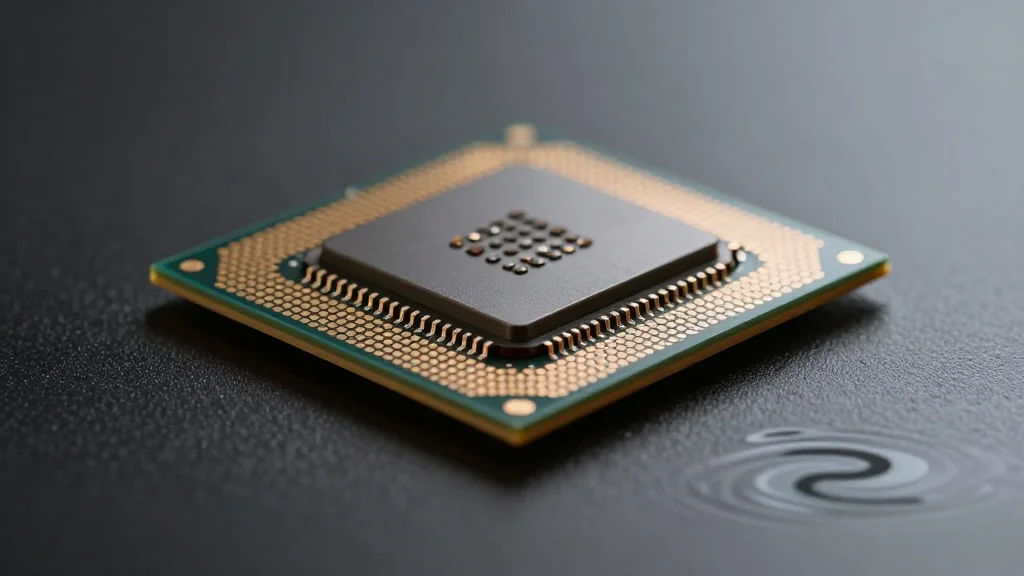
Intel Serpent Lake Processors to Integrate NVIDIA RTX GPUs in 2028
Companies Mentioned
Why It Matters
Integrating NVIDIA’s RTX GPU into Intel silicon could reshape the APU market, giving manufacturers high‑performance graphics without discrete GPUs and intensifying competition with AMD. The collaboration also highlights a broader industry trend toward shared IP to accelerate innovation.
Key Takeaways
- •Intel to embed NVIDIA RTX GPUs by 2028
- •Hybrid Copper Shark and Golden Eagle cores used
- •Potential boost for mobile graphics performance
- •May be last generation using separate P‑ and E‑cores
- •Intel explores dual APU paths, in‑house and NVIDIA
Pulse Analysis
The announced Intel‑NVIDIA partnership marks a notable departure from the traditional siloed CPU‑GPU development model. By embedding RTX‑branded graphics into a single silicon package, Intel can offer developers and OEMs a unified platform that simplifies board design, reduces power draw, and unlocks advanced features like ray tracing and DLSS‑style AI upscaling. This integration aligns with the broader industry push toward heterogeneous computing, where workloads are distributed across specialized accelerators within a single chip, delivering performance gains without the cost and space penalties of separate components.
Serpent Lake’s architecture builds on Intel’s hybrid strategy, pairing high‑throughput Copper Shark performance cores with power‑efficient Golden Eagle efficiency cores. While the hybrid approach has powered recent generations, sources suggest this may be the final iteration before Intel consolidates to a unified core design. The inclusion of an RTX GPU, likely based on a future NVIDIA architecture beyond Ada or Blackwell, promises substantial graphics horsepower for thin‑and‑light laptops and tablets, sectors where discrete GPUs are often impractical. This could narrow the performance gap with AMD’s Ryzen 7000 series APUs, which already blend strong CPU cores with Radeon graphics.
Strategically, the move gives Intel two parallel paths: an in‑house GPU roadmap for near‑term products and a high‑end integrated solution leveraging NVIDIA’s expertise for later releases. This dual‑track approach may pressure AMD to accelerate its own GPU innovations while also prompting OEMs to reconsider platform choices. Licensing, manufacturing logistics, and the timeline to 2028 remain uncertainties, but if realized, Intel’s RTX‑enabled SoC could redefine expectations for integrated graphics performance across the mobile computing market.
Intel Serpent Lake processors to integrate NVIDIA RTX GPUs in 2028
Comments
Want to join the conversation?
Loading comments...