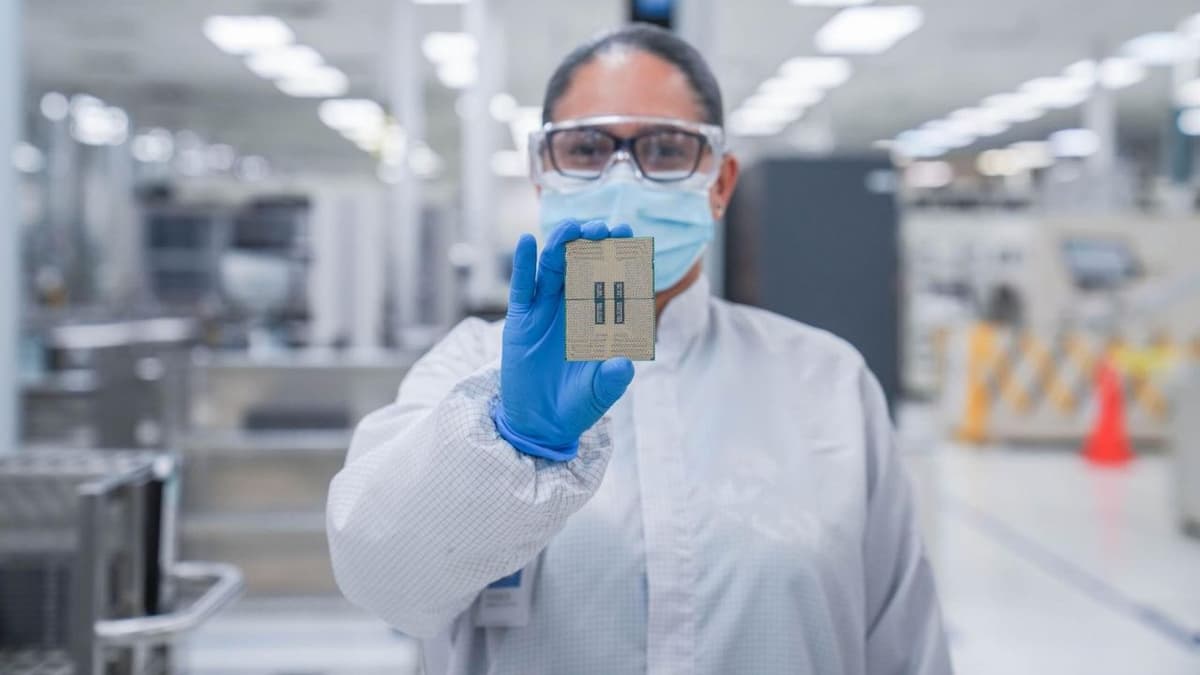
Intel Xeon 7 ‘Diamond Rapids’ CPUs Officially Launching in 2027 on Intel 18A-P — Next-Gen P-Core Xeon Features PCIe 6.0, 50% Higher Core Counts, and Twice the Memory Bandwidth
Why It Matters
Diamond Rapids reshapes the data‑center CPU landscape by targeting higher core density and efficiency, forcing customers to reassess Intel versus AMD roadmaps for next‑gen workloads.
Key Takeaways
- •Diamond Rapids launches 2027 on refined 18A‑P process
- •Supports PCIe 6.0 and up to 192 cores per socket
- •Memory bandwidth doubles, reaching up to 1.6 TB/s
- •9% performance boost or 18% power cut versus 18A
- •AMD Venice arrives earlier, potentially leading market
Pulse Analysis
Intel’s decision to ship Xeon 7 "Diamond Rapids" on the 18A‑P node marks a strategic push to regain performance leadership in the data‑center market. The 18A‑P refinement promises a 9% uplift in compute throughput at unchanged power envelopes, or an 18% power draw reduction for the same performance, a critical metric for hyperscale operators battling energy costs. By integrating PCIe 6.0 and expanding core counts to 192, Intel aims to address the growing demand for parallel workloads such as AI inference and high‑performance computing, while the projected 1.6 TB/s memory bandwidth tackles the bandwidth bottleneck that has hampered previous generations.
Meanwhile, AMD’s EPYC "Venice" CPUs, expected in 2026, will debut with up to 256 cores, 1.6 TB/s per‑socket bandwidth, and a 70% generational performance jump. This earlier arrival gives AMD a temporal advantage, allowing customers to adopt higher‑core, higher‑bandwidth silicon before Diamond Rapids hits the market. The competitive pressure forces enterprises to weigh immediate performance gains against Intel’s promised efficiency gains and longer‑term roadmap continuity. For workloads that prioritize raw core density and PCIe 6.0 connectivity, AMD may appear the more attractive short‑term choice, whereas Intel’s power‑efficiency narrative could sway cost‑sensitive data centers planning multi‑year refresh cycles.
Looking ahead, Intel has already hinted at the subsequent "Coral Rapids" generation slated for 2028, which is expected to reintroduce simultaneous multithreading (SMT) and further architectural refinements. The re‑introduction of multi‑threading could close the gap with AMD’s hyper‑threaded designs, offering a more balanced performance‑per‑watt profile. As the industry moves toward increasingly heterogeneous compute stacks, the timing and feature set of Diamond Rapids will be pivotal in shaping procurement strategies, influencing everything from cloud provider capacity planning to enterprise on‑premise upgrades. Intel’s ability to deliver on its performance and power claims will ultimately determine whether it can reclaim market momentum against AMD’s aggressive roadmap.
Intel Xeon 7 ‘Diamond Rapids’ CPUs officially launching in 2027 on Intel 18A-P — next-gen P-core Xeon features PCIe 6.0, 50% higher core counts, and twice the memory bandwidth
Comments
Want to join the conversation?
Loading comments...