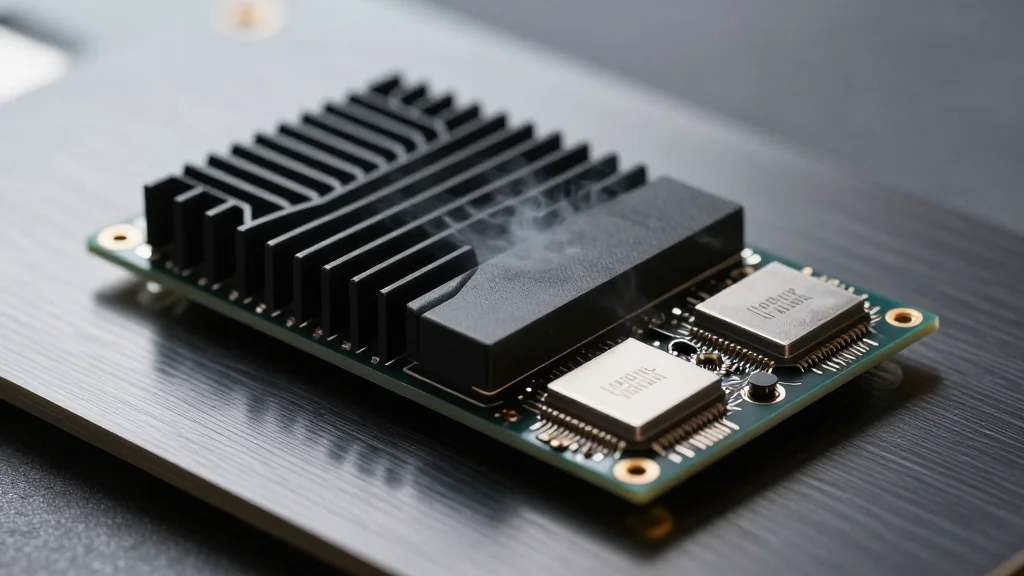
Intel’s Crescent Island PCB Leak Shows Xe3P GPU with 160 GB LPDDR5X Memory

Companies Mentioned
Why It Matters
The Crescent Island leak reveals Intel’s strategic bet on LPDDR5X as a cost‑effective memory solution for AI inference, directly challenging the HBM‑centric approaches of Nvidia and AMD. By avoiding HBM’s supply bottlenecks, Intel could offer a more affordable, power‑efficient alternative for hyperscale data centers that prioritize inference throughput over raw training bandwidth. This shift may reshape procurement decisions for cloud providers and enterprises, potentially diversifying the memory ecosystem in AI hardware. Furthermore, the timing of the leak—just months before the planned sampling window—means the market will soon have concrete performance data to compare against competing GPUs. If Intel’s Xe3P can meet or exceed inference benchmarks while delivering lower total‑system cost, it could accelerate adoption of Intel’s data‑center GPU portfolio and pressure rivals to reconsider their memory roadmaps.
Key Takeaways
- •PCB leak confirms Xe3P GPU die paired with 160 GB LPDDR5X memory (20 memory sites).
- •Design includes 18 VRM positions (13 populated), USB‑C test port, and 12 V‑2×6 power connector.
- •Intel targets air‑cooled data‑center inference; sampling planned for H2 2026.
- •LPDDR5X chosen over HBM to reduce cost and power‑supply strain amid HBM shortages.
- •Competes with Nvidia’s HBM3E/4 and AMD’s HBM3E/4 GPUs slated for 2027.
Pulse Analysis
Intel’s decision to build Crescent Island around LPDDR5X reflects a pragmatic response to the current memory market dynamics. HBM, while offering superior bandwidth, has become a scarce commodity as AI training workloads explode, driving up prices and complicating power delivery. By opting for LPDDR5X, Intel sidesteps these constraints, positioning the Xe3P accelerator as a cost‑efficient inference engine. This could be especially compelling for hyperscale operators that run billions of inference queries daily and are more sensitive to memory cost per inference than raw bandwidth.
Historically, Intel has struggled to gain traction in the high‑performance GPU space, with its Arc consumer line failing to achieve market relevance. The Crescent Island effort marks a clear pivot: focusing on a niche—AI inference—where the performance ceiling is lower than training but the volume and cost considerations are higher. If Intel can deliver a compelling price‑performance ratio, it may carve out a sustainable foothold in data‑center GPUs, leveraging its existing Xeon ecosystem for tighter integration.
Looking ahead, the success of Crescent Island will hinge on benchmark results and the ability to secure early adopters before Nvidia and AMD roll out their next‑gen HBM4 GPUs. Should Intel’s LPDDR5X solution prove competitive, it could force the industry to re‑evaluate the dominance of HBM for inference workloads, potentially spurring a broader shift toward more affordable memory technologies in AI accelerators.
Intel’s Crescent Island PCB Leak Shows Xe3P GPU with 160 GB LPDDR5X Memory
Comments
Want to join the conversation?
Loading comments...