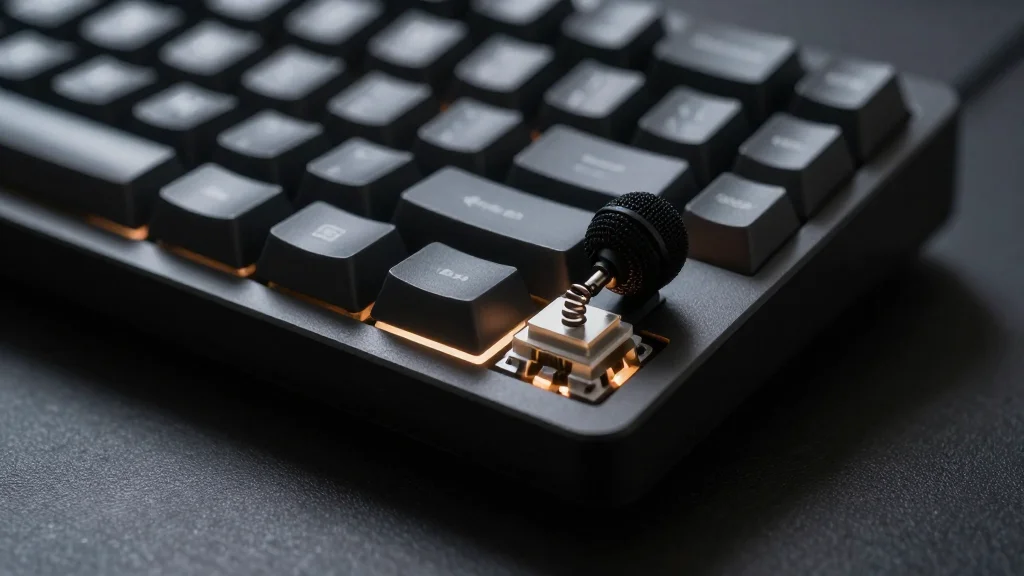
Interactive Listening Museum Lets You Compare the Sounds of 36 Mechanical Keyboards
Companies Mentioned
Why It Matters
By digitizing keyboard acoustics, the Listening Museum gives designers, reviewers and hobbyists a scalable way to evaluate sound‑based user experience, a factor increasingly central to premium input devices. It also democratizes access to vintage and niche keyboards that many users cannot physically test.
Key Takeaways
- •Listening Museum hosts 36 keyboard sound samples online
- •Users type on own keyboard to hear mapped acoustic profiles
- •Includes vintage IBM Model M and modern SteelSeries keyboards
- •Project highlights challenges of accurate audio sampling for keystrokes
- •Tool aids enthusiasts lacking physical access to diverse keyboards
Pulse Analysis
The Listening Museum arrives at a moment when mechanical keyboards have transcended their utilitarian roots to become lifestyle products. By offering a web‑based sound library of 36 iconic models, the platform lets users instantly compare the click, clack, and thock of everything from the 1980s IBM Model M to contemporary SteelSeries and Logitech offerings. This interactive approach mirrors the rise of audio‑first product showcases, where sound design is treated as a core differentiator alongside tactile feel and aesthetics.
Capturing keystroke acoustics is technically demanding. Each recording reflects a complex signal chain—microphone placement, room acoustics, host board, keycap set, and playback hardware—all of which color the final audio. The museum’s creators acknowledge these variables, noting that perfect fidelity is unattainable. Nevertheless, the curated samples illuminate how switch type, case material, internal dampening and mounting systems shape a keyboard’s sonic fingerprint. For engineers, this data highlights design trade‑offs; for reviewers, it provides a benchmark to discuss sound quality with measurable references.
Beyond hobbyist curiosity, the project signals a broader industry shift. Premium keyboard manufacturers now market specific acoustic profiles, targeting users who value a satisfying auditory response. The Listening Museum offers a low‑cost, scalable tool for product teams to test and iterate on sound before committing to physical prototypes. As the market continues to segment by niche preferences—silent office boards versus clicky gaming rigs—the museum’s model could evolve into a standard testing platform, fostering faster innovation and more informed consumer choices.
Interactive Listening Museum lets you compare the sounds of 36 mechanical keyboards
Comments
Want to join the conversation?
Loading comments...