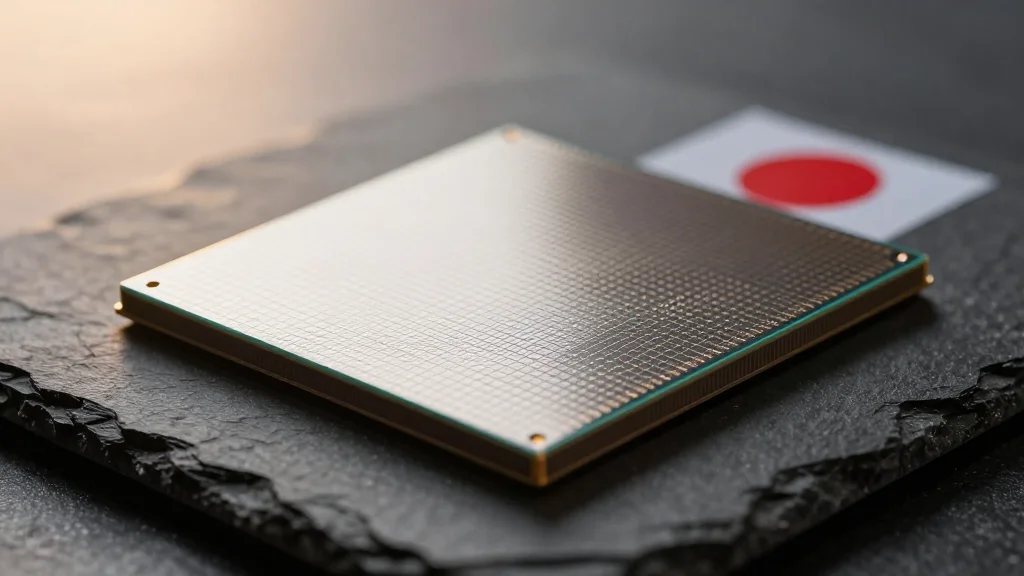
Japan Approves Additional 631.5 Billion Yen for Chipmaker Rapidus
Companies Mentioned
Why It Matters
The boost positions Japan to revive domestic advanced‑chip manufacturing, reducing reliance on overseas suppliers and strengthening its role in the global semiconductor supply chain.
Key Takeaways
- •Japan adds ¥631.5 bn (~$4.2 bn) to Rapidus R&D funding.
- •Total government aid for Rapidus reaches ¥2.354 tn (~$15.7 bn).
- •Rapidus aims for 2‑nm logic chips, mass production FY2027.
- •Private investors pledged ¥160 bn (~$1.1 bn); government plans ¥250 bn (~$1.7 bn).
- •NEDO supports Fujitsu and IBM Japan semiconductor design projects.
Pulse Analysis
Japan’s latest subsidy underscores a strategic shift toward self‑sufficiency in high‑end semiconductors. After years of lagging behind Taiwan and South Korea, the government is deploying record‑level R&D grants to nurture domestic players capable of producing cutting‑edge logic chips. By funneling roughly $4.2 billion into Rapidus, policymakers hope to accelerate the 2‑nanometre node—technology that powers AI accelerators, data‑center processors, and next‑generation mobile devices. The move aligns with broader industrial policies aimed at securing supply chains that have been strained by geopolitical tensions and pandemic‑induced shortages.
Rapidus, a joint venture backed by major Japanese firms, is positioned to become the country’s flagship chipmaker. With a total of about $15.7 billion in public R&D assistance, the company can scale its pilot lines, attract talent, and invest in expensive lithography equipment. Private capital of $1.1 billion and an additional $1.7 billion slated from the state further de‑risk the venture, allowing Rapidus to target mass production by FY2027. Parallel support from NEDO for design collaborations with Fujitsu and IBM Japan signals an ecosystem approach, ensuring that both front‑end manufacturing and back‑end design capabilities mature in tandem.
The implications extend beyond national pride. A successful 2‑nm production line would give Japan a foothold in the most advanced segment of the semiconductor market, offering an alternative source for multinational OEMs wary of over‑reliance on a single region. It could also stimulate downstream industries, from automotive electronics to industrial IoT, by providing a reliable supply of domestically produced chips. However, the venture faces steep technical hurdles, intense competition, and the need for sustained fiscal commitment, making execution as critical as the headline‑grabbing funding.
Japan approves additional 631.5 billion yen for chipmaker Rapidus
Comments
Want to join the conversation?
Loading comments...