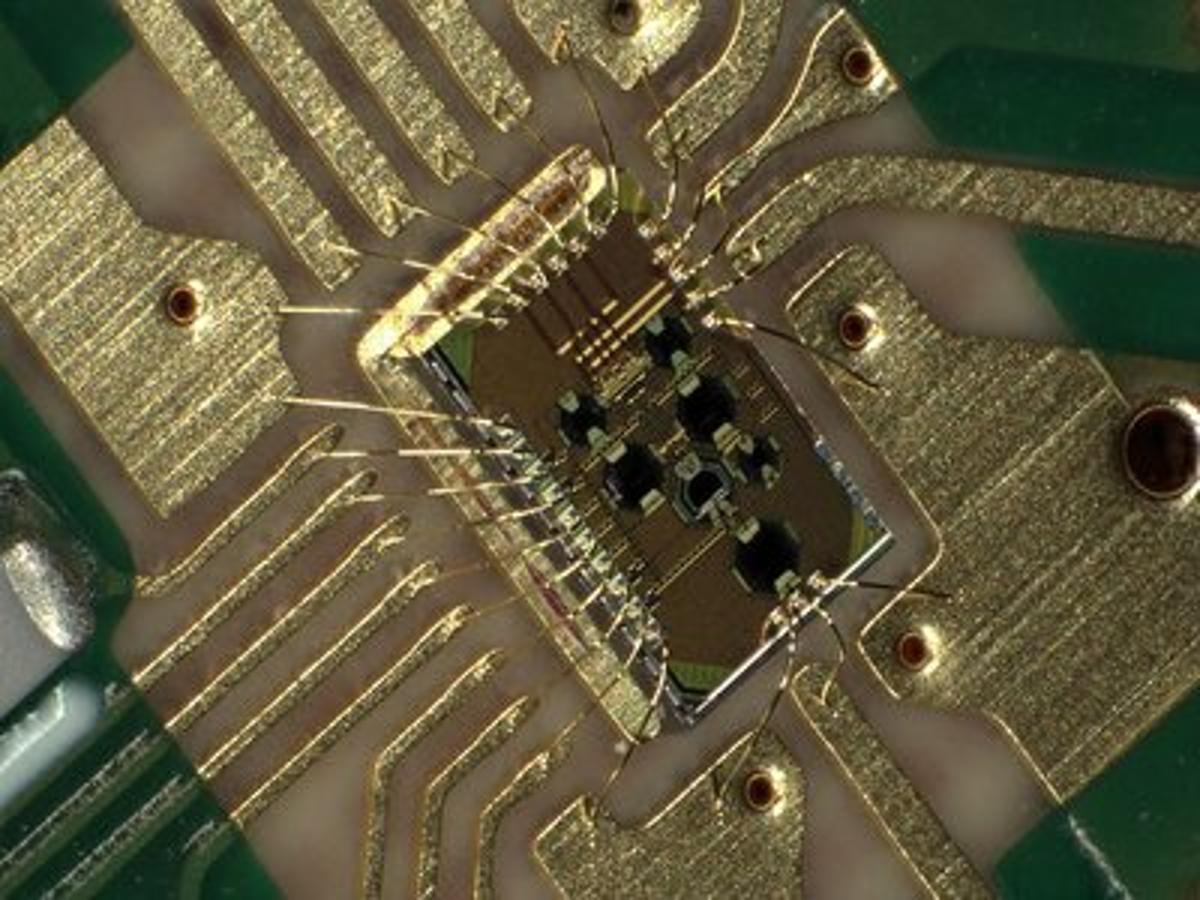
Japanese Institutes Develop Wi-Fi Chip Operable in Extreme Radiation
Why It Matters
Wireless control cuts worker radiation exposure and boosts operational flexibility in nuclear cleanup, while opening new markets for resilient communications in space and other high‑radiation applications.
Key Takeaways
- •Chip tolerates 500 kGy radiation, far beyond standard limits
- •Enables wireless robot control in Fukushima, cutting cable constraints
- •Design uses larger transistors and inductors for radiation hardness
- •Potential applications in space missions and other high‑radiation sites
Pulse Analysis
The decommissioning of Fukushima Daiichi has highlighted a critical bottleneck: most inspection and remediation robots rely on wired connections, which restrict mobility and increase the risk of cable failure in high‑radiation zones. A wireless link that can survive the plant’s intense gamma flux would allow simultaneous deployment of multiple autonomous systems, dramatically reducing the time workers spend in protective gear and lowering cumulative radiation doses. The new chip’s ability to function after 500 kilograys—equivalent to the dose a satellite might encounter in a solar storm—directly addresses this operational gap.
Technically, the researchers achieved unprecedented radiation hardness by simplifying the receiver architecture. They trimmed the transistor count, replaced vulnerable components with passive inductors, and enlarged the remaining transistors, a strategy that mitigates charge buildup and leakage pathways caused by ionizing particles. In laboratory tests, the device continued to transmit data after exposure to radiation levels a thousand times higher than those tolerated by conventional space‑qualified chips, suggesting a new benchmark for rugged communications hardware. This approach mirrors trends in aerospace where miniaturization and durability are paramount, positioning the chip as a candidate for future lunar or Martian habitats where cosmic radiation poses a constant threat.
Beyond nuclear cleanup, the technology could reshape industries that operate in hostile environments—such as deep‑sea oil rigs, high‑energy physics labs, and defense applications—by providing reliable, untethered connectivity. Market analysts anticipate a surge in demand for radiation‑hard wireless components as governments and private firms accelerate decommissioning projects and expand space exploration initiatives. Continued investment in materials science and semiconductor design will likely yield even more robust solutions, cementing Japan’s role as a leader in next‑generation resilient electronics.
Japanese institutes develop Wi-Fi chip operable in extreme radiation
Comments
Want to join the conversation?
Loading comments...