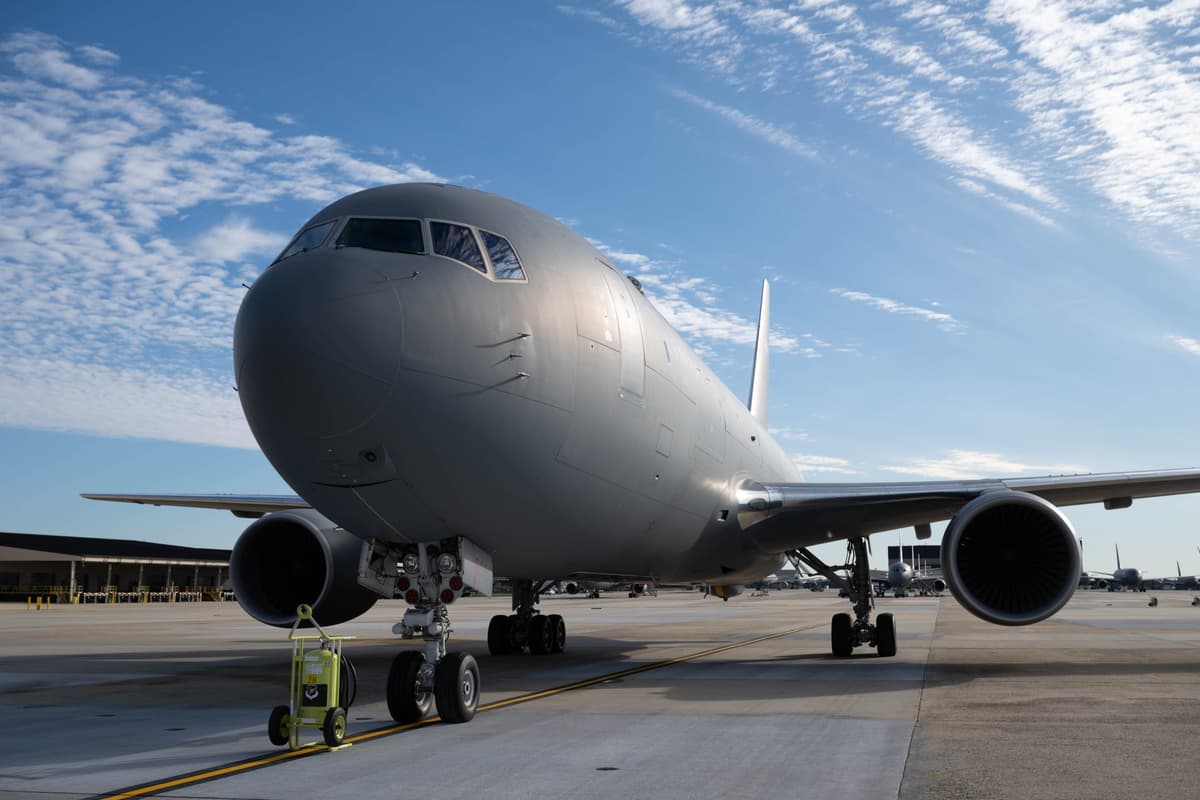
KC-46’s New Remote Vision System Completes Initial ‘Non-Contact’ Testing
Companies Mentioned
Why It Matters
RVS 2.0 directly addresses long‑standing safety and readiness gaps, enabling the Air Force to meet its tanker expansion goals. Faster fielding improves mission‑capable rates and strengthens the defense industrial base.
Key Takeaways
- •RVS 2.0 completed non‑contact flight tests, validating camera optics
- •New 3‑D display aims to reduce operator eye strain and errors
- •Fielding timeline cut from 13 to 7 years via retrofit agreement
- •KC‑46 readiness expected to rise 6% short‑term, 20% by 2030
- •Additional 75 tankers pending contract contingent on RVS 2.0 certification
Pulse Analysis
The KC‑46’s Remote Vision System has been a chronic pain point for the Air Force, with boom operators reporting eye strain and occasional mis‑alignments that risk damage to receiving aircraft. RVS 2.0 introduces ruggedized cameras and a stereoscopic 3‑D display, delivering depth perception that mirrors a pilot’s line of sight. By completing non‑contact flight tests, Boeing demonstrated that the system’s optics meet stringent military standards, clearing a major hurdle toward full certification.
Beyond the technology upgrade, the Air Force‑Boeing partnership reshapes the tanker’s sustainment strategy. The agreement mandates installing RVS 2.0 kits during depot‑level maintenance, slashing the retrofit window from 13 years to seven. This accelerated schedule, coupled with a performance‑based logistics framework, is projected to lift the KC‑46’s mission‑capable rate by roughly 6 percent in the near term and over 20 percent by 2030. The readiness boost is critical as the service evaluates a supplemental purchase of 75 tankers to bridge the gap before a future replacement platform arrives.
For the defense industry, the RVS 2.0 milestone underscores Boeing’s ability to remediate legacy platform deficiencies while preserving production lines. Successful certification will likely unlock the additional tanker contract, reinforcing Boeing’s market position in aerial refueling. Moreover, the rapid retrofit model could become a template for other services seeking to modernize existing fleets without incurring the cost of entirely new aircraft, signaling a shift toward incremental, technology‑focused upgrades in defense procurement.
KC-46’s New Remote Vision System Completes Initial ‘Non-Contact’ Testing
Comments
Want to join the conversation?
Loading comments...