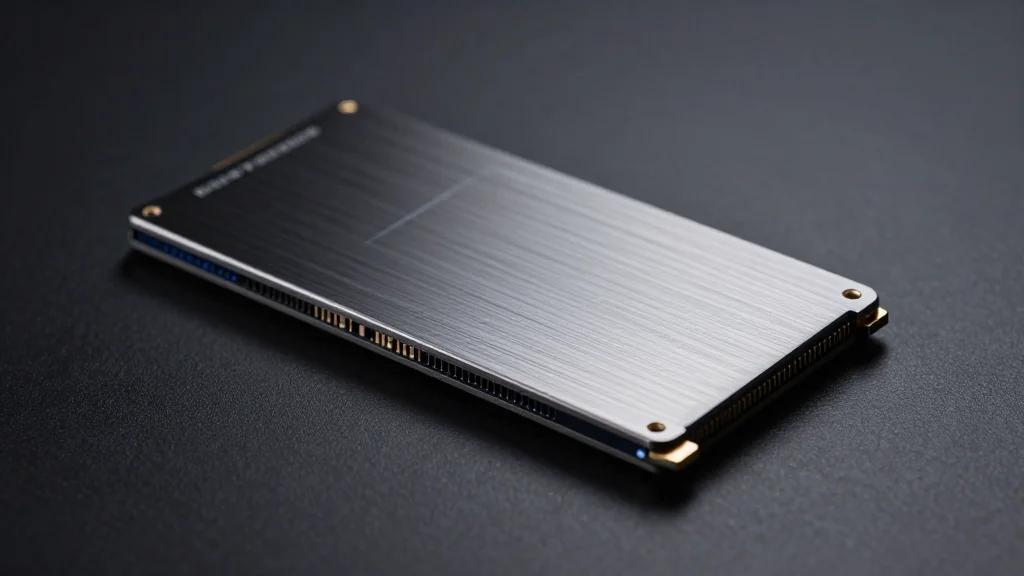
Kioxia Issues Firmware Update for EXCERIA G3 SSDs, Recommends Upgrade
Why It Matters
The firmware fix safeguards data integrity and performance for high‑speed consumer SSDs, protecting Kioxia’s market reputation and reducing warranty claims. Early adoption also ensures users benefit from the latest reliability improvements before larger issues emerge.
Key Takeaways
- •Kioxia releases EVFATR.1 firmware for EXCERIA G3 SSDs
- •Update addresses critical bugs, improves reliability and performance
- •Drives use BiCS8 QLC NAND with DRAM‑less HMB architecture
- •Available in 1 TB and 2 TB, 10 000 MB/s sequential reads
- •Kioxia advises all users to back up data before upgrading
Pulse Analysis
Firmware updates are a pivotal maintenance tool for solid‑state drives, especially those built on QLC NAND like Kioxia’s EXCERIA G3. While QLC offers high density at lower cost, it is more sensitive to wear‑leveling and error‑correction inefficiencies. A timely firmware revision such as EVFATR.1 can fine‑tune controller algorithms, mitigate edge‑case failures, and ensure the drive’s performance envelope remains consistent across diverse workloads. For IT managers and power users, staying current with firmware is often the difference between a seamless experience and unexpected latency spikes or data loss.
The EXCERIA G3 series targets the premium consumer segment, competing with other PCIe 4.0 and emerging PCIe 5.0 SSDs that promise multi‑gigabyte per second speeds. By leveraging a DRAM‑less design coupled with Host Memory Buffer, Kioxia reduces BOM costs while still delivering up to 10 GB/s sequential reads. This architecture, however, places greater reliance on firmware to manage cache operations and host memory interactions efficiently. The EVFATR.1 update likely refines these pathways, delivering smoother performance in real‑world scenarios such as large file transfers, gaming, and content creation.
From a market perspective, Kioxia’s proactive firmware rollout reinforces its commitment to product longevity and customer trust. Early firmware releases can preempt larger reliability incidents that might otherwise erode brand perception, especially as QLC SSDs gain broader adoption in consumer PCs. Enterprises and enthusiasts alike benefit from the assurance that their high‑speed storage will maintain data integrity over the drive’s lifespan, reducing potential warranty costs and support tickets. In an industry where storage speed and reliability are key differentiators, such updates help Kioxia stay competitive against rivals like Samsung and Western Digital.
Kioxia Issues Firmware Update for EXCERIA G3 SSDs, Recommends Upgrade
Comments
Want to join the conversation?
Loading comments...