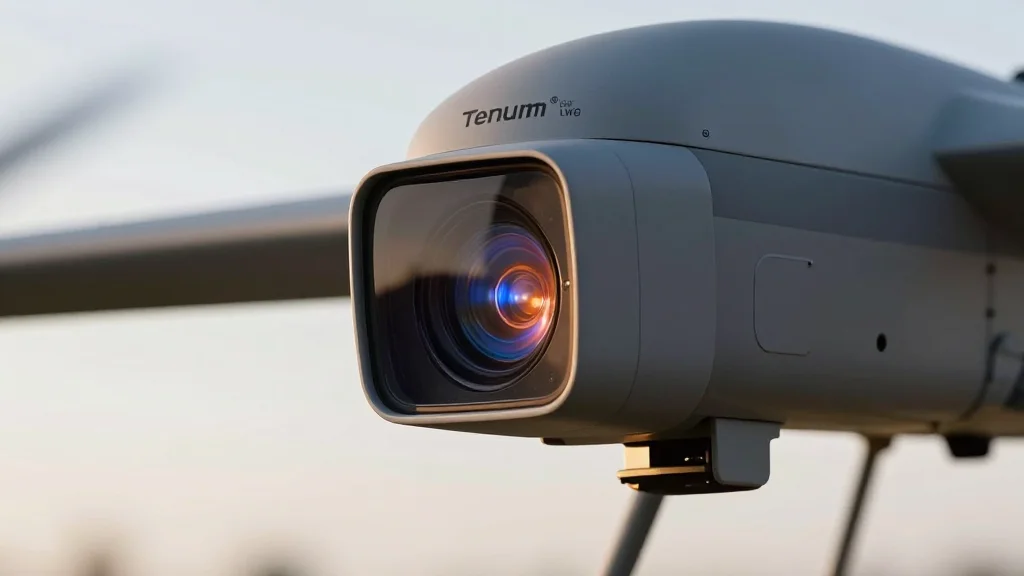
Leonardo DRS Launches LWIR Thermal Camera Module at SOF Week 2026
Companies Mentioned
Why It Matters
The compact, high‑performance sensor cuts integration time and cost, expanding mission capability for the rapidly growing fleet of small unmanned systems.
Key Takeaways
- •640×512 LWIR resolution with 10 µm pixel pitch
- •60 fps frame rate and sub‑20 mK thermal sensitivity
- •MIPI CSI/CCS and USB interfaces simplify OEM integration
- •Targets Group 1‑3 UAVs, UGVs, and USVs for rapid deployment
Pulse Analysis
The rapid proliferation of small unmanned aerial, ground and maritime systems has intensified demand for lightweight, high‑resolution sensors that can operate around the clock. Traditional thermal cameras often trade image quality for size, weight and power, limiting their suitability for Group 1‑3 platforms that prioritize endurance and payload efficiency. Leonardo DRS, a long‑standing defense contractor, answered this gap at the 2026 SOF Week exhibition by introducing the Tenum® 640 Orbit™—an uncooled long‑wave infrared (LWIR) module built around a VOx microbolometer. The launch reflects a broader industry shift toward compact, cost‑effective imaging solutions that do not compromise performance.
The Tenum® 640 Orbit™ delivers a 640 × 512 pixel array with a 10 µm pixel pitch, operating in the 8‑14 µm spectral band. Its 60 frames‑per‑second output and thermal sensitivity better than 20 mK enable reliable detection, tracking and navigation even in degraded‑visibility environments. Crucially, the module adopts a Mobile Industry Processor Interface (MIPI) CSI/CCS standard and offers optional USB connectivity, allowing OEMs to plug the sensor directly into existing processing pipelines without extensive redesign. This SWAP‑c (size, weight, power, cost) optimization shortens integration cycles and reduces bill‑of‑materials expenses for manufacturers targeting high‑volume production.
For defense customers, the new camera translates into faster fielding of autonomous platforms capable of night‑time reconnaissance, obstacle avoidance and precision targeting, thereby enhancing operational tempo and survivability. Commercial operators in sectors such as oil‑and‑gas, agriculture and infrastructure inspection stand to benefit from the same high‑fidelity thermal data without the overhead of larger, more power‑hungry sensors. As unmanned systems become increasingly networked, the ability to embed a standardized, high‑performance imaging module like Tenum® 640 Orbit™ will drive interoperability and accelerate the development of next‑generation AI‑enabled perception algorithms.
Leonardo DRS Launches LWIR Thermal Camera Module at SOF Week 2026
Comments
Want to join the conversation?
Loading comments...