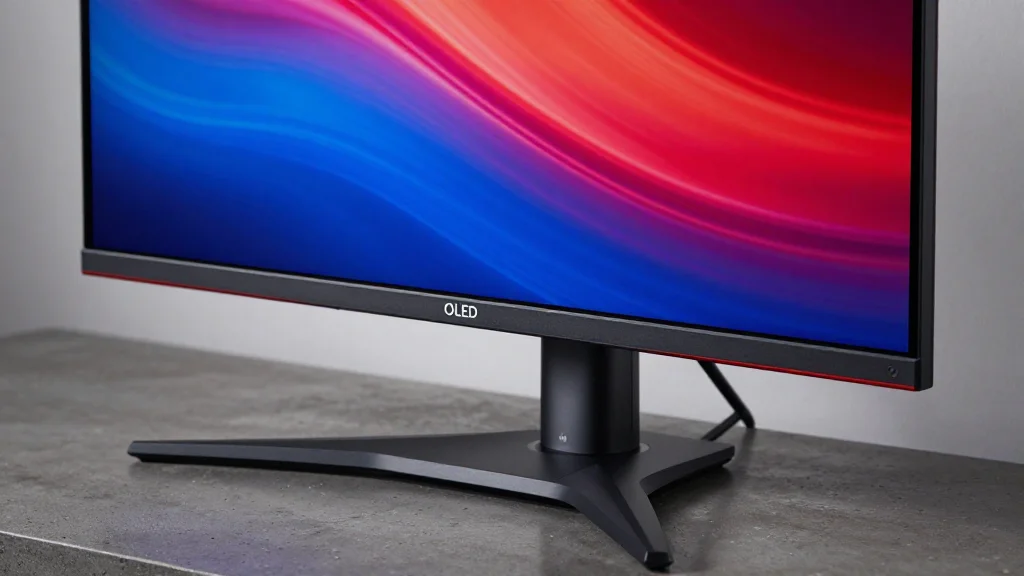
LG UltraGear 27‑inch OLED Gaming Monitor Sets World‑Record 540 Hz/720 Hz Refresh Rates

Companies Mentioned
Why It Matters
The UltraGear’s record‑breaking refresh rates force the broader hardware ecosystem to confront new performance ceilings. GPU manufacturers must deliver sustained output above 500 fps to make the monitor’s capabilities meaningful, accelerating the rollout of next‑gen graphics cards and driver optimizations. Meanwhile, OLED panel producers gain a high‑profile use case that validates their ability to combine ultra‑fast response times with high brightness, potentially expanding OLED adoption beyond TVs and smartphones into premium PC peripherals. For the esports industry, a monitor that can eliminate ghosting and motion blur at 720 Hz could redefine competitive standards, prompting tournament organizers to reconsider hardware specifications and broadcasters to adjust capture pipelines. The award from SID also signals to investors that LG Display’s DFR technology is a differentiator worth backing, likely influencing R&D budgets across the display sector.
Key Takeaways
- •LG UltraGear 27GX790B‑B offers 540 Hz at 1440p and 720 Hz at 720p, the fastest consumer gaming monitor to date
- •Retail price is $999, positioning it as a premium but still affordable option for high‑end gamers
- •Awarded SID’s Display of the Year, highlighting its Dynamic Frequency & Resolution (DFR) technology
- •ClearMR 21000 certification from VESA confirms industry‑leading motion‑blur reduction
- •Panel’s OLED brightness and HDR performance surpass previous OLED gaming monitors, addressing a common criticism
Pulse Analysis
LG’s launch is less a commercial gamble than a strategic showcase of OLED’s untapped potential in the high‑refresh market. Historically, OLED panels excelled in contrast and color fidelity but lagged in response speed compared to LCD‑based fast‑refresh displays. By engineering a proprietary DFR algorithm that decouples refresh rate from resolution limits, LG has effectively rewritten that rulebook. The move forces competitors to either accelerate their own OLED roadmaps or double down on mini‑LED and micro‑LED solutions that can match the speed without the same contrast advantages.
From a market dynamics perspective, the UltraGear’s price point under $1,000 is deliberately aggressive. It signals LG’s confidence that the cost of high‑speed OLED production can be amortized at scale, especially as supply chains for large‑area OLED mature. Early adopters—professional esports teams and high‑budget streamers—will serve as de‑facto ambassadors, creating demand signals that could push GPU vendors to prioritize frame‑rate output in driver updates. In turn, this could catalyze a virtuous cycle: faster monitors demand faster GPUs, which in turn justify the premium pricing of next‑gen graphics cards.
Looking ahead, the real litmus test will be ecosystem support. Game engines must expose frame‑rate caps high enough to leverage 720 Hz, and content creators need tools to capture and stream at those speeds without introducing latency. If LG can shepherd a broader software and hardware coalition through SID Display Week, the UltraGear could become the benchmark for a new class of “ultra‑high‑refresh” displays, reshaping the hardware stack from the GPU up to the monitor. Absent that support, the monitor risks being a spectacular but niche showcase, valuable for brand prestige but limited in market penetration.
LG UltraGear 27‑inch OLED Gaming Monitor Sets World‑Record 540 Hz/720 Hz Refresh Rates
Comments
Want to join the conversation?
Loading comments...