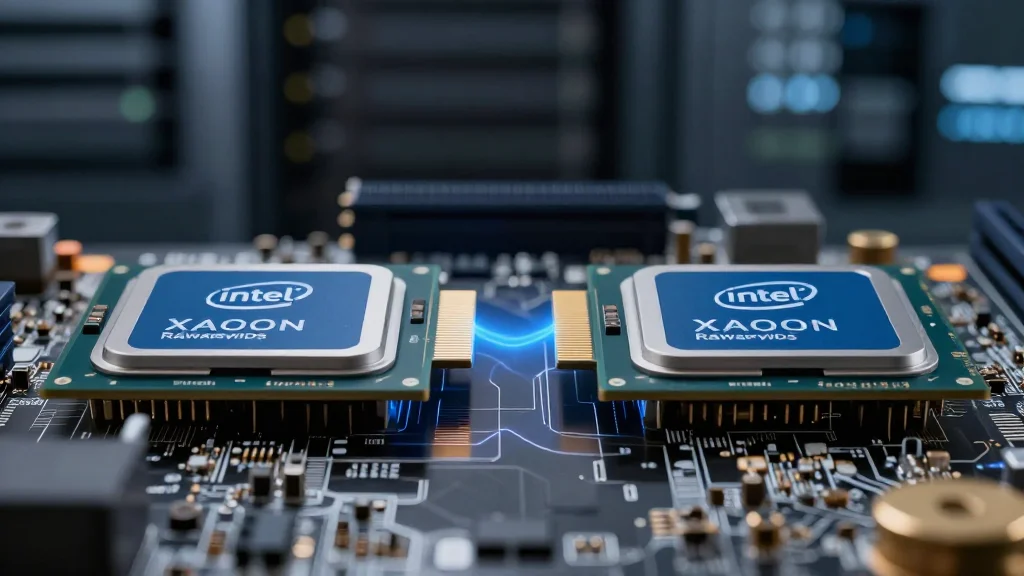
Linux 7.0 Further Prepares For Intel Diamond Rapids With NTB Driver Support

Key Takeaways
- •Linux 7.0 adds NTB driver for Diamond Rapids
- •Only dozens of code lines added for support
- •Enables PCIe 6.0 DMA between Xeon systems
- •Includes DebugFS enhancements and tx_memcpy_offload option
- •Supports Intel Gen6 NTB device IDs and offsets
Pulse Analysis
Intel’s Diamond Rapids Xeon line represents the next step in server‑grade silicon, introducing PCIe 6.0 bandwidth and advanced memory‑fabric capabilities. By the time the silicon reaches production, the Linux kernel already includes core driver support, a rare example of upstream readiness that reduces time‑to‑market for OEMs and cloud providers. The NTB (non‑transparent bridge) driver, now extended for Gen6 hardware, required only minimal code changes—primarily new device identifiers and a PPD0 offset tweak—demonstrating the modularity of the kernel’s PCIe stack.
The NTB subsystem enables two or more separate memory domains to share a single PCIe fabric, allowing direct memory access (DMA) across nodes without involving the host CPU. This capability is critical for distributed storage arrays, compute offloading, and high‑availability clusters where latency and throughput are paramount. With PCIe 6.0’s 64 GT/s per lane, the bandwidth ceiling rises dramatically, making real‑time data replication and low‑latency analytics feasible at scale. The added tx_memcpy_offload parameter gives administrators fine‑grained control over off‑load paths, further optimizing performance for bandwidth‑intensive workloads.
For the broader ecosystem, early kernel integration signals strong collaboration between Intel and the open‑source community. Data‑center operators can plan migrations to Diamond Rapids with confidence, knowing that the core drivers are stable and already benefiting from community testing. The incremental DebugFS enhancements also improve observability, helping engineers troubleshoot NTB‑related issues faster. As PCIe 6.0 adoption expands, this groundwork paves the way for future innovations such as composable infrastructure and disaggregated memory, positioning Linux as the preferred OS for next‑generation high‑performance computing environments.
Linux 7.0 Further Prepares For Intel Diamond Rapids With NTB Driver Support
Comments
Want to join the conversation?