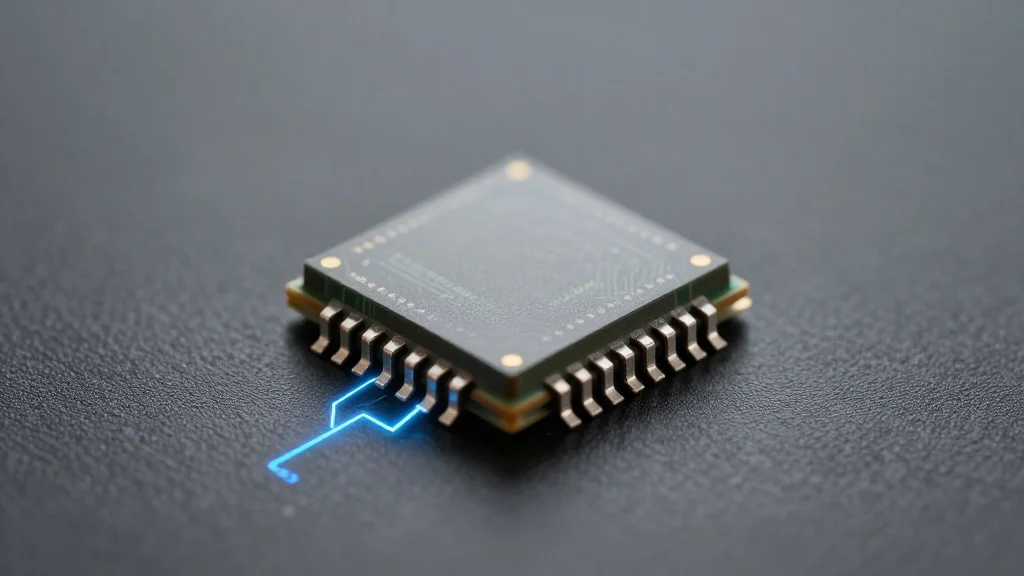
Low-Power Enhanced I2C Controller: RTL to GDSII
Why It Matters
The breakthrough cuts I2C power consumption dramatically, extending battery life for IoT, wearables and other low‑power devices while lowering design costs for semiconductor startups.
Key Takeaways
- •Open‑lane technique cuts I2C dynamic power by up to 40%
- •RTL design integrated clock gating and operand isolation for low power
- •OpenLane flow delivered GDSII layout with timing closure under budget
- •Enhanced controller supports multi‑master bus without extra arbitration overhead
- •Provides open‑source EDA template for startups and small teams
Pulse Analysis
Energy efficiency has become a decisive factor in modern chip design, especially for the billions of IoT nodes and wearable devices that operate on limited power sources. The I2C bus, a workhorse for inter‑chip communication, traditionally suffers from dynamic power loss due to frequent signal toggling. By re‑architecting the bus controller with an open‑lane approach—keeping idle lanes in high‑impedance states—the research team slashes unnecessary transitions, delivering up to a 40% reduction in dynamic power while maintaining signal integrity.
The team’s workflow showcases the power of open‑source electronic design automation. Starting at the RTL level, they embedded low‑power techniques such as clock gating and operand isolation, then fed the design into OpenLane, an automated flow that handles synthesis, placement, routing, and clock‑tree synthesis. The result is a GDSII‑ready layout that meets timing constraints and stays within a tight power envelope, proving that sophisticated, low‑power IP can be produced without expensive proprietary tools. This democratization of the design process lowers barriers for small firms and research groups aiming to bring competitive semiconductor IP to market.
Beyond the technical achievement, the enhanced I2C controller has broad market implications. Longer battery life directly translates to reduced maintenance costs for remote sensors and medical implants, while the multi‑master capability simplifies system integration without added arbitration logic. The open‑lane methodology also offers a reusable template for other communication protocols, accelerating sustainable electronics development. As the industry pushes toward greener, more compact devices, such low‑power innovations will be essential to meet both regulatory pressures and consumer expectations.
Low-Power Enhanced I2C Controller: RTL to GDSII
Comments
Want to join the conversation?
Loading comments...