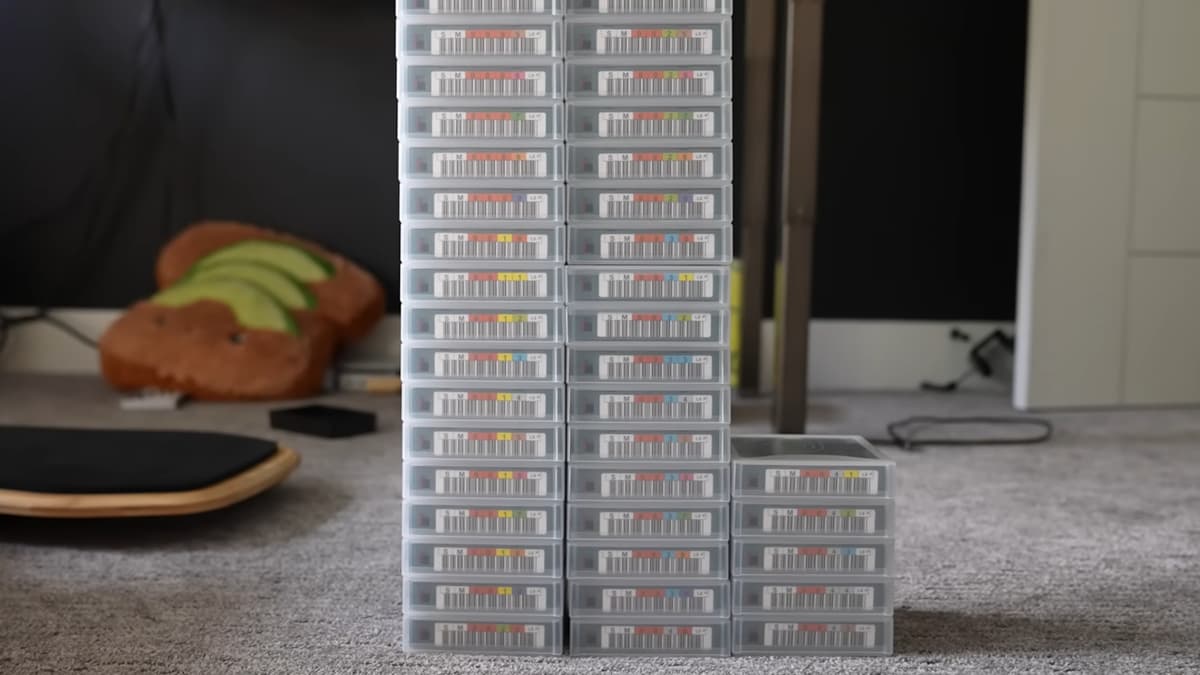
LTO Tape Stores Data for $5 per Terabyte — Here's Why You Can't Buy It
Companies Mentioned
Why It Matters
Tape’s ultra‑low per‑TB cost makes it indispensable for large‑scale archiving, but the high upfront hardware expense limits adoption to enterprises that can amortize the investment over massive data volumes.
Key Takeaways
- •LTO‑9 cartridges store 18 TB native; LTO‑10 up to 40 TB.
- •2024 LTO shipments reached 176.5 exabytes, fourth year growth.
- •Enterprise tape drives cost $7k‑$13k, creating high entry barrier.
- •Tape provides air‑gapped ransomware protection and WORM compliance.
- •Cost per TB falls below $5 only after large cartridge volumes.
Pulse Analysis
The LTO ecosystem has quietly cemented its role as the most cost‑effective medium for petabyte‑scale cold storage. While solid‑state and cloud solutions dominate active workloads, tape’s $5‑per‑TB price point—derived from the cheap magnetic cartridge—only shines when the total cost of ownership is spread across thousands of tapes. Record shipments of 176.5 exabytes in 2024 underscore a fourth consecutive year of growth, driven by media‑intensive sectors such as video production, scientific research, and regulatory‑bound archives that demand durability and longevity.
The real hurdle for broader adoption lies in the hardware. An LTO‑9 internal drive retails for roughly $7,200, and the newer LTO‑10 pushes past $13,000. These five‑figure investments are justified only when organizations can amortize the expense over hundreds of cartridges, turning the per‑TB cost into a genuine savings. Consequently, tape remains a niche solution for enterprises with massive, infrequently accessed datasets, while small and midsize businesses continue to rely on external HDDs or cloud backup services that require far lower capital outlay.
Beyond economics, LTO offers intrinsic security advantages. Physical air‑gap isolation protects against ransomware, and features like WORM (Write‑Once‑Read‑Many) and built‑in encryption satisfy stringent compliance mandates. However, its sequential access nature limits suitability for random‑read workloads, reinforcing its position as a backup and archival tier rather than a primary storage solution. As data volumes explode, organizations will likely adopt a tiered strategy: fast, active storage for day‑to‑day operations, complemented by tape for long‑term preservation, ensuring both cost efficiency and resilience.
LTO tape stores data for $5 per terabyte — here's why you can't buy it
Comments
Want to join the conversation?
Loading comments...