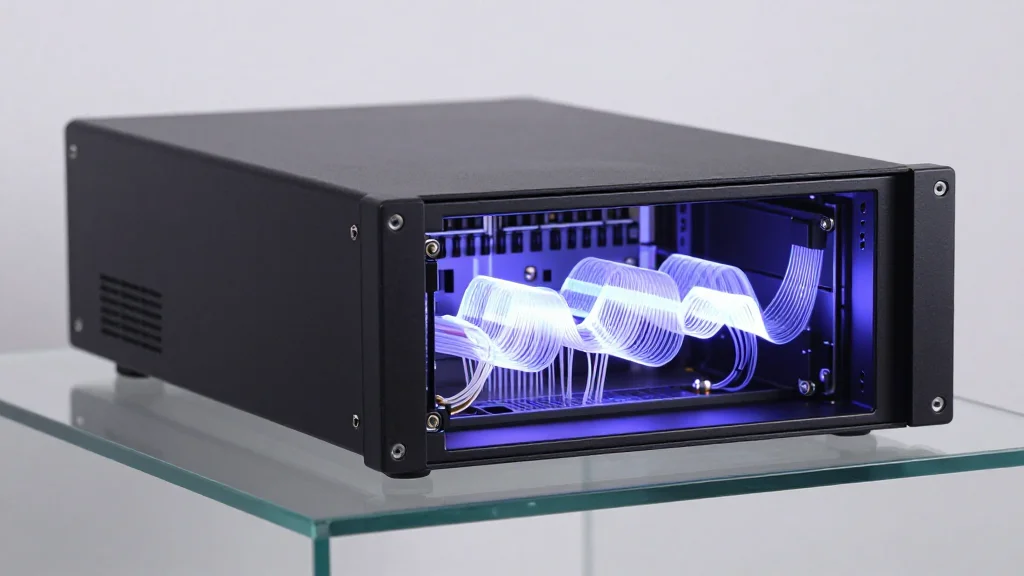
Lumai Debuts Iris Optical Compute System for Real-Time LLM Inference
Why It Matters
By cutting inference power draw dramatically, Lumai’s technology addresses the looming data‑center energy wall and enables larger AI models to be served at scale, giving early adopters a cost and sustainability advantage.
Key Takeaways
- •Iris Nova runs Llama 8B and 70B in real time.
- •Optical compute cuts inference energy use up to 90% versus GPUs.
- •First commercial system to run billion‑parameter LLMs with photons.
- •Available now for evaluation by hyperscalers, enterprises, and research labs.
- •UK’s ARIA funds research, citing urgent need for post‑silicon scaling.
Pulse Analysis
Lumai’s Iris family marks the first time an optical‑based server has demonstrated real‑time inference on billion‑parameter large language models. By replacing silicon transistors with a three‑dimensional photonic tensor engine, the system can execute millions of matrix operations in parallel using light pulses. The hybrid architecture pairs conventional digital control with the optical core, allowing seamless integration into existing data‑center stacks while delivering an order‑of‑magnitude speed advantage for token‑heavy workloads such as Llama 8B and 70B.
The timing could not be more critical. The International Energy Agency projects global data‑center electricity demand to double by 2030, pressuring operators to cut power costs and carbon footprints. Lumai claims up to 90 % lower energy consumption per inference compared with GPU clusters, translating into substantial OPEX savings and a smaller environmental impact. This efficiency gain also eases the thermal constraints that have limited the density of traditional silicon racks, opening the door for larger AI models to be served at scale without costly cooling upgrades.
With the Iris Nova now available for evaluation, hyperscalers and enterprise clouds can test the technology before committing to larger deployments. Early adopters stand to differentiate themselves by offering faster, greener AI services, a competitive edge as regulatory and ESG pressures mount. Lumai’s partnership with the UK’s Advanced Research and Invention Agency underscores governmental confidence in post‑silicon solutions, hinting at potential public‑private funding pipelines. If performance scales as promised, optical compute could reshape the AI hardware roadmap, challenging Nvidia, AMD and emerging silicon photonics players for dominance in the inference market.
Lumai Debuts Iris Optical Compute System for Real-Time LLM Inference
Comments
Want to join the conversation?
Loading comments...