Maxsun Brings Intel Panther Lake and Wildcat Lake Mobile CPUs to Desktop Motherboards
Companies Mentioned
Why It Matters
By marrying laptop‑class efficiency with desktop expandability, Maxsun’s MoDT boards could reshape NAS, edge‑AI and compact workstation markets, offering a new value proposition for power‑conscious enterprises.
Key Takeaways
- •Maxsun's MoDT boards embed Intel mobile SoCs on desktop form factor
- •Panther Lake SK‑PTLNAS supports up to 128 GB DDR5 and 65 W TDP
- •Dual 10 GbE and 2.5 GbE ports target NAS and edge AI workloads
- •Wildcat Lake micro‑ATX board offers 28 W TDP for low‑power embedded use
Pulse Analysis
The "Mobile on Desktop" (MoDT) concept reflects a broader industry trend of leveraging the power efficiency of laptop‑class system‑on‑chips (SoCs) in traditional desktop environments. Intel’s upcoming Panther Lake and Wildcat Lake architectures bring integrated Xe³ graphics and advanced power management, enabling manufacturers like Maxsun to design boards that consume far less energy than conventional desktop CPUs while still offering the connectivity and upgrade paths users expect. This hybrid approach appeals to data‑center operators and edge‑computing firms seeking lower TCO and smaller footprints.
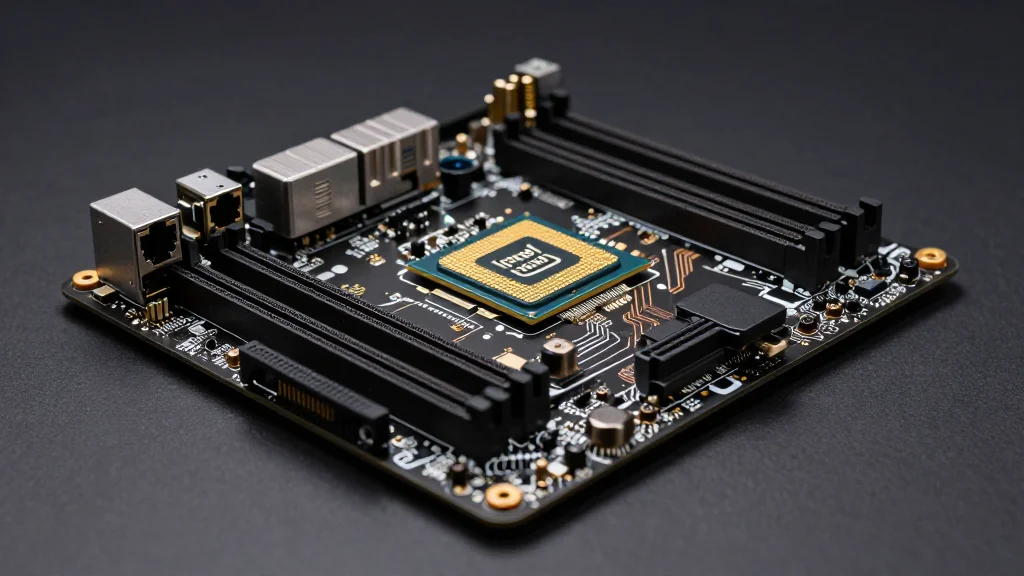
Maxsun’s flagship SK‑PTLNAS ATX motherboard showcases the potential of Panther Lake in a desktop chassis. Equipped with a Core Ultra 7 356H eight‑core processor, the board delivers 65 W TDP, 6+4 phase VRM, and up to 128 GB DDR5 across two SO‑DIMM slots. Storage flexibility is a highlight, with five M.2 slots spanning PCIe Gen5 x2 to Gen4 x1, plus three Mini‑SAS connectors for high‑capacity NAS deployments. Dual 10 GbE and an additional 2.5 GbE port provide enterprise‑grade networking, while a full‑length PCIe 5.0 x16 slot leaves room for discrete GPUs or accelerators, positioning the board for AI edge workloads and compact workstations.
The companion Wildcat Lake micro‑ATX board targets the low‑power segment, featuring a 28 W TDP SoC, a single DDR5 slot up to 32 GB, and a streamlined 4+2 phase power design. Its modest I/O suite—one PCIe Gen4 x4 M.2 slot, SATA III, and mixed USB ports—makes it suitable for embedded devices, thin clients, and edge servers. As Intel’s mobile CPUs gain broader adoption, MoDT platforms could challenge traditional desktop CPUs on price and efficiency, prompting OEMs to explore new form factors and pricing models. Early market response will determine whether this hybrid architecture becomes a mainstream alternative for power‑sensitive enterprises.
Maxsun Brings Intel Panther Lake and Wildcat Lake Mobile CPUs to Desktop Motherboards
Comments
Want to join the conversation?
Loading comments...