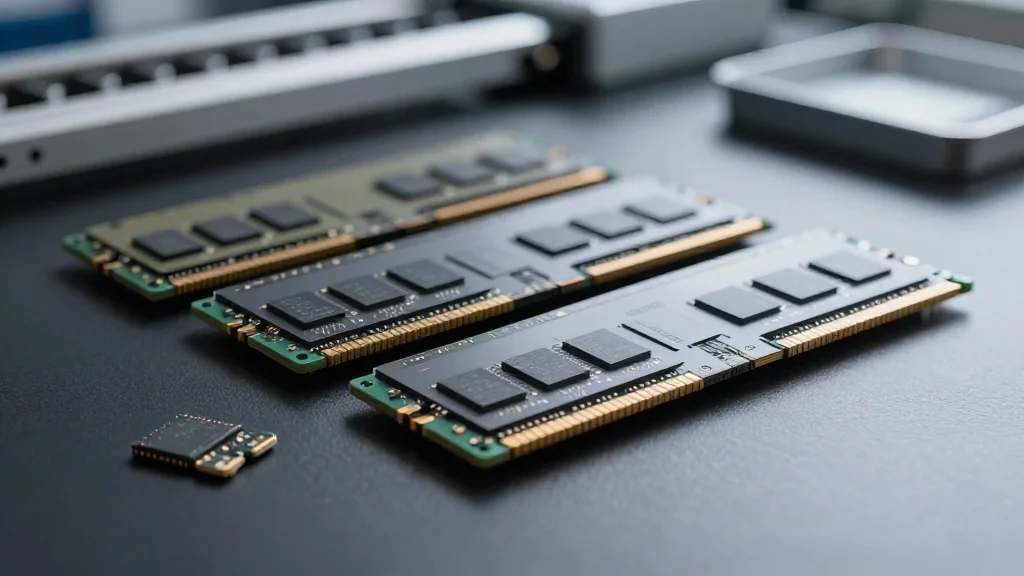
‘Memflation’ Pushes Semiconductor Market Across $1.3 Trillion Threshold

Companies Mentioned

Why It Matters
Escalating component costs threaten margins for PC and server manufacturers while boosting revenues for AI‑focused chipmakers, reshaping investment priorities across the tech supply chain. The prolonged price pressure could suppress non‑AI demand, extending supply constraints through 2028.
Key Takeaways
- •Semiconductor market hits $1.3 trillion, up 64% YoY.
- •DRAM prices up 125%, NAND flash up 243% in 2026.
- •“Memflation” could delay non‑AI demand through 2028.
- •Nvidia overtakes Samsung, AI chip sales exceed $200 billion.
- •Over 70% of channel partners report price hikes, 90% face delays.
Pulse Analysis
The Gartner forecast that the semiconductor industry will breach $1.3 trillion in 2026 marks a historic inflection point, driven largely by an unprecedented AI building boom. Hyperscalers are allocating more than half of their hardware budgets to AI workloads, pushing memory and storage components into a price spiral that Gartner has labeled “memflation.” DRAM costs are projected to climb 125% and NAND flash 243% within the year, outpacing the modest 17% revenue growth expected for 2027. This inflationary pressure is not limited to data centers; it ripples through every tier of the computing stack.
The pricing surge is reshaping the competitive landscape. Nvidia eclipsed Samsung as the world’s largest semiconductor seller, with AI processor revenue topping $200 billion, while Micron’s focus on data‑center memory has intensified supply constraints for solid‑state drives. Vendors are passing higher component costs to end‑users, and a recent Omdia survey shows more than 70% of channel partners have raised prices, with 90% experiencing shipment delays. These dynamics reward AI‑centric manufacturers but squeeze margins for traditional PC and server makers.
For enterprise buyers, the outlook demands tighter contract discipline and diversified sourcing. CIOs are urged to avoid long‑term pricing clauses that lock in inflated rates beyond 2027, and many are exploring alternative architectures or on‑premise AI solutions to mitigate exposure. Meanwhile, investors are likely to favor companies that can capture AI‑driven growth, such as Nvidia and memory specialists positioned for data‑center demand. As “memflation” persists, the industry may see a gradual moderation of price hikes, but the ripple effects on non‑AI segments could linger well into 2028.
‘Memflation’ pushes semiconductor market across $1.3 trillion threshold
Comments
Want to join the conversation?
Loading comments...