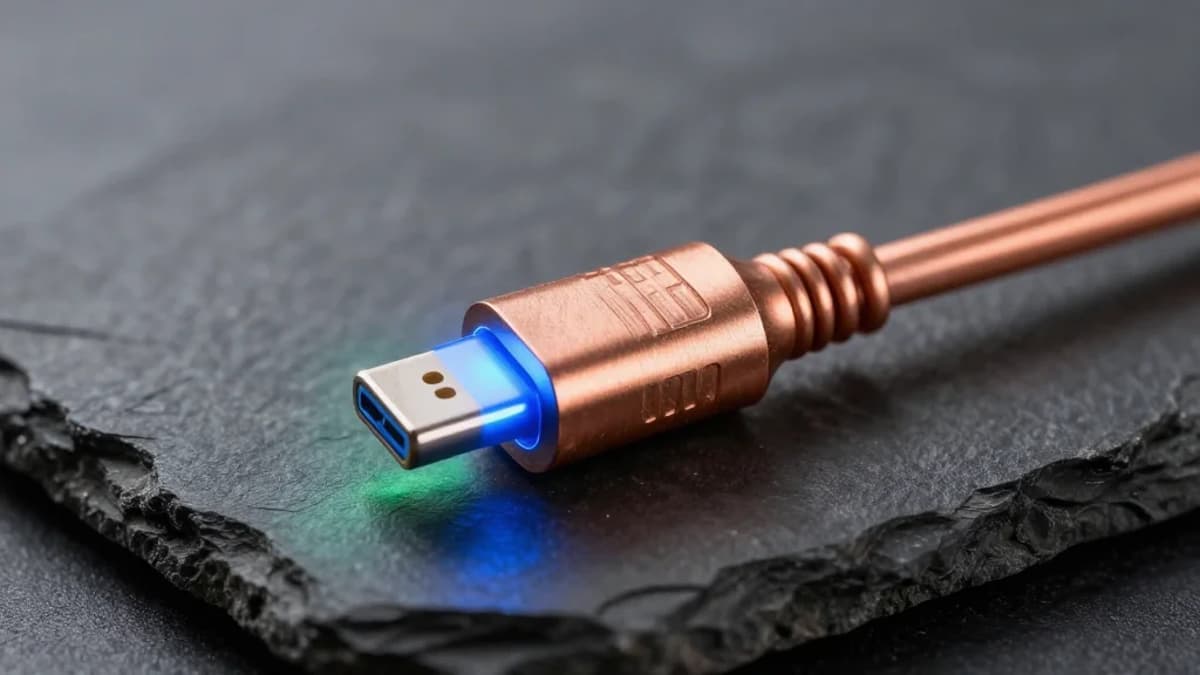
Micro-LED Co-Packaged Optics Cut Power Consumption to Just 5% that of Copper Cables
•March 4, 2026
0
Why It Matters
Micro‑LED CPOs dramatically lower data‑center power and cooling costs, making ultra‑high‑speed links economically viable and accelerating the shift from copper to optics.
Key Takeaways
- •Micro-LED CPOs cut power to 5% of copper
- •Energy per bit drops to 1‑2 pJ, versus >10 pJ
- •1.6 Tbps modules can run at ~1.6 W power
- •NVIDIA targets <1.5 pJ/bit, 0.5 Tbps/mm² density
- •Taiwanese firms positioned to lead micro‑LED supply chain
Pulse Analysis
The surge in generative‑AI workloads has forced data‑center operators to double down on bandwidth, pushing intra‑rack links toward 800 Gbps and 1.6 Tbps rates. Copper cables, long the workhorse for short‑distance connections, now suffer from excessive energy use—over 10 pJ per bit—and signal‑integrity constraints at those speeds. As power budgets tighten and cooling costs rise, operators are actively scouting alternatives that can sustain higher densities without inflating OPEX. Optical interconnects, particularly those built on micro‑LED co‑packaged optics, are emerging as the most viable solution to this bottleneck.
Micro‑LED co‑packaged optics combine sub‑50 µm LEDs with CMOS drivers in a single module, delivering energy consumption as low as 1–2 pJ per bit. In a 1.6 Tbps transceiver, this translates to roughly 1.6 W of total power—about one‑twentieth of a comparable copper link and a twenty‑fold improvement over conventional silicon‑photonic modules that draw 30 W. The drastic reduction in heat generation eases thermal management, enabling tighter rack layouts and lower cooling infrastructure. Moreover, the high integration density, exceeding 0.5 Tbps per square‑millimetre, supports the scaling required for future AI‑driven traffic.
The ecosystem around micro‑LED CPOs is gaining momentum. NVIDIA has published silicon‑photonic targets of under 1.5 pJ/bit and ultra‑low failure rates, while Microsoft’s MOSAIC architecture and Credo’s Hyperlume acquisition signal strong demand from hyperscale players. Taiwanese optoelectronics firms—AUO, Innolux, PlayNitride—leverage mature micro‑LED fabs and epitaxial expertise to secure supply chains and drive cost reductions. As these collaborations mature, the industry expects micro‑LED optics to displace copper in short‑haul data‑center links, delivering both energy savings and the scalability needed for the next generation of AI services.
Micro-LED co-packaged optics cut power consumption to just 5% that of copper cables
0
Comments
Want to join the conversation?
Loading comments...