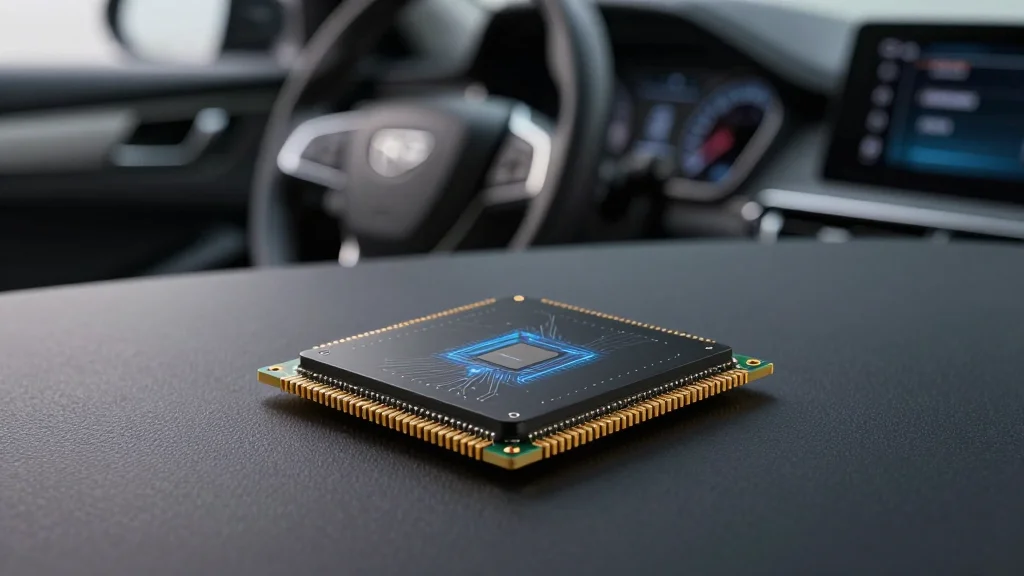
Microchip Hybrid MCU Targeted at Automotive, E-Mobility HMI Applications
Companies Mentioned

Why It Matters
The SAM9X75D5M gives automotive OEMs a cost‑effective, high‑performance solution for next‑generation HMI designs while improving supply chain resilience. Its integrated architecture accelerates development cycles and supports the industry’s shift toward richer graphics and real‑time networking.
Key Takeaways
- •AEC‑Q100 Grade 2 qualified SiP integrates MPU and DDR2
- •Supports 10‑inch XGA displays via MIPI DSI, LVDS, RGB
- •Reduces PCB routing complexity and discrete DRAM procurement risk
- •Offers CAN FD, USB, Gigabit Ethernet, TSN connectivity
- •Provides migration path from MCU to MPU for higher performance
Pulse Analysis
The automotive sector’s rapid adoption of digital cockpits and e‑mobility charging stations is driving demand for richer graphical interfaces. Traditional microcontrollers struggle to meet the memory bandwidth and processing power required for XGA‑class displays, forcing designers to source separate DRAM chips—a process fraught with supply volatility. Microchip’s SAM9X75D5M addresses this gap by embedding 512 Mbit DDR2 directly within a SiP, delivering a compact, automotive‑grade solution that aligns with the industry’s push for higher integration and reliability.
Beyond raw performance, the hybrid MCU’s flexible display interfaces—MIPI DSI, LVDS, and parallel RGB—enable OEMs to target a broad spectrum of HMI form factors, from two‑wheel digital dashboards to ten‑inch infotainment panels. This versatility shortens time‑to‑market, as engineers can reuse existing MCU development tools while leveraging real‑time operating systems for deterministic behavior. The inclusion of CAN FD, USB, Gigabit Ethernet, and Time‑Sensitive Networking further positions the SAM9X75D5M as a central hub for vehicle‑wide data exchange, supporting emerging standards for autonomous driving and over‑the‑air updates.
From a strategic perspective, integrating memory and processing in a single package reduces bill‑of‑materials costs and mitigates the risk of component shortages that have plagued discrete DDR markets. For suppliers, the long‑term availability promised by Microchip’s automotive‑grade qualification translates into more predictable supply chains, a critical factor as OEMs scale production of electric vehicles and advanced driver‑assist systems. Ultimately, the SAM9X75D5M exemplifies the industry’s move toward consolidated silicon solutions that balance cost, power efficiency, and performance, paving the way for the next generation of connected, high‑resolution automotive experiences.
Microchip Hybrid MCU Targeted at Automotive, E-Mobility HMI Applications
Comments
Want to join the conversation?
Loading comments...