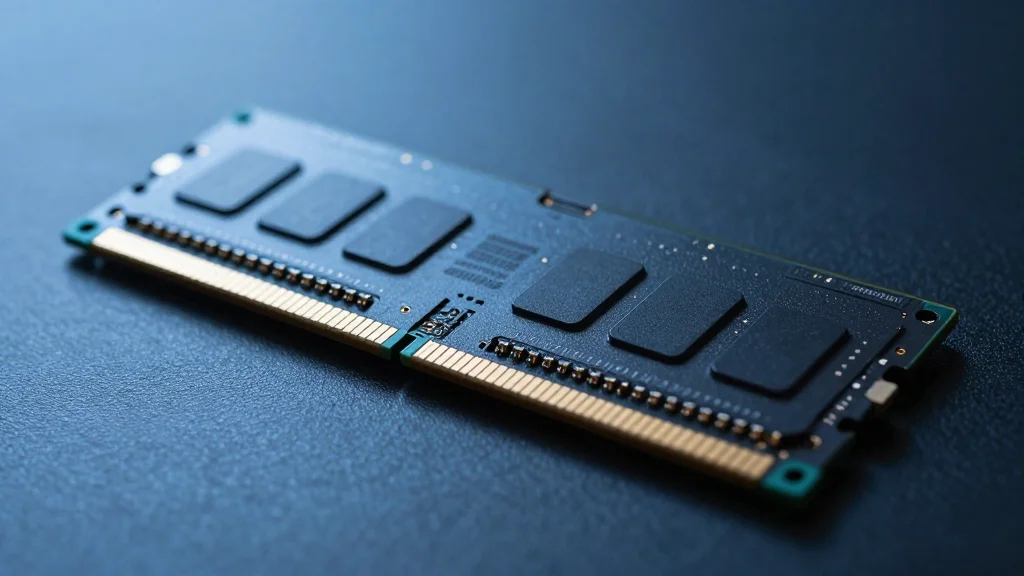
Micron Posts Record Q2 Earnings as AI Memory Demand Sparks Price Surge

Companies Mentioned
Why It Matters
The surge in AI‑driven memory demand reshapes the broader semiconductor supply chain, as DRAM and NAND become critical bottlenecks for data‑center operators. Micron’s ability to capture premium pricing not only boosts its own profitability but also influences the pricing dynamics for rival memory makers, potentially compressing margins for downstream hardware vendors that rely on cost‑effective storage. If Micron can lock in multi‑year contracts and keep capacity in line with demand, it may set a new pricing floor for high‑performance memory, encouraging AI hardware developers to design more ambitious models. Conversely, a misstep in capacity planning could trigger a price correction that reverberates through the entire AI ecosystem, from chip designers to cloud service providers.
Key Takeaways
- •Revenue in Q2 nearly tripled YoY on AI memory demand
- •CEO Sanjay Mehrotra called memory a "defining strategic asset in the AI era"
- •Guidance for a record Q3 and forward P/E of ~7 at $420 share price
- •Potential 65% stock upside to about $693 if $99 EPS target is met
- •Capacity expansion slated for mid‑2027 carries risk of oversupply and price volatility
Pulse Analysis
Micron’s Q2 performance underscores a rare alignment of market forces: AI workloads are consuming memory at a rate that outpaces the historical cyclical peaks of the semiconductor sector. By capitalizing on premium‑priced, high‑bandwidth DRAM and NAND, Micron has temporarily broken free from the supply‑driven price erosion that typically follows capacity additions. The five‑year strategic agreement is a tactical move to mitigate that risk, effectively converting short‑term price spikes into a more predictable revenue stream.
Historically, memory manufacturers have suffered when capacity expansions outstrip demand, leading to steep price declines and inventory write‑downs. Micron’s forward‑looking stance—asserting that supply will exceed demand only after 2026—suggests a disciplined approach to capacity rollout. If the company can sustain this discipline, it may establish a new operating model where AI‑driven demand acts as a stabilizing anchor rather than a fleeting surge.
However, the upside is not guaranteed. The AI market’s growth trajectory is still subject to macro‑economic variables, including corporate IT spending and geopolitical tensions that could disrupt supply chains. Moreover, competitors such as Samsung and SK Hynix are also scaling AI‑optimized memory lines, which could intensify pricing competition. Micron’s next inflection point will be its Q3 results; a repeat of record revenue would validate its strategic bets, while a slowdown could reignite concerns about the sector’s inherent volatility.
Micron Posts Record Q2 Earnings as AI Memory Demand Sparks Price Surge
Comments
Want to join the conversation?
Loading comments...