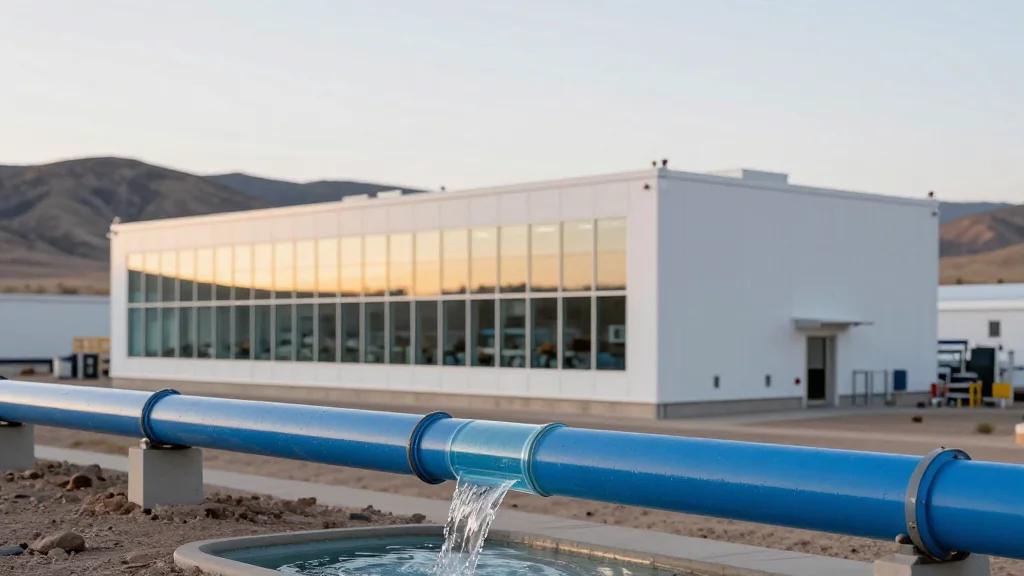
Micron’s $50 B Idaho Fab Expansion Triggers Water‑Use Alarm

Companies Mentioned
Why It Matters
The Idaho expansion highlights the growing clash between the United States’ strategic goal of expanding domestic semiconductor capacity and the environmental limits of water‑scarce regions. Water is a critical input for wafer fabrication; any shortage can throttle yield, increase costs, and delay product rollouts, affecting the broader AI and data‑center markets that rely on Micron’s memory chips. Moreover, the dispute sets a precedent for how future fabs will be evaluated against local resource constraints, potentially reshaping site‑selection criteria and prompting tighter federal oversight. If Micron fails to secure a sustainable water supply, the company could face operational disruptions, reputational damage, and heightened scrutiny from both regulators and investors increasingly focused on ESG performance. Conversely, a successful water‑management strategy could become a benchmark for the industry, demonstrating that high‑volume chip production can coexist with responsible resource stewardship in arid environments.
Key Takeaways
- •$50 billion investment to add two new fabs in Boise, Idaho
- •Daily water consumption projected to rise from 4.7 M to 10.2 M gallons
- •First new fab will use 5.5 M gallons per day and discharge 2.9 M gallons
- •Micron pledged a 75 % global water‑conservation target by 2030
- •No environmental impact study filed for the second fab, raising regulatory concerns
Pulse Analysis
Micron’s Idaho expansion arrives at a pivotal moment for U.S. chip policy. The CHIPS Act and subsequent subsidies have accelerated fab construction, but the water‑intensity of semiconductor manufacturing is often under‑appreciated. Historically, fabs have clustered in water‑rich regions like California’s Silicon Valley; the shift to high‑desert locales forces companies to confront scarcity head‑on. Micron’s lack of transparency on water sourcing could erode stakeholder trust, especially as investors weigh ESG metrics more heavily.
From a competitive standpoint, rivals such as Intel and TSMC are also racing to secure water‑intensive sites in the Southwest, prompting a nascent race for water‑rights acquisitions and innovative recycling technologies. If Micron can demonstrate a viable closed‑loop system that meets its 75 % conservation goal, it could gain a strategic edge, positioning itself as the first major U.S. fab to reconcile AI‑driven demand with sustainable water use. Failure to do so, however, may invite stricter permitting regimes that could slow the U.S. supply chain’s rebound.
Looking ahead, policymakers may need to craft a more granular framework that ties semiconductor subsidies to measurable water‑management milestones. Such a policy could incentivize investment in advanced treatment, desalination, or even the co‑location of water‑recycling facilities with fabs. Micron’s next public disclosures—particularly regarding the second fab’s water plan—will be a litmus test for how the industry balances growth with the finite resources of the high desert.
Micron’s $50 B Idaho Fab Expansion Triggers Water‑Use Alarm
Comments
Want to join the conversation?
Loading comments...