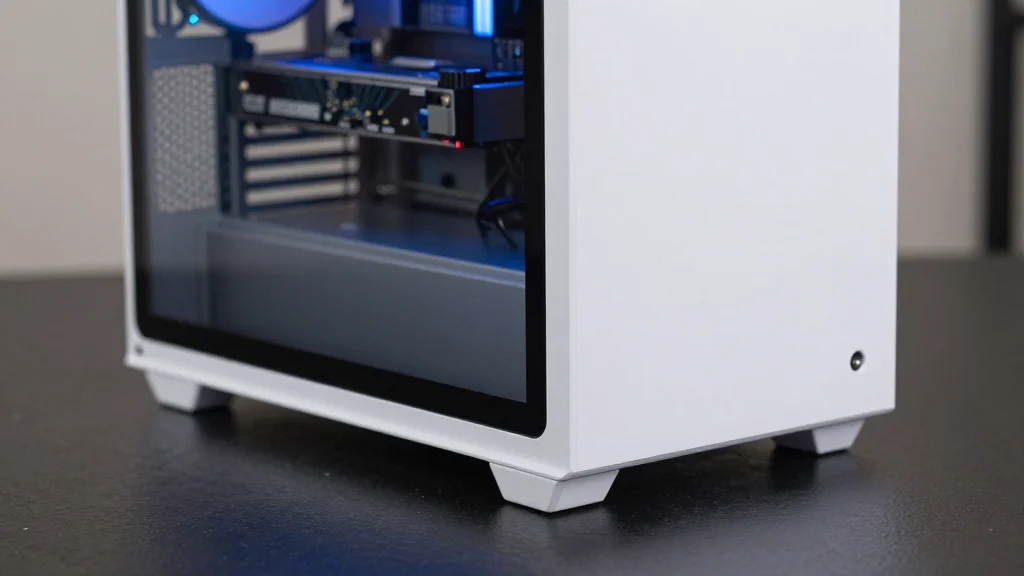
Microsoft Debuts Surface RTX Spark Dev Box to Run Large AI Models without Cloud Costs
Why It Matters
The Dev Box lets developers shift routine model training and inference from costly cloud GPUs to predictable, capital‑expense hardware, potentially reshaping AI development economics and strengthening Microsoft’s end‑to‑end ecosystem.
Key Takeaways
- •128 GB unified memory enables 120 B‑parameter model inference locally
- •One‑petaflop RTX Spark chip rivals entry‑level cloud GPU performance
- •Pre‑installed AI stack cuts setup time from hours to minutes
- •Fixed hardware cost reduces unpredictable cloud AI spend for teams
- •Microsoft’s tiered hardware strategy links local dev to Azure scaling
Pulse Analysis
Microsoft’s Surface RTX Spark Dev Box marks a strategic pivot toward on‑premise AI compute. Built around Nvidia’s Blackwell‑class RTX Spark SoC, the device merges CPU, GPU, and a massive 128 GB unified memory pool, delivering roughly one petaflop of AI throughput. This architecture lets developers load and interact with models exceeding 120 billion parameters without any cloud calls, a capability previously limited to expensive, rented GPU instances. By integrating the unified memory directly into Windows 11 Pro—complete with WSL 2, CUDA‑ready drivers, and Microsoft’s AI Toolkit—the box eliminates the lengthy configuration steps that have long plagued developer hardware, allowing teams to start coding within minutes.
The economic implications are profound. AI development costs have ballooned as organizations pay per token or per GPU hour, especially during iterative fine‑tuning cycles. The Dev Box offers a fixed‑cost alternative, turning variable cloud spend into a predictable capital expense. For enterprises, this shift could free up budget for additional experiments, while still preserving Azure for scaling frontier‑level workloads. Microsoft’s broader three‑tier hardware roadmap—spanning the Surface Laptop Ultra to the DGX Station for Windows—reinforces a hybrid model where most development stays local, and only the most demanding inference runs in the cloud.
Beyond cost, the device’s technical choices set it apart from competitors like Apple’s Mac Mini. While Apple’s silicon also offers unified memory, it caps at 48 GB for the M4 Pro and relies on the Metal framework, which lacks the deep‑rooted CUDA ecosystem that powers most AI frameworks such as PyTorch and TensorRT. By delivering a CUDA‑native, high‑memory platform in a compact desktop, Microsoft positions the RTX Spark Dev Box as the go‑to workstation for developers who need both performance and ecosystem compatibility, potentially redefining the standard development stack for AI across the industry.
Microsoft debuts Surface RTX Spark Dev Box to run large AI models without cloud costs
Comments
Want to join the conversation?
Loading comments...