Morse Micro Announces MM8108-M20 High-Power Wi-Fi HaLow Module to Accelerate Long-Range IoT Adoption
Why It Matters
The MM8108‑M20 gives OEMs a ready‑to‑integrate, high‑range Wi‑Fi HaLow solution, shortening time‑to‑market for IoT devices that need coverage beyond traditional Wi‑Fi. Its performance and certification lower development risk, spurring broader adoption of long‑range IoT across industries.
Key Takeaways
- •MM8108-M20 delivers up to 28.5 dBm output power.
- •Module supports 902‑928 MHz band for North America.
- •Offers 43.3 Mbps max PHY rate at 8 MHz bandwidth.
- •Compact 18.5 mm × 14 mm form factor simplifies integration.
- •FCC/IC certified, ready for sampling by OEMs.
Pulse Analysis
Wi‑Fi HaLow, the sub‑GHz extension of the ubiquitous Wi‑Fi standard, promises ten‑fold range improvements while retaining low power consumption, positioning it as a key enabler for the next wave of IoT deployments. Industry analysts have highlighted the technology’s potential to bridge the gap between short‑range Wi‑Fi and cellular IoT, especially in smart‑city, industrial automation, and remote‑monitoring scenarios. Morse Micro, already a leader with its MM6108 and MM8108 silicon, leverages this momentum by delivering a complete module that abstracts the complexities of RF design and certification.
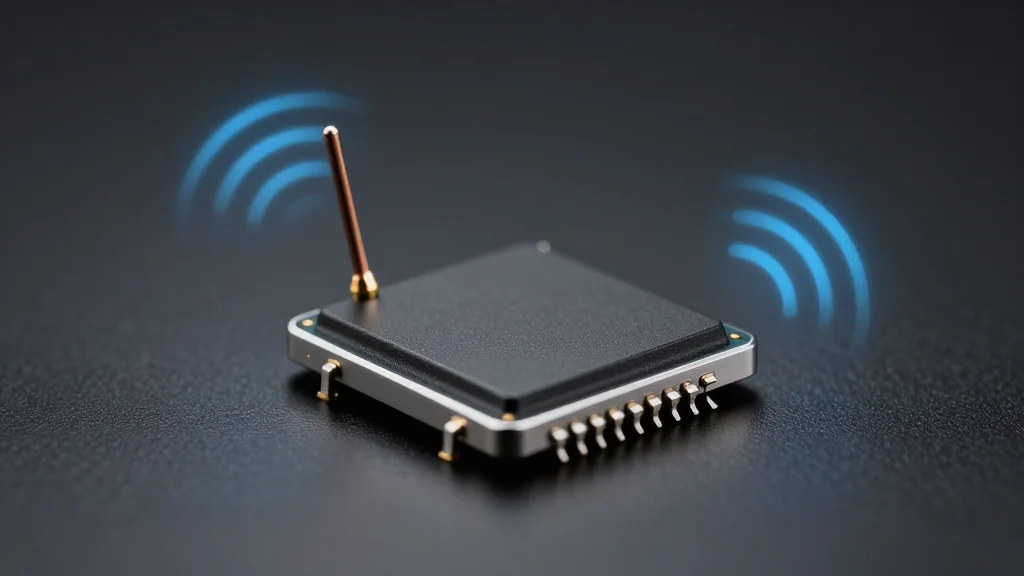
The MM8108‑M20 translates Morse Micro’s second‑generation SoC into a production‑ready package. At a modest 18.5 mm × 14 mm footprint, it packs a high‑power amplifier capable of 28.5 dBm output, a SAW filter tuned to the 902‑928 MHz North American band, and flexible host interfaces including USB 2.0 High‑Speed, SDIO 2.0 and SPI. These features enable developers to choose bandwidths from 1 MHz to 8 MHz, balancing throughput—up to 43.3 Mbps—and range according to application needs. FCC/IC certification further removes a major barrier, allowing OEMs to move directly from prototype to volume production.
For the IoT ecosystem, the module’s arrival could accelerate the shift toward long‑range, low‑power Wi‑Fi solutions that avoid the cost and complexity of cellular modules. By offering a turnkey component, Morse Micro reduces engineering overhead, shortens development cycles, and improves confidence in meeting regulatory requirements. This is likely to spur a wave of new products—such as outdoor surveillance cameras, smart‑metering hubs, and industrial sensors—bringing HaLow’s extended coverage to markets that previously relied on fragmented, proprietary radios. As adoption scales, the competitive landscape may see increased pressure on legacy short‑range Wi‑Fi and low‑power wide‑area network (LPWAN) technologies, reshaping IoT connectivity strategies across sectors.
Morse Micro Announces MM8108-M20 High-Power Wi-Fi HaLow Module to Accelerate Long-Range IoT Adoption
Comments
Want to join the conversation?
Loading comments...