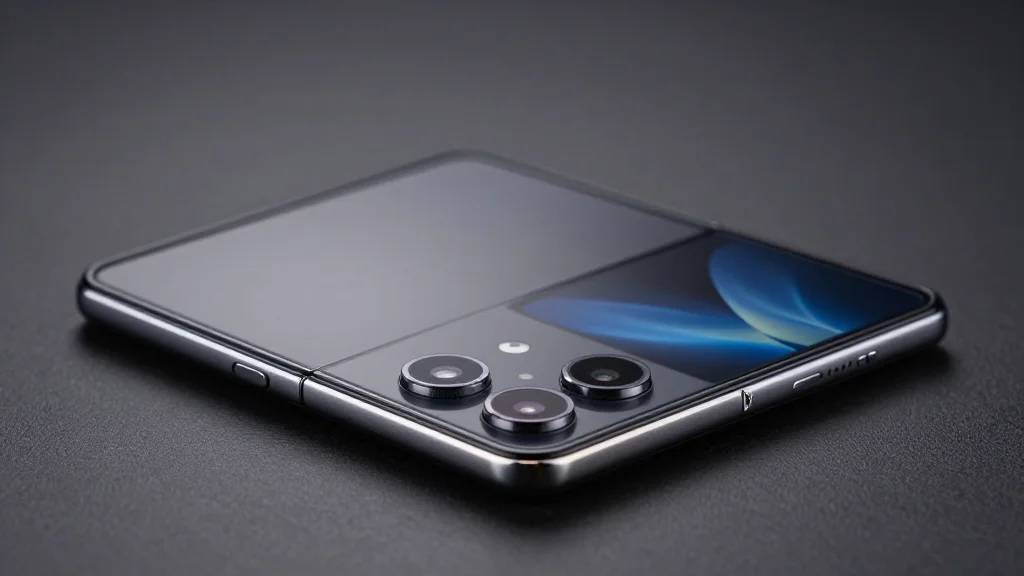
Motorola Razr Fold’s DXOMARK‑Gold Camera Still Trails Samsung Galaxy Z Fold 7

Companies Mentioned
Why It Matters
The Razr Fold’s launch signals Motorola’s ambition to move from clamshell flip phones into the high‑end notebook‑style foldable arena, a segment still dominated by Samsung. By attaching a DXOMARK Gold label to its camera, Motorola aims to reassure consumers that its imaging can compete, but the early performance gap suggests that hardware parity will require more than badge‑driven marketing. If Motorola can close the camera gap while maintaining its aggressive pricing, it could accelerate the overall adoption of foldables by offering a more affordable, productivity‑oriented option. Conversely, a persistent disparity may reinforce Samsung’s premium positioning and push other rivals—such as Google’s Pixel Fold and potential Apple entrants—to double down on camera excellence as a key differentiator.
Key Takeaways
- •Motorola Razr Fold launched at $1,899 with 512 GB storage, $100 cheaper than Samsung Galaxy Z Fold 7
- •Device carries a DXOMARK Gold‑label triple‑50 MP camera system, yet side‑by‑side tests show lower color fidelity than the Z Fold 7
- •Powered by Snapdragon 8 Gen 5, 6,000 mAh silicon‑carbon battery promises 43 hours of use and 80 W wired charging
- •Pre‑orders began May 14; shipments start May 21 in the U.S., with carrier roll‑out to follow
- •Foldable shipments in North America grew 28 % YoY in 2025; analysts expect >20 % annual growth in 2026
Pulse Analysis
Motorola’s Razr Fold is a bold statement of intent: it tries to blend the nostalgic Razr brand with the notebook‑style foldable form factor that Samsung has refined over three generations. The hardware stack—Snapdragon 8 Gen 5, a massive 6,000 mAh silicon‑carbon battery, and a titanium hinge—places it squarely in the premium camp, while the $1,899 price undercuts Samsung’s $1,999 Z Fold 7. Yet the camera, the most visible consumer‑facing differentiator, remains a weak point. DXOMARK’s Gold label is a powerful marketing tool, but real‑world image comparisons still reveal softer shadows and less accurate skin tones than Samsung’s 50 MP sensor array. This discrepancy highlights a broader industry truth: badge‑driven specs alone cannot close the perception gap that Samsung has built through years of iterative refinement.
The market dynamics further complicate Motorola’s gamble. Foldable adoption is accelerating, but price sensitivity remains high. By offering a lower entry price and generous storage, Motorola may attract enterprise users and early adopters who value productivity over pure photography. However, the looming threat of an Apple foldable—rumored to debut later this year—could reset consumer expectations around camera performance and ecosystem integration. Motorola will need to leverage its unique design cues, such as the Moto Pen stylus and rugged titanium hinge, to differentiate beyond megapixels.
Looking ahead, the decisive factor will be how quickly Motorola can iterate on its imaging pipeline. If software updates and AI‑driven post‑processing can narrow the gap, the Razr Fold could become a credible challenger that forces Samsung to defend its lead on price as well as performance. Failing that, the device may settle into a niche role, serving users who prioritize screen real estate and durability over flagship photography. The next quarter’s sales data and any follow‑up firmware upgrades will be the litmus test for Motorola’s long‑term relevance in the foldable race.
Motorola Razr Fold’s DXOMARK‑Gold Camera Still Trails Samsung Galaxy Z Fold 7
Comments
Want to join the conversation?
Loading comments...