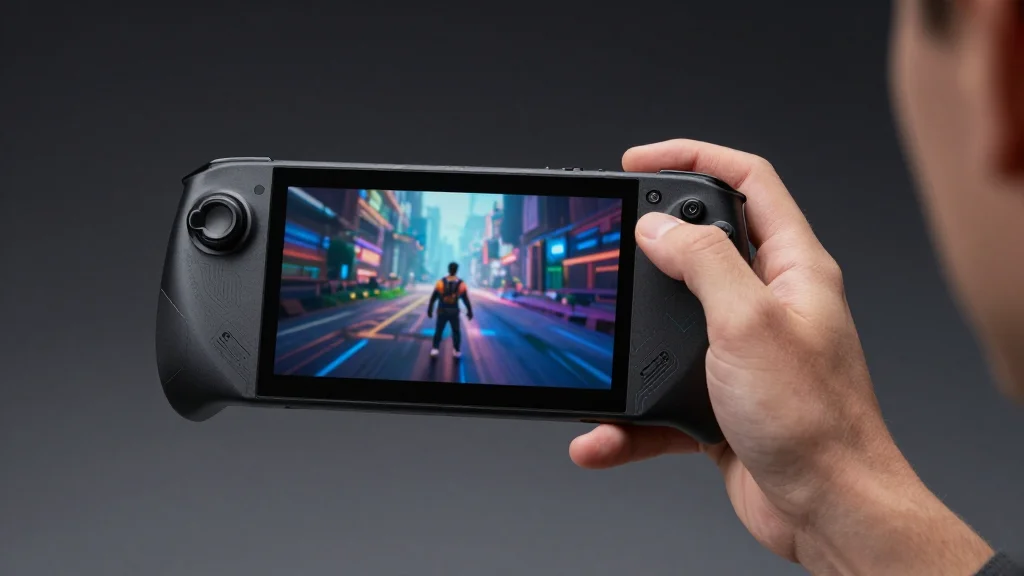
MSI Unveils First Intel Arc G3 Extreme Handheld, Challenging Steam Deck and ROG Ally

Companies Mentioned


Why It Matters
The Claw 8 EX AI+ marks the first commercial deployment of Intel’s Arc G3 Extreme in a handheld form factor, potentially redefining performance expectations for portable PC gaming. By delivering higher frame rates and AI‑enhanced upscaling at comparable power levels, the device could shift consumer demand toward premium, Windows‑based handhelds, challenging the dominance of the Steam Deck’s value‑oriented proposition. If MSI’s pricing and performance claims hold up, manufacturers may accelerate development of AI‑centric chips for handhelds, prompting a new wave of competition that could drive component costs higher but also spur innovation in battery efficiency, thermal design, and software integration across the portable gaming market.
Key Takeaways
- •MSI announced the Claw 8 EX AI+ handheld at Computex 2026, powered by Intel’s Arc G3 Extreme chip.
- •Projected retail price is around $1,500, positioning it above the Steam Deck ($790) and ROG Ally ($790).
- •Intel claims up to 42 % faster performance at equal wattage compared to AMD’s Ryzen Z2 Extreme.
- •Benchmarks show 85 % higher frame rates in Diablo IV (122 fps vs 66 fps on an Xbox Ally X).
- •Battery life estimates reach 12 hours on low‑intensity games, with power draw as low as 4 W in idle.
Pulse Analysis
MSI’s entry into the handheld market with an Intel‑based device is a strategic gamble that could reshape the competitive landscape. Historically, AMD’s custom APUs have powered the most popular portable PCs—Valve’s Steam Deck and ASUS’s ROG Ally—largely because they offered a sweet spot of performance, power efficiency, and price. Intel’s Arc G3 Extreme, however, promises a different value proposition: raw performance boosted by AI‑driven upscaling, which could make lower‑resolution rendering appear native. If the Claw 8 EX AI+ lives up to its specs, it may force AMD to accelerate its own roadmap, potentially shortening the development cycle for next‑gen handheld silicon.
The pricing strategy also reveals a broader market segmentation. By targeting a $1,500 premium tier, MSI is courting enthusiasts who prioritize performance and a Windows ecosystem over the affordability that made the Steam Deck a breakout success. This could create a bifurcated market: a mass‑market segment anchored by sub‑$800 devices and a high‑end niche where AI features justify a steeper price. The success of the Claw will likely influence Valve’s next hardware iteration—whether to stick with its current AMD‑based design or explore Intel partnerships. Moreover, the emphasis on AI upscaling may accelerate adoption of similar technologies across the industry, pushing developers to optimize for XeSS, DLSS, and FSR in tandem.
In the short term, the Claw’s impact will be measured by pre‑order numbers and early reviews. Long‑term, it could catalyze a shift toward more powerful, AI‑enabled handhelds, prompting component suppliers to re‑evaluate pricing and capacity. For gamers, the immediate takeaway is a new option that promises desktop‑class performance in a pocket‑sized form factor—provided they are willing to pay the premium.
MSI Unveils First Intel Arc G3 Extreme Handheld, Challenging Steam Deck and ROG Ally
Comments
Want to join the conversation?
Loading comments...